
Behind-the-Meter vs Open Access PPAs in India 2026: Cost, Charges and Strategy
By Sudarshan Karweer · sudarshan@growthifye.com · +91 84510 99371 (Call / WhatsApp) · 2026-09-16
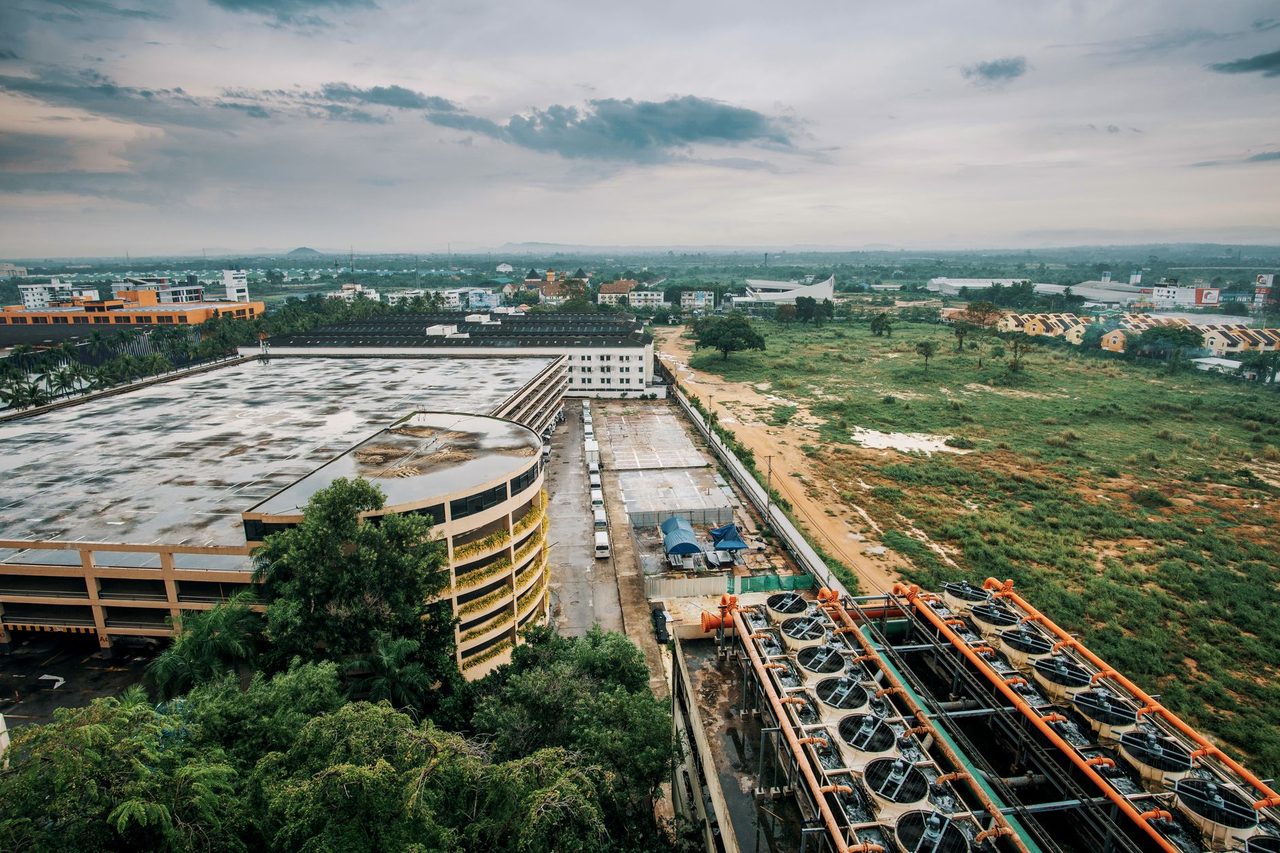
Photo: FOX ^.ᆽ.^= ∫ on Pexels
India’s corporate clean-power market in 2026 is no longer a simple procurement choice between discom supply and an off-site renewable PPA. For many commercial and industrial consumers, the sharper strategic question is this: should the next megawatt be procured through behind-the-meter captive solar, or through an open access corporate PPA?
That question matters because the answer shapes more than tariff. It changes exposure to cross-subsidy surcharge, wheeling and transmission charges, banking rules, curtailment risk, scheduling complexity, RPO positioning, capex intensity and lender comfort. It also affects how quickly a project can be executed and whether the savings will survive the next state regulatory order.
This article compares behind-the-meter and open access PPAs in India in 2026 from a practitioner perspective, with specific attention to landed cost economics, policy frictions and portfolio design for C&I buyers.
Why this comparison matters in 2026
The economics of corporate renewable procurement have tightened in 2026. Module prices remain far below 2022 peaks, but evacuation constraints, stricter banking conditions in several states, time-of-day settlement reforms and evolving surcharge structures have made simplistic “solar is cheaper” claims less reliable.
At the same time, many C&I consumers are pursuing 30% to 80% renewable penetration rather than symbolic installations. Once renewable procurement moves from a rooftop pilot to a serious share of annual electricity consumption, the trade-offs between on-site and off-site models become operationally material.
In practical terms:
- Behind-the-meter projects usually avoid open access network charges but are constrained by roof or land availability, substation configuration and daytime load coincidence.
- Open access PPAs unlock larger scale and lower generation tariffs, but their final landed cost depends on state-specific charge stacks and banking treatment.
- A combined strategy often beats a single-asset decision, particularly for multi-shift manufacturing, data centres, cold chains, metals, chemicals, textiles and large campuses.
Defining the two models clearly
Behind-the-meter in this article refers to on-site or near-site renewable generation physically connected behind the consumer meter, typically rooftop solar, carport solar, floating solar within premises, or ground-mounted systems within the same electrical boundary. These projects may be owned by the consumer or implemented through a RESCO or captive arrangement, but they primarily offset imported grid units directly at the point of consumption.
Open access refers to off-site power procurement from a renewable project wheeled through the transmission and distribution network under the Electricity Act framework and state/open access regulations. It may be structured as:
- Third-party sale
- Group captive
- Captive
- Intra-state open access
- Inter-state open access
- Solar, wind or hybrid supply
The reason this distinction matters is that behind-the-meter savings come mainly from displacing retail tariffs, while open access savings depend on a waterfall of generation tariff plus network and statutory charges.
Cost stack: generation tariff is only the starting point
In 2026, on-site solar capex for quality C&I systems is typically in these broad ranges, depending on scale, structure, module choice, evacuation and site conditions:
- Rooftop solar: about Rs 32-42 million/MW
- Carport solar: about Rs 42-55 million/MW
- Ground-mounted on-campus solar: about Rs 28-36 million/MW
For a RESCO-style behind-the-meter PPA, discovered tariffs for strong C&I offtakers often fall around:
- Rooftop: Rs 3.20-4.40/kWh
- Carport: Rs 4.00-5.50/kWh
- Ground-mounted behind-the-meter: Rs 2.90-3.90/kWh
These tariffs look attractive because every unit consumed on-site can offset grid procurement that may cost Rs 7-11/kWh for HT industrial consumers and even more for certain commercial categories. Most behind-the-meter structures also avoid the open access cost stack, which is the biggest reason they remain relevant even when off-site generation tariffs are lower.
By contrast, 2026 utility-scale renewable PPA tariffs for open access projects may be around:
- Solar: Rs 2.40-3.20/kWh
- Wind: Rs 3.20-4.30/kWh
- Solar-wind hybrid: Rs 3.40-4.60/kWh
- RTC-shaped renewable blends: Rs 4.80-6.80/kWh depending on profile and firming design
However, no serious buyer should compare those numbers directly with behind-the-meter tariffs. Open access landed cost must incorporate:
- Transmission charges
- Wheeling charges
- Cross-subsidy surcharge for third-party structures where applicable
- Additional surcharge where applicable
- SLDC charges and scheduling fees
- Losses at applicable voltage levels
- Banking charges or forfeiture, if banking is allowed
- Standby and balancing costs where relevant
- Metering and open access administrative expenses
In some favourable states and structures, especially group captive at EHT level, landed solar open access may still be around Rs 4.20-5.60/kWh. In more punitive charge regimes, especially where CSS and banking restrictions are severe, landed cost can move toward Rs 6.00-7.50/kWh or higher. That can still beat grid supply, but the margin narrows.
This is why Landed-cost management is not a back-office exercise; it is the core of procurement strategy.
Where behind-the-meter wins
Behind-the-meter projects remain compelling in 2026 for four reasons.
First, they can deliver the cleanest bill offset. Every kWh generated and consumed behind the meter directly reduces imported units without attracting open access network levies. For a consumer paying Rs 8.50-10.50/kWh blended grid cost during solar hours, even a behind-the-meter tariff of Rs 3.80-4.20/kWh can create robust savings.
Second, approval pathways are often simpler than full open access implementation. While rooftop net metering and gross metering rules vary by state and contract demand class, many behind-the-meter projects avoid the procedural complexity of long-term OA approvals, scheduling and energy accounting. This can reduce execution time, especially for single-site consumers.
Third, behind-the-meter projects can improve resilience and power quality when combined with internal electrical design, static loads, diesel offset strategy or storage. For high-cost commercial facilities, this non-tariff value can be meaningful.
Fourth, lender and management committees often understand behind-the-meter projects more intuitively. The risk drivers are visible: roof rights, structural integrity, irradiation, O&M, and host credit. There is less dependence on annual regulatory changes to banking or surcharge orders.
But the limits are equally real:
- Roof area is finite
- Daytime self-consumption may cap usable capacity
- Weekend and seasonal underutilisation can erode economics
- Carport and engineered rooftop structures raise tariff
- Many industrial plants cannot meet a large decarbonisation target with on-site solar alone
In practice, behind-the-meter solar often addresses 5% to 20% of annual consumption for dense industrial sites, and perhaps 15% to 35% for large low-rise campuses with good roof-to-load ratios.
Where open access wins
Open access becomes the stronger instrument when scale, load diversity and annual energy share matter more than simplicity.
A 20 MW to 100 MW open access portfolio can serve multiple sites and deliver renewable penetration levels that no rooftop program can match. For sectors with heavy baseload or multi-shift demand, off-site wind or hybrid PPAs can improve generation-load coincidence far beyond solar-only on-site systems.
Open access also wins where:
- The consumer has large annual consumption above 20-30 million units
- Sites are land-constrained or have weak roof conditions
- The buyer needs multi-state procurement flexibility
- Renewable targets require 40% to 70% energy coverage
- The company wants long tenor price visibility for 15 to 25 years
- Group captive is feasible and can remove CSS exposure
Consider a hypothetical HT industrial consumer in a relatively OA-friendly state with a blended grid cost of Rs 8.20/kWh. A group captive solar-wind hybrid PPA may deliver landed power at Rs 4.90-5.40/kWh after charges and losses. That creates a saving of roughly Rs 2.80-3.30/kWh over a large annual volume. Even after equity commitment, compliance and scheduling overhead, the economics are substantial.
The problem is volatility in state-level rules. Banking windows, banking charges, energy set-off hierarchy, transmission exemptions and treatment of unutilised banked units can materially change the realised savings. In some states, monthly banking with 8% to 10% banking charge or peak-hour restriction can sharply reduce value. In others, annual-style economics are effectively unavailable.
This is why Demand & ToD analysis is central before signing any open access deal. A cheap tariff with poor hour-by-hour fit may underperform a more expensive but better-shaped supply option.
Key strategic filters for choosing between the two
The right answer in 2026 usually comes from five filters rather than one headline tariff.
1. Load shape and day-time coincidence
If a facility runs strong daytime load, six or seven days a week, behind-the-meter solar can monetize a high share of production with minimal policy leakage. If the load is night-heavy or highly seasonal, open access wind or hybrid structures may create better annual utilisation.
2. State charge regime
A site in a state with moderate wheeling charges, group captive viability and usable banking may find OA highly attractive. A similar consumer in a state with high CSS, restrictive banking and frequent curtailment may get superior risk-adjusted returns from on-site assets.
3. Scale requirement
A 2 MW rooftop project and a 50 MW open access procurement solve different business problems. If the objective is RE100 progress, Scope 2 reduction at scale, or long-term energy hedging across multiple plants, behind-the-meter alone is insufficient.
4. Balance sheet and governance appetite
Group captive structures require shareholder discipline, annual 26% ownership tests at the project SPV level and 51% consumption compliance on a proportional basis. Some buyers prefer a straightforward third-party behind-the-meter RESCO because it reduces governance complexity even if the per-unit tariff is marginally higher.
5. Execution timeline
High-quality rooftop and on-premise projects can often be delivered faster than large off-site OA projects that require land finalisation, evacuation readiness, PPA execution, open access registration and utility coordination. Where immediate savings are needed, on-site can be the first move while OA is developed in parallel.
The portfolio approach: not either-or, but layered procurement
For many Indian C&I users in 2026, the best strategy is layered procurement rather than a binary choice.
A practical design often looks like this:
- Step 1: Maximise economically viable behind-the-meter solar for low-friction daytime offset
- Step 2: Add open access wind, solar or hybrid for larger annual RE share
- Step 3: Align contracted shape with time-of-day tariffs and production cycles
- Step 4: Revisit discom contract demand, standby exposure and residual grid procurement
- Step 5: Use contract architecture to preserve flexibility for future storage or RTC procurement
This layered model can reduce the weighted average cost of energy while also diversifying regulatory and operational risk. If banking rules tighten, on-site generation still performs. If rooftop expansion is exhausted, OA scales the decarbonisation trajectory.
For developers and lenders, this has implications too. The strongest C&I procurement programs now compare not just tariff bids but whole-portfolio outcomes: residual discom bill, fixed-charge recovery, seasonal profile match, curtailment exposure and approval confidence. That makes Sourcing strategy and PPA structuring & negotiation more analytical than they were even two years ago.
What boards, lenders and policymakers should watch
Boards should ask management teams for more than a quoted PPA tariff. They should require a 15- to 25-year landed-cost comparison that includes charge-change sensitivities, banking downside, deemed generation assumptions and counterparty credit considerations.
Lenders should distinguish between simple on-site contracts and open access structures where cash flow depends materially on policy treatment of wheeling, banking and consumption matching. Debt sizing based on optimistic energy realisation assumptions is still a risk in several states.
Utilities and policymakers should recognise that overly punitive open access charges may protect short-term discom revenue but can reduce industrial competitiveness and push consumers toward narrower on-site solutions. Stable, transparent rules on banking, surcharge computation and approval timelines are more valuable to market growth than headline policy announcements.
Bottom line for 2026
Behind-the-meter and open access PPAs are not substitutes in every case. They are different tools for different parts of the corporate energy problem.
Choose behind-the-meter when the priority is low-friction daytime savings, limited regulatory exposure, fast execution and direct offset of expensive retail power.
Choose open access when the objective is scale, multi-site coverage, deeper renewable penetration and long-term portfolio economics that justify the added complexity.
For most large Indian C&I consumers, the optimal 2026 answer is a blended architecture: use on-site assets where they are physically and economically efficient, and use open access for the remaining volume where the state charge regime and load profile support durable savings.
If your organisation is evaluating behind-the-meter solar, open access PPAs, or a combined procurement roadmap, contact Growthifye’s advisory desk for a site-specific assessment of charges, banking, approvals and landed-cost economics.
Explore Growthifye's related capabilities
This analysis connects directly to our advisory practice: Demand & ToD analysis · Sourcing strategy · Competitive developer selection · PPA structuring & negotiation.
About the author

Chief Executive Officer, Growthifye — With over 23 years in management consulting, Sudarshan has taken businesses from concept to scale — building and scaling new-age digital and energy businesses.
- 23+ years in management consulting
- EY alumnus
- Led large-scale BESS programmes, capital raises and advisory mandates
Want this analysis applied to your project?
Talk to our team

