Battery Storage Is Won or Lost Long Before Commissioning
By Sudarshan Karweer · sudarshan@growthifye.com · +91 84510 99371 (Call / WhatsApp) · 2026-09-07
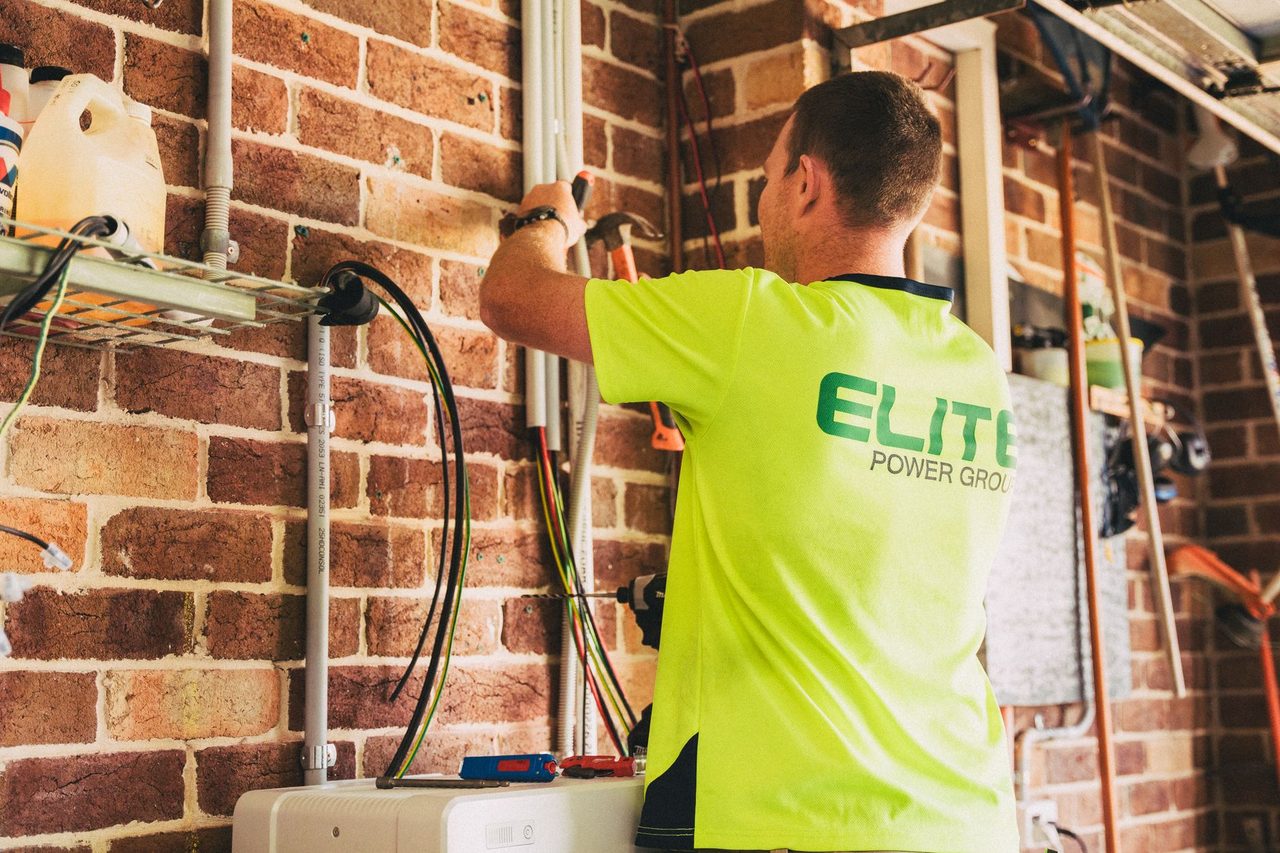
Photo: Elite Power Group on Pexels
Storage Is No Longer a Sidecar to Renewables
In my 23 years across strategy, scale-up, and project execution, I have learned that markets mature when engineering choices start determining financial outcomes more than headline capacity targets do. Battery energy storage systems, or BESS, have now entered that phase.
For a few years, storage was discussed in simplified terms: four-hour systems, falling battery prices, and a broad assumption that any bankable integrator could stitch the solution together. That era is over. Today, what makes or breaks a project is not only the tariff or the EPC price. It is the stack of decisions from cell chemistry to container design, from thermal architecture to software logic, from augmentation philosophy to warranty carve-outs.
Globally, the storage market is being reset by three forces:
- supply-chain reordering beyond a single-country manufacturing model
- safety-led engineering after several high-profile fire incidents
- merchant and hybrid revenue models that demand more operational precision
For India, this matters enormously. We are not simply adding storage to renewables. We are building a grid-balancing asset class at the same time that transmission, market design, DISCOM behavior, and domestic manufacturing ambitions are all evolving. In that environment, BESS engineering cannot be treated as a procurement exercise alone. It is a strategy question with a very technical core.
The Cell-to-Container Decisions That Actually Drive Project Economics
What we see across our mandates is that sponsors often focus first on capex per kWh and only later on the engineering assumptions that govern usable life, performance stability, safety, and augmentation needs. That is backward.
The economics of a BESS project are shaped by a few foundational choices.
- Cell chemistry selection: LFP remains dominant because of its safety profile, cycle life, and cost position, but chemistry choice must be linked to duty cycle, ambient conditions, and warranty structure, not trend alone.
- DC-to-AC sizing: Overbuilding at the battery block level can support dispatch commitments, but if not coordinated with inverter and EMS logic, it can create stranded capability.
- Thermal management design: Air-cooled versus liquid-cooled is not a cosmetic choice, especially in Indian heat and dust conditions. It affects degradation, auxiliary consumption, maintainability, and safety.
- Container architecture: Energy density is attractive until it complicates isolation, firefighting access, replacement logistics, or temperature uniformity.
- Fire suppression and detection philosophy: Compliance-driven minimalism can become an expensive mistake if local site realities are ignored.
- EMS and controls stack: Revenue comes from dispatch intelligence, state-of-charge discipline, and operational responsiveness. Poor controls quietly destroy economics.
- Augmentation strategy: Whether you plan augmentation in years 4, 6, or 8 materially changes financing assumptions and revenue confidence.
Too many projects still buy storage as though it were a static equipment package. It is not. It is a performance-managed infrastructure asset. The quality of engineering integration matters more than the attractiveness of one component line item.
Why the Lowest Battery Price Can Produce the Highest Project Cost
One of the recurring misconceptions in storage is that a lower cell or container price automatically translates into a stronger project. In practice, the cheapest battery can become the most expensive project if it forces hidden costs into operations, augmentation, safety retrofits, or contractual underperformance.
I will put this plainly: BESS should be evaluated on delivered and sustained value, not only installed cost.
That means asking harder questions early:
- What usable energy is available at site temperatures, not lab temperatures?
- How much degradation is expected under the actual dispatch profile?
- What is the round-trip efficiency at system level after auxiliaries?
- How much availability is contractually backed and how is it measured?
- What exclusions sit inside the warranty fine print?
- How modular is replacement if one rack, string, or container underperforms?
- What happens when future augmentation requires mixing generations of cells?
The global market has already started learning this lesson. In the United States, Europe, Australia, and parts of the Middle East, asset owners are becoming much more disciplined about integrated performance guarantees and lifecycle modeling. India will move in the same direction, but we must move faster because our margin for error is smaller. Tariffs are competitive, financing discipline is rising, and the climate operating envelope is unforgiving.
The contrarian point here is this: as battery prices keep falling, engineering quality will matter more, not less. Lower component prices do not reduce the penalty of poor design. They often increase the temptation to under-specify what truly protects long-term returns.
India Cannot Copy-Paste Global BESS Designs
A major mistake I see in early storage adoption is the tendency to import standard designs from temperate or highly standardized grid environments and assume they will perform the same way in India. They will not.
India-specific factors are decisive:
- Ambient heat profiles can materially accelerate degradation if thermal management is not robust.
- Dust, humidity, and monsoon exposure affect enclosure design, HVAC loading, and maintenance practices.
- Grid conditions and dispatch variability require careful control system tuning.
- O&M capabilities differ sharply across locations, so maintainability is not a theoretical issue.
- Land constraints and evacuation architecture influence layout and serviceability.
- Financing expectations increasingly require clearer risk allocation across OEM, integrator, EPC, and owner.
This is why India needs storage engineering localization, not just assembly localization. Domestic manufacturing is important, but bankable domestic capability will depend equally on system design competence, test protocols, software integration, and field-performance analytics.
The world order is moving toward resilient supply chains, industrial policy, and selective regionalization. For India, that creates an opening. We should not define success only as making cells or containers domestically. We should define success as owning the engineering intelligence that optimizes storage for Indian operating realities while meeting global performance standards.
That would position India not only as a demand market, but as a design and execution market.
Software, Warranties, and the New Bankability Test
When lenders and investors first looked at storage, many focused on sponsor strength, offtake certainty, and OEM pedigree. Those still matter, but the bankability conversation is becoming more nuanced.
Three areas now deserve much deeper scrutiny.
First, software. The energy management system and plant controller are no longer peripheral. They determine charge-discharge logic, degradation management, response times, thermal behavior, and participation in stacked revenue models. A weak software layer can erode value every day without triggering dramatic alarms.
Second, warranties. In BESS, not all warranties protect the owner equally. There are often separate commitments around product defects, capacity retention, throughput, availability, and performance. The interaction among these clauses matters. If there are too many exclusions around ambient conditions, cycling patterns, maintenance compliance, or grid events, the owner may discover that the practical warranty is thinner than expected.
Third, interface risk. Battery OEM, PCS supplier, EMS provider, system integrator, and EPC contractor may all be individually credible. But projects fail in the interfaces between them. That is why technical due diligence must go beyond datasheets. It must examine responsibility matrices, integration testing, communication architecture, and failure-mode planning.
In my experience, this is where serious sponsors distinguish themselves. They do not merely negotiate price. They engineer accountability.
The Next Value Shift: From Asset Procurement to Portfolio Optimization
The forward-looking shift in storage is that single-project optimization will soon be insufficient. The winners will be those who optimize fleets, not just sites.
Globally, storage is moving from a standalone asset mindset to a portfolio orchestration mindset. Hybrid renewable-plus-storage parks, virtual aggregation, ancillary services participation, and dispatch portfolios are changing how returns are generated. India will evolve on its own timeline, but this direction is unmistakable.
That means today’s engineering decisions must anticipate tomorrow’s market architecture.
- Can the control stack support future market participation requirements?
- Is the data architecture clean enough for performance benchmarking across sites?
- Are augmentation decisions being made with fleet standardization in mind?
- Can cybersecurity and remote diagnostics scale across a portfolio?
- Is the project designed only to meet a tender, or to remain flexible as revenue models mature?
My contrarian view is that some storage projects being celebrated today will look over-optimized for capex and under-optimized for strategic optionality. In a maturing market, optionality has value. A system that is slightly more expensive upfront but more dispatch-flexible, software-upgradable, and augmentation-ready can outperform a cheaper system over its life.
India should take note. As storage deployment scales, the premium will shift from simply owning battery assets to operating them intelligently within broader renewable and grid portfolios.
What Project Developers, Utilities, and Investors Should Do Differently Now
If I were advising a board evaluating storage at scale today, I would recommend a tighter decision framework.
- Start with the use case, not the battery. Peak shifting, firming, ancillary support, or capacity commitments each require different design priorities.
- Build lifecycle models that reflect Indian temperature, degradation, auxiliary load, and augmentation realities.
- Evaluate system-level efficiency and usable throughput, not only nameplate energy.
- Demand integrated accountability across OEM, integrator, software, and EPC interfaces.
- Stress-test warranties under actual operating assumptions.
- Prioritize maintainability and field service access, especially in remote or harsh environments.
- Design controls and data systems for future portfolio-level optimization.
The storage market is entering a more serious phase. This is healthy. It will reward those who combine engineering depth, commercial discipline, and execution realism.
In renewable energy, markets often begin with enthusiasm, pass through a period of commoditization, and then rediscover the value of expertise. BESS is at that rediscovery point now.
The Growthifye View
- In storage, project value is set upstream. Cell, thermal, controls, and warranty decisions shape returns more than headline capex alone.
- India needs localized BESS engineering intelligence, not just localized assembly, if assets are to perform reliably in Indian conditions.
- The next bankability test is system integration quality: software, interfaces, augmentation logic, and accountability across vendors.
- The long-term winners will treat BESS not as a box purchase, but as a portfolio optimization platform.
About the author

Founder & CEO, Growthifye — engineering and financing India's clean-energy transition.
Want this analysis applied to your project?
Talk to our team