AI for Renewable O&M in India 2026: Field Service, Spares and Downtime ROI
By Sudarshan Karweer · sudarshan@growthifye.com · +91 84510 99371 (Call / WhatsApp) · 2026-09-07
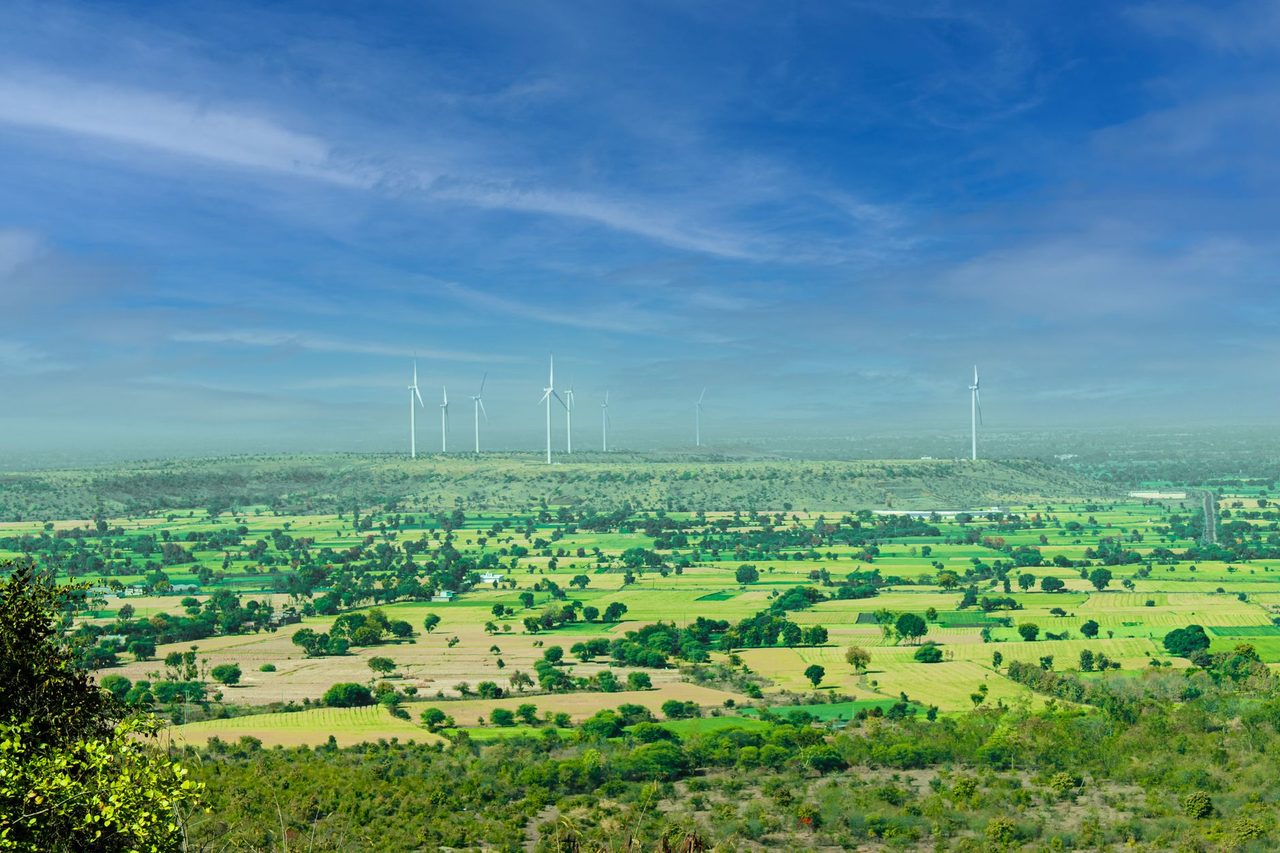
Photo: Samar Mourya on Pexels
India’s solar, wind and hybrid fleets have expanded faster than the digital operating model needed to run them at scale. In 2026, the next value pool is not only in adding MW, but in reducing avoidable downtime, improving field productivity and tightening spare-parts control across dispersed assets. For many asset owners, EPC-backed O&M teams and in-house operations groups still run critical maintenance with a patchwork of SCADA alarms, spreadsheets, WhatsApp groups, local vendor calls and delayed ERP updates. That model breaks when portfolios cross 250 MW, when sites span multiple states, or when lenders demand tighter reporting on availability, curtailment, generation losses and cash-flow resilience.
A practical answer is AI-enabled field service and maintenance orchestration: a digital operating layer that connects alarms, work orders, technician dispatch, spare-parts availability, contractor SLAs, warranty data and closure evidence. This is a different topic from ERP/EAM, APM or data platforms alone. The focus here is the last-mile execution engine of renewable O&M: who goes where, with what spare, in what time window, under what SLA, and with what financial impact.
For Indian renewable portfolios in 2026, this matters because a few hours of avoidable inverter, feeder, transformer or WTG outage can erase margin quickly. A 100 MW AC solar plant operating at a 24% CUF equivalent output profile can lose roughly 24 MWh for each full hour of total outage. At a realised tariff of Rs 2.8-4.2/kWh, that is about Rs 67,000 to Rs 1.0 lakh of revenue at risk per hour before considering DSM, contractual performance deductions or downstream scheduling effects in hybrid structures. For wind, the revenue at risk per hour is more variable, but fault response delay during strong wind windows can be disproportionately expensive.
Why field-service digitalisation is now a board-level issue
Three trends have pushed maintenance execution from an O&M manager’s problem to a CFO, CIO and lender concern.
First, portfolios are more operationally complex. Utility-scale solar now commonly includes central and string inverter mixes, tracker systems, pooling substations, robotic cleaning interfaces and third-party SCADA layers. Wind fleets often span OEM generations with different service models and spare ecosystems. RTC and hybrid projects add BESS, forecasting dependencies and tighter dispatch discipline.
Second, labour and logistics costs are rising. Technician availability in remote districts remains uneven, while travel time, fuel, accommodation and contractor mobilisation charges are materially higher than in 2022-23. Repeated site visits due to poor diagnosis or missing parts create silent cost leakage.
Third, counterparties expect evidence. Lenders, insurers, DISCOM-facing teams and C&I offtakers increasingly want event-level traceability: fault timestamp, acknowledgement, dispatch time, root cause, spare consumed, restoration proof and claimability under warranty or AMC terms. Without a digital chain of record, recovery from OEMs and contractors weakens.
This is why many operators are expanding beyond SCADA dashboards into service-operations software tied to ERP & asset management systems and Data & analytics platforms. The ROI is usually not theoretical. It sits in lower mean time to repair, fewer repeat failures, better van-stock planning, reduced emergency procurement and stronger warranty capture.
What AI-enabled field service looks like in Indian renewables
The term AI is overused, so it is worth defining the practical stack.
At the core is a work-order orchestration platform that ingests events from SCADA, historian, IoT gateways, ticketing channels or operator inputs. AI models then assist in triage and execution rather than replacing engineers. Typical functions include:
- Alarm deduplication so 300 cascading alerts from the same inverter block or feeder event do not create chaos
- Probable-cause suggestions based on historical fault patterns, OEM bulletins and environmental conditions
- Priority scoring using generation-at-risk, weather window, contractual SLA, grid conditions and crew distance
- Dispatch optimisation based on technician skill, certification, shift timing and spare availability
- Spare recommendation and reservation before truck roll approval
- Auto-generation of closure templates, evidence checklists and warranty claim packets
- Failure trend detection across fleets, for example recurring combiner-box issues at sites with similar dust or humidity conditions
For Indian use cases, the system must also handle patchy connectivity, multilingual field workflows and mixed ownership models where some tasks are completed by owner teams, some by EPC/O&M contractors and some by OEM service engineers.
A good design does not require perfect data on day one. It starts by digitising incident intake, standardising asset hierarchy, cleaning failure codes and linking minimum viable inventory records. The quality of AI suggestions improves once 6-12 months of structured maintenance history is available.
The highest-value use cases in 2026
Not every use case deserves the same investment. The best programmes target operational pain with measurable cash impact.
1) Inverter and evacuation fault response
In solar fleets, inverter trips, communication loss, protection events and evacuation-side failures remain top causes of generation loss. A dispatch engine that distinguishes between true field intervention and remote-reset candidates can cut unnecessary truck rolls. When site access is required, the system should pre-check spare modules, fuses, fans, cards or breakers at nearby warehouses before dispatch.
On a 500 MW solar portfolio, even a 0.25 percentage-point gain in technical availability due to faster restoration can be worth several million rupees annually depending on CUF and tariff profile.
2) WTG fault triage and high-wind-period prioritisation
For wind, the value lies less in sheer ticket volume and more in timing. AI-assisted prioritisation can combine weather forecasts with current fault states to decide which turbines deserve immediate attention before high-wind windows. This is especially important where crane mobilisation, specialist teams or OEM dependencies make response expensive.
3) Spare-parts planning for remote sites
Many owners either overstock low-usage items or understock critical consumables and electronics. Both hurt economics. AI-driven min-max optimisation can be tuned by failure rates, lead times, monsoon access risk, OEM import dependency and carrying cost. In 2026, imported electrical spares for selected equipment categories can still face long replenishment cycles, making smart stocking a major availability lever.
4) Contractor SLA management
A large share of underperformance comes from weak supervision of outsourced work. Digital work orders with geotagged check-in, task-specific checklists, photo evidence and time stamps materially improve accountability. The data can feed payment validation, liquidated damages and performance scorecards.
5) Warranty and insurance recovery support
Teams often miss recovery opportunities because proof packs are incomplete. If every qualifying failure automatically triggers part serial capture, event chronology, maintenance history and photographic evidence, claim success rates improve. This matters for transformer, inverter, blade, gearbox, power-electronics and cable-related events where claim values can be significant.
ROI model: where the money actually comes from
Executives should avoid broad promises and calculate ROI in a narrow, plant-by-plant manner. In India, the economics usually come from five buckets.
- Revenue saved from lower downtime
- Lower O&M labour and travel cost through better dispatching
- Reduced spare-parts working capital and emergency purchases
- Better recovery from warranties, AMCs and contractors
- Fewer compliance, audit and lender-reporting gaps
Consider a simplified solar portfolio example:
- Fleet size: 300 MW AC across 6 sites
- Average CUF: 23%
- Realised tariff: Rs 3.20/kWh
- Current technical availability: 98.1%
- Target availability improvement from execution digitalisation: 0.35 percentage points
Approximate annual energy = 300 x 8760 x 23% = 604 GWh.
A 0.35 percentage-point improvement on this base is about 2.11 GWh preserved. At Rs 3.20/kWh, that is roughly Rs 67.5 lakh per year in additional revenue, before secondary benefits.
Now add operational savings:
- 12-18% reduction in avoidable truck rolls through better remote triage and first-time-fix preparation
- 8-15% lower emergency procurement spend due to planned stocking
- 10-20% improvement in contractor productivity and payment accuracy
- 5-10 days lower average inventory holding for selected spare classes without increasing stockout risk
For a 300 MW fleet, a well-scoped programme can often justify itself within 12-24 months, depending on current process maturity and whether software is adopted as SaaS or customised on an existing platform. Wind-heavy fleets may show more volatile but often larger upside per critical event avoided.
Architecture and operating model choices
The biggest implementation mistake is treating field service as just a mobile app. It is a workflow layer that must sit between operational telemetry and enterprise systems.
A practical architecture for Indian renewable operators in 2026 usually includes:
- SCADA/historian/event source for machine and plant alarms
- Asset master and location hierarchy aligned with finance and maintenance coding
- Work-order orchestration engine with rules, SLAs and mobile workflows
- Inventory and procurement integration for spare reservations, issues and replenishment
- Contractor and warranty master data
- Analytics layer for MTTR, repeat failures, stockout rates, cost per MW and generation-at-risk trends
- Identity, device management and Cybersecurity controls for field access and remote connectivity
For many organisations, the right path is not a rip-and-replace project. It is an overlay on current ERP/EAM and SCADA with phased integration. This is where IT strategy & roadmaps become important: sequence the use cases, define data standards, avoid duplicate masters and align business ownership between O&M, stores, procurement, finance and IT.
Operating model matters as much as software. Someone must own fault taxonomy, service-catalogue design, SLA rules, spare criticality classification and monthly value tracking. Without this governance, systems degrade into digital paperwork.
What lenders, C&I buyers and policymakers should look for
This topic is not only relevant to plant operators.
Lenders should ask whether borrowers can produce event-level maintenance evidence, spare criticality policies and repeat-failure analytics. In stressed assets, weak service execution often shows up before financial underperformance becomes visible in quarterly numbers.
C&I buyers procuring renewable power through captive, group captive or open access structures should evaluate whether the generator has disciplined outage-response processes. Better maintenance execution supports more stable supply performance and fewer unpleasant settlement surprises.
Utilities and policymakers should note that digital O&M execution can improve scheduling discipline and outage transparency across increasingly complex RE portfolios. As variable renewable penetration rises, faster restoration and clearer status visibility become system-level benefits, not only owner-level gains.
Relevant Indian context in 2026 includes increasing scrutiny on cyber-secure remote access, evidence-backed operational reporting and tighter performance management under hybrid and firm-power contracts. Any field-service platform touching OT-adjacent workflows should therefore be designed with role-based access, device controls, audit trails and vendor-access governance from day one.
A realistic implementation roadmap for 2026-27
The fastest path is a focused 120-180 day phase rather than a multi-year transformation narrative.
Phase 1: Diagnostic and business case
- Map current incident-to-closure workflow across sites
- Baseline MTTA, MTTR, repeat visits, stockouts, emergency buys and contractor SLA misses
- Identify top 20 fault categories by generation loss and response delay
- Quantify value at risk by asset class and season
Phase 2: Minimum viable deployment
- Standardise asset hierarchy and failure codes
- Launch mobile work orders for one solar cluster or one wind region
- Integrate basic SCADA alarms and inventory visibility
- Implement evidence capture, geotagging and closure discipline
Phase 3: AI and optimisation
- Add alarm correlation and fault-priority scoring
- Introduce technician scheduling and spare recommendations
- Build dashboards for generation-at-risk, MTTR and contractor scorecards
- Start warranty-claim automation for selected asset classes
Phase 4: Scale and controls
- Roll out across the portfolio
- Link to finance for cost attribution and payment controls
- Embed monthly review cadence and benefit realisation tracking
- Extend to BESS, substations and hybrid assets as needed
The KPI set should remain tight:
- Mean time to acknowledge
- n- Mean time to repair
- First-time-fix rate
- Repeat failure rate within 30/60 days
- Emergency procurement share of total spare spend
- Generation loss by root cause and response bucket
- Contractor SLA compliance
- Warranty recovery value realised
For developers and operators with rapid portfolio growth, this domain is becoming a decisive operating capability. The winners in 2026 will not be those with the most dashboards. They will be those that can convert alarms into the right field action, with the right spare, at the right time, and prove the value in rupees.
If your organisation is evaluating AI-led maintenance execution, field-service transformation or spare-parts optimisation for renewable assets, contact Growthifye’s advisory desk. We help energy companies design practical digital operating models, select the right platforms and execute programmes that deliver measurable uptime, cost and control outcomes.
Explore Growthifye's related capabilities
This analysis connects directly to our advisory practice: IT strategy & roadmaps · ERP & asset management systems · Data & analytics platforms · Cloud migration.
About the author

Founder & CEO, Growthifye — engineering and financing India's clean-energy transition.
Want this analysis applied to your project?
Talk to our team