Energy Digital Twins for India Renewables 2026: Use Cases, ROI and Rollout
By Sudarshan Karweer · sudarshan@growthifye.com · +91 84510 99371 (Call / WhatsApp) · 2026-09-07
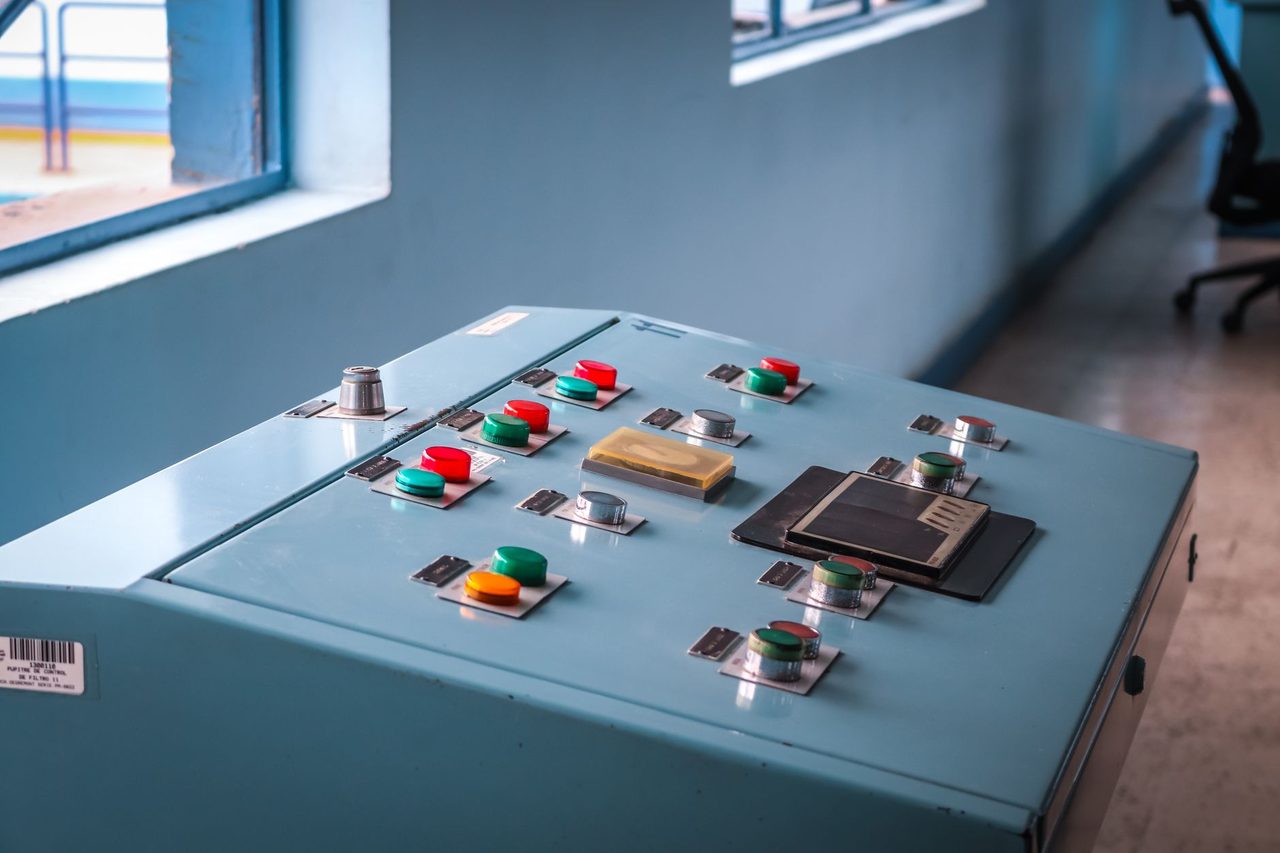
Photo: Fernando Narvaez on Pexels
# Energy Digital Twins for India Renewables 2026: Use Cases, ROI and Rollout
India’s renewable sector has spent the last few years investing in SCADA upgrades, ERP, condition monitoring, forecasting and cloud platforms. In 2026, the next practical layer is the energy digital twin: a live digital representation of a plant, substation, feeder, storage system or portfolio that combines design data, operating telemetry, maintenance history, weather, alarms and financial context into one decision model.
For Indian renewable developers, C&I consumers, utilities and lenders, digital twins matter because the margin for error is tighter than before. Solar tariffs in utility-scale bids remain aggressive. Open-access C&I deals are judged on uptime and savings realization, not only contracted capacity. Lenders want better visibility into degradation, availability and revenue volatility. Grid operators expect better schedule discipline, especially where co-located storage and hybrid plants are involved.
A digital twin is not just a 3D model or a dashboard. Done properly, it becomes an operational system for diagnosing losses, prioritising maintenance, improving generation, evaluating what-if scenarios and strengthening lender-grade reporting. The business case is strongest where fleets are geographically dispersed, EPC handover quality varies, inverter and turbine OEM systems are fragmented, and teams need faster decisions using the same source of truth.
This article explains where digital twins create value in India in 2026, what data and architecture are required, what ROI to expect, and how to roll out the capability without getting trapped in a high-cost pilot.
What an energy digital twin means in the Indian context
In India, an energy digital twin usually starts with one of four scopes:
- A plant twin for a solar, wind, hydro or BESS asset
- A portfolio twin for multiple sites across states and OEMs
- A network twin for evacuation systems, substations or feeders
- A commercial twin linking technical output with tariffs, settlements and contract obligations
The reason this matters is that many firms still operate with disconnected systems:
- SCADA and historians for plant telemetry
- CMMS or ERP for work orders and spares
- Weather feeds and forecasting tools
- OEM portals with limited interoperability
- Manual spreadsheets for PR, CUF, availability and claims
- Separate lender reporting packs and insurance documentation
A digital twin brings these together and models how the asset should perform under actual operating conditions. It can compare expected versus actual behaviour at equipment level, identify underperformance drivers, and estimate commercial impact in rupees per day.
For example, a 100 MW solar plant in Rajasthan operating at a CUF of around 24% should generate roughly 210 million units annually under typical conditions. A 1.5% avoidable yield loss due to string outages, tracker misalignment, transformer heating, soiling response delays or clipping misclassification can mean over 3 million units lost in a year. At a realised value of Rs 3.0 to Rs 4.5 per kWh depending on project structure, that is roughly Rs 0.9 crore to Rs 1.35 crore of annual impact from losses that are often detected late.
That is the practical reason digital twins are getting attention: they turn hidden operational variation into visible, prioritised action.
Where digital twins create measurable value in 2026
The strongest use cases in India are not generic “AI for energy” claims. They are specific operating and commercial decisions.
1. Yield-loss decomposition for solar and wind
Most fleets already track PR, CUF and availability. The problem is attribution. A digital twin can break losses into categories such as:
- Irradiance or wind deviation
- Grid outage and curtailment
- Inverter clipping and derating
- String or combiner failure
- Tracker stow or angle error
- High module temperature impact
- Soiling and cleaning delay
- Reactive power constraints
- Transformer and evacuation bottlenecks
When loss allocation becomes credible and time-stamped, O&M teams can act faster and commercial teams can support claims or contractual discussions more effectively.
2. Predictive maintenance and work-order prioritisation
In India’s dispersed portfolios, maintenance often remains calendar-based or alarm-based. A twin enables condition-based workflows by combining:
- Vibration, temperature and oil data for critical equipment
- Historical failure patterns
- Weather stress and site conditions
- Spare-parts lead times
- Revenue impact of each failure mode
This helps teams decide whether a transformer fan issue, inverter IGBT degradation or yaw-system anomaly should be fixed immediately, deferred to planned shutdown, or escalated as warranty risk.
3. Hybrid and storage optimisation
As solar-plus-storage and wind-solar hybrid projects expand, the twin can simulate charge-discharge strategies, clipping recovery, ramp support, auxiliary load interactions and contractual delivery scenarios.
For C&I and open-access structures, this matters because value is no longer just generated units. It includes:
- Time-of-day bill offset
- Peak-demand reduction
- Schedule adherence
- Curtailment mitigation
- Backup power reliability for critical loads
In states where commercial and industrial tariffs often remain in the range of Rs 7 to Rs 10 per kWh for many consumer categories, even modest improvements in peak shaving or procurement optimisation can materially improve project economics.
4. Lender, insurer and investor reporting
Lenders increasingly expect better operating transparency, especially for portfolios with multiple counterparties, variable resource profiles and refinancing plans. A digital twin can generate evidence-backed reporting on:
- Availability trends
- Degradation curves
- Root causes of recurring outages
- Forecast versus actual generation variance
- Capex deferral risk on major equipment
- Insurance event reconstruction
For lenders, this reduces information asymmetry. For developers, it strengthens credibility during refinancing, acquisition due diligence and portfolio monetisation discussions.
5. Grid and utility use cases
Utilities can apply digital twins beyond generation assets. Common 2026 use cases include:
- Substation thermal loading simulation
- Feeder hosting-capacity analysis for distributed RE
- Transformer overloading prediction
- Power-quality event reconstruction
- Switching scenario planning for outage reduction
As more distributed solar, battery systems and flexible loads connect to urban and industrial feeders, utilities need better digital models to maintain reliability without overbuilding every asset.
ROI: what numbers are realistic for Indian projects
The ROI case depends on plant type, baseline digital maturity and whether the twin is deployed at plant or portfolio level. In our experience, realistic value usually comes from a mix of yield recovery, maintenance savings, outage reduction and lower reporting effort.
For utility-scale solar portfolios, a sensible 2026 range is:
- Yield recovery: 0.7% to 2.0% of annual generation
- Maintenance cost reduction: 5% to 12% on targeted activities
- Critical outage duration reduction: 10% to 25%
- Engineering and reporting productivity improvement: 20% to 40%
For wind portfolios, upside can be higher where wake effects, yaw misalignment, underperforming turbines or recurring converter faults are not yet systematically analysed.
Illustrative example for a 500 MW solar portfolio:
- Annual generation: about 1.0 to 1.1 billion kWh depending on CUF
- Realised value: Rs 3.2 to Rs 4.2 per kWh across PPAs/open access mix
- 1.0% yield recovery: about 10 to 11 million additional kWh
- Revenue value: roughly Rs 3.2 crore to Rs 4.6 crore per year
- O&M and analytics productivity savings: Rs 0.8 crore to Rs 1.5 crore per year
- Avoided major failure or insurance support value: case specific but potentially significant
Even after accounting for software licences, data engineering, integration and change management, a well-targeted portfolio rollout can often achieve payback in 12 to 24 months. But that only happens when the twin is built around decisions and workflows, not around visualisation alone.
Data and architecture: what must be in place
A digital twin is only as credible as its data model. Many projects fail because the team tries to start with AI before fixing asset hierarchy, tag quality and time synchronisation.
At a minimum, the architecture should include:
- SCADA and historian data at appropriate granularity
- Asset master and hierarchy down to maintainable equipment level
- Maintenance history, work orders and spare-parts records
- Design and commissioning baselines
- Weather and satellite resource data
- Alarm/event logs with proper timestamps
- Metering and commercial settlement data where relevant
- Document layer for drawings, manuals and warranty records
In practice, most developers need a staged integration approach. This is where Growthifye capabilities such as Data & analytics platforms and ERP & asset management systems become relevant. The digital twin should not sit outside core enterprise systems forever. It must exchange data with work-order systems, procurement, inventory and financial controls if you want measurable business outcomes.
A strong 2026 architecture pattern for Indian fleets is:
- Edge collection from plant systems where needed
- Central cloud data layer with historian and contextual asset model
- Analytics engine for rules, anomaly detection and simulation
- Workflow integration into CMMS/ERP and reporting tools
- Role-based access with cybersecurity controls for OT-connected environments
The twin does not require all data to move in real time. Some use cases need second-level or minute-level streaming. Others, such as performance benchmarking or insurer reporting, can run hourly or daily. The architecture should be driven by use case economics, not by technology fashion.
Common failure points in Indian deployments
By 2026, the market has enough pilot history to know what usually goes wrong.
1. No clear loss-value model
If the team cannot quantify how much each avoided issue is worth in rupees, the twin becomes an expensive dashboard.
2. Weak asset hierarchy and inconsistent tags
Many fleets have inherited naming conventions from multiple EPCs and OEMs. Without normalisation, analytics do not scale across sites.
3. No workflow integration
Finding a problem is not the same as fixing it. If insights do not trigger work orders, approvals, inspections or claims, the value leaks away.
4. Over-customisation
Some firms attempt to model every asset perfectly before launching. That delays value. Start with high-impact assets and repeatable patterns.
5. OT/IT risk not addressed early
Any twin connected to plant systems must be designed with proper segmentation, access control, logging and remote-access discipline. This is especially important for portfolios using multiple SI partners and OEM tunnels.
A practical rollout roadmap for developers, utilities and C&I portfolios
A pragmatic roadmap usually works better than a “full twin” ambition from day one.
Phase 1: Prioritise value pools
Choose 3 to 5 use cases with direct economic value, for example:
- Inverter fault prediction at top 10 loss sites
- String underperformance and soiling optimisation
- Wind yaw misalignment detection
- Transformer thermal-risk monitoring
- BESS dispatch optimisation for peak offset and clipping recovery
Phase 2: Fix the data foundation
- Clean asset master and tag mappings
- Reconcile telemetry granularity and time stamps
- Define expected performance baselines
- Integrate CMMS/ERP data for maintenance context
- Create standard event and loss taxonomy
Phase 3: Deploy plant or portfolio twin
Start with one archetype that can be replicated. For example, a 50 to 100 MW solar plant with representative inverters, tracker systems and evacuation setup often makes a good template.
Phase 4: Link insights to operations
- Trigger work orders automatically for defined conditions
- Route exceptions to reliability, O&M and asset management teams
- Attach financial impact to each recommendation
- Measure closure time and realised recovery
Phase 5: Expand to commercial and lender workflows
Once technical trust is established, layer in:
- Revenue impact calculation
- PPA or OA contract context
- Insurance and warranty evidence packs
- Portfolio benchmarking and management review dashboards
For larger organisations, Program governance is critical. Without clear ownership across IT, O&M, asset management and finance, digital twin programmes often stall between pilot success and enterprise rollout.
Why the topic matters now in India
Three structural trends make 2026 the right time.
First, renewable fleets are larger and more heterogeneous. Developers are managing different vintages, OEMs and state-level operating conditions. Manual analysis no longer scales.
Second, storage and hybridisation are changing operating logic. Assets are being judged on dispatch quality, time-of-day value and flexibility, not only annual generation.
Third, capital providers are becoming more data-sensitive. Better asset transparency can improve confidence in operating assumptions, reserves planning and refinancing narratives.
For C&I consumers, digital twins also support a more reliable savings story. If an open-access or captive structure underdelivers due to hidden performance issues, the consumer’s actual landed energy economics can drift materially from the board-approved case. Better operational visibility helps protect that value.
The key point is this: the digital twin should be treated as an operating capability, not a visualisation project. In India, the winners will be firms that connect plant behaviour to commercial outcome, and then embed the insight into day-to-day decisions.
Final takeaway
Energy digital twins are no longer experimental for Indian renewables. They are becoming a practical tool for yield recovery, predictive maintenance, hybrid optimisation, lender reporting and scalable fleet operations. The best business cases come from targeted deployment, disciplined data architecture and workflow integration into core systems.
If your organisation is evaluating where digital twins fit within plant performance, portfolio analytics or enterprise IT modernisation, contact Growthifye’s advisory desk. We help clients define the use case, architecture, ROI case and rollout plan for energy-sector digital transformation.
Explore Growthifye's related capabilities
This analysis connects directly to our advisory practice: IT strategy & roadmaps · ERP & asset management systems · Data & analytics platforms · Cloud migration.
About the author

Founder & CEO, Growthifye — engineering and financing India's clean-energy transition.
Want this analysis applied to your project?
Talk to our team