
Who gets despatched, at what cost, in every state
Click a state to see its merit-order stack — every generator ranked by variable cost, the must-run block, and the marginal unit that sets the price of the last MW. Then read how SCED re-optimises the national stack and where the flexibility gap a battery monetises sits.
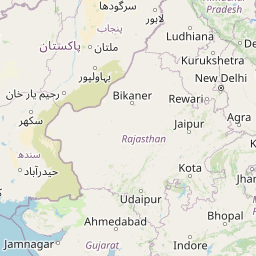
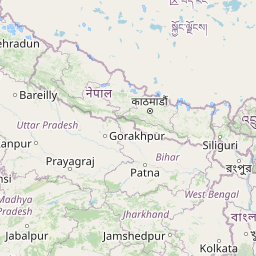
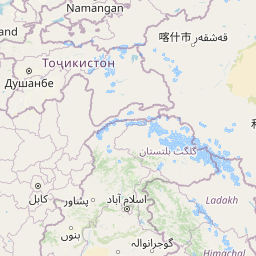


Costliest marginal unit → cheapest
Contracted capacity by variable-cost band (six reference states)
Maharashtra
FY25-26 reference stack · indicativeMarginal cost
₹5.5–9
Must-run block
16.3 GW
Marginal unit
Uran gas
Why MOD struggles here: Largest, most heterogeneous stack (MAHAGENCO, three big IPPs, central share, Mumbai licensees). Pilot showed MOD vs LP diverge most on day-changeover, ramp limits and intra-state congestion; old MAHAGENCO units kept on at tech-min; ~12 GW RE now inverts the daytime stack.
Vidura · today's read
Gujarat and Rajasthan carry the costliest marginal units today, with gas plants (GSECL/GSEG at Dhuvaran and Hazira, and Dholpur) setting reference variable costs of ₹6.5/unit and ₹6.0/unit respectively — these are indicative figures, not live SCED outputs, so treat as directional. MH's Uran gas sits mid-pack at ₹5.5.
Midday inversion risk is concentrated where cheap coal or old thermal is the marginal setter rather than gas — KA (Udupi imported coal, ₹4.5), WB (Bandel old units, ₹4.3) and UP (Harduaganj/Parichha, ₹4.5) suggest thermal is already near technical minimum, making solar-hour curtailment of must-run capacity more likely. Most other states (TN, TS, AP, MP, DL, PB, HR, OD, CG, BR, JH, KL, AS, UK, HP, GA) have no marginal-cost data available today.
Implied BESS spread: charging against ₹4.3–5.5/unit thermal floors (WB, UP, KA, MH) and discharging into ₹6.0–6.5/unit gas-set evening peaks (RJ, GJ) yields an indicative arbitrage band of roughly ₹1.5–2/unit — attractive but based on reference costs only.
Midday inversion + evening gas band = the BESS spread. Size it against your state's ToD windows.
Live figures are parsed from MERIT (meritindia.in) when the portal allows automated access; otherwise the last successful snapshot or the FY25-26 reference stack (published tariff-order ballparks) is shown and labelled as such.