
Pumped Hydro in India 2026: Sizing, Tariff Economics and Bankable Project Design
By Sudarshan Karweer · sudarshan@growthifye.com · +91 84510 99371 (Call / WhatsApp) · 2026-09-17
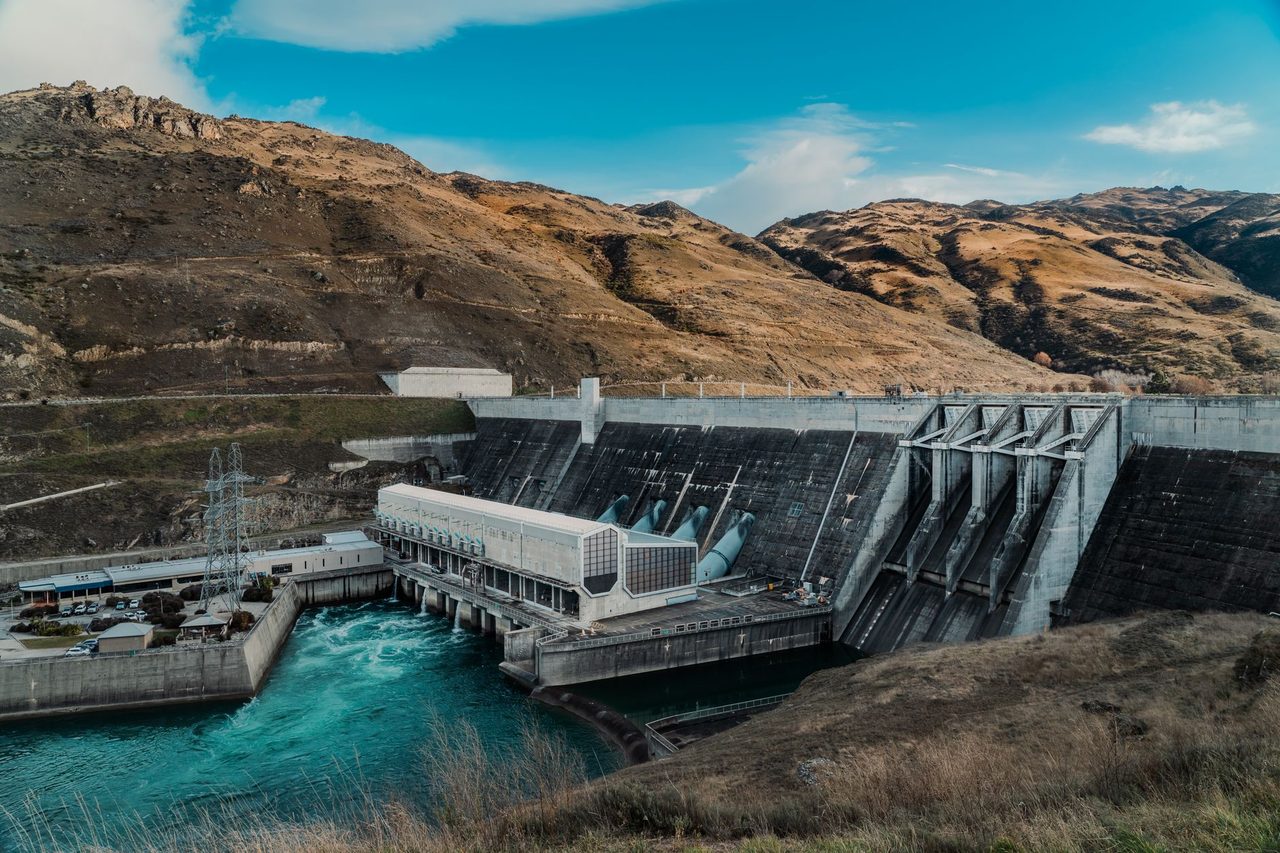
Photo: Donovan Kelly on Pexels
India’s energy-storage conversation in 2026 is heavily focused on batteries, but pumped hydro storage (PHS) is now back on every serious planner’s shortlist. The reason is simple: India needs multi-hour and multi-day flexibility at scale, and not all of that requirement can be met by lithium-ion systems alone. For state discoms, central agencies, RE developers, large C&I consumers and lenders, pumped hydro is increasingly being evaluated not as a legacy hydro concept, but as a firming asset for high-renewables grids.
In the Indian context, pumped hydro sits at the intersection of resource adequacy, evening peak management, renewable curtailment reduction, ancillary support and long-duration storage. Yet many projects that look attractive in early concept notes do not survive real-world scrutiny once head, hydrology, geology, transmission access, cycle profile and tariff expectations are tested properly.
This article takes a practitioner view of pumped hydro in India in 2026: where the economics work, how sizing should actually be approached, what approval and execution risks lenders care about, and how developers can avoid building a technically elegant but commercially weak project.
Why pumped hydro is back in India’s 2026 storage pipeline
The core driver is the shape of India’s net load curve. Solar additions continue at scale, wind remains seasonally valuable but variable, and evening ramps are becoming sharper in high-RE states. A 2-hour or 4-hour battery can solve some balancing needs, but utilities are also confronting longer residual peaks, overnight shifting requirements, monsoon variability and the need for assets with long operating life.
Pumped hydro has several structural advantages in that context:
- Storage duration can extend well beyond the typical 2-4 hour battery window
- Asset life can be 40-60 years with refurbishment cycles rather than full electrochemical replacement
- Domestic content exposure is different from battery supply chains
- Large single-site capacities can support system planning at utility scale
- Long-duration discharge can support peak shaving, renewable firming and reserve provision
However, the return of PHS does not mean every site is investable. The gap between theoretical storage capacity and commercially dispatchable value is large. Many projects are currently overestimating annual cycles, underestimating civil and hydrological risk, or using tariff assumptions copied from BESS or conventional hydro benchmarks without adjusting for actual utilisation.
What makes a pumped hydro project commercially viable
At a high level, a pumped hydro project earns value by buying or absorbing cheaper power during low-price periods and generating during high-value periods. But in India, that simplified arbitrage story is incomplete. Most projects will depend on a mix of use cases rather than one merchant spread alone.
The most viable use cases in 2026 are typically:
- Peak shifting for state utilities facing expensive evening procurement
- Firming of solar-heavy portfolios where midday surplus can be stored
- Support for FDRE and RTC structures where longer discharge windows are required
- Capacity-like planning value in systems with rising peak deficits
- Grid balancing and reserve support, subject to market and dispatch frameworks
- Curtailment reduction where transmission constraints force renewable spillage
Commercial viability depends on five linked variables:
- Usable energy capacity in MWh, not just installed MW
- Round-trip efficiency, often in the 70-80% range depending on design and hydraulic losses
- Number of economically useful cycles per year
- Input energy cost for pumping
- Delivered discharge tariff or avoided procurement cost during generation hours
For example, consider a 500 MW pumped hydro asset with 8 hours of discharge duration, implying roughly 4,000 MWh gross storage capacity. After accounting for operating reserves, hydraulic constraints and actual dispatch strategy, the commercially usable capacity may be lower. If round-trip efficiency is 78%, then to deliver 1 MWh at generation, roughly 1.28 MWh must be purchased or diverted for pumping. If pumping power is sourced at an effective cost of Rs 2.50-3.50/kWh from surplus solar or off-peak grid energy, the energy input cost alone lands around Rs 3.20-4.50/kWh of discharged output before fixed charges, O&M, transmission losses and financing are added.
That is why project viability cannot be judged only on storage duration. A long-duration asset with poor cycle economics can still be uncompetitive versus a well-optimised mixed portfolio of solar, wind and BESS.
Sizing pumped hydro: start with the use case, not the reservoir
One of the most common development mistakes is to begin with topography and then force-fit a business case around the resulting site. In practice, sizing should begin with the demand problem to be solved.
For Indian utilities and developers, three questions matter first:
- What net-load deficit window must the asset cover: 4 hours, 6 hours, 8 hours or longer?
- Is the project intended for daily cycling, seasonal support, or a mixed operating profile?
- What is the source of low-cost charging energy: co-located RE, contracted RE, or market/grid purchases?
Only then should core design parameters be fixed:
- Power rating in MW
- Storage duration in hours
- Reservoir live storage volume
- Hydraulic head
- Pump-turbine configuration
- Annual target cycles
In 2026, many Indian procurement structures still reward capacity optics, but lenders increasingly look at utilisable annual MWh. A 1,000 MW project with only limited economically useful cycling may be less financeable than a 400 MW project with a robust dispatch case and lower civil uncertainty.
As a broad market observation:
- 4-6 hour PHS may align better where evening peaks dominate and transmission access is strong
- 6-10 hour PHS can work for deeper peak coverage, renewable firming and overnight shifting
- Very long-duration concepts need especially careful revenue modelling because annual utilisation can drop if price spreads are insufficient
Seasonality also matters. In states with strong monsoon wind generation, pumped hydro may capture different value in different quarters. A project that appears attractive on annual averages may face weak spreads in some months and congestion in others. Hourly modelling, not annual simplification, is essential.
Tariff economics in 2026: where pumped hydro can and cannot compete
The market often compares pumped hydro and BESS as direct substitutes. That is only partly correct. Their cost structures, degradation profiles, duration economics and operating roles differ materially.
For pumped hydro, the fixed-cost burden is dominated by civil works, electro-mechanical equipment, land, tunnels, water systems, evacuation and financing during long construction periods. The variable cost is heavily driven by pumping energy cost and cycle efficiency. By contrast, BESS has faster construction and modularity advantages but shorter asset life and different augmentation economics.
In India in 2026, pumped hydro competitiveness is strongest when four conditions hold:
- The project can access low-cost charging energy, often sub-Rs 3/kWh on an effective basis
- The offtaker values longer discharge beyond the 2-4 hour battery sweet spot
- Transmission and grid access allow consistent charging and discharging
- Capex and schedule risk are controlled tightly enough to preserve financing assumptions
Developers frequently test levelised storage tariffs, but for pumped hydro this should be supplemented by delivered-value analysis. A utility does not buy storage in abstraction; it buys avoided cost, peak assurance, renewable integration and reliability.
In practical procurement terms, if a discom’s evening marginal procurement cost is regularly in the Rs 6-9/kWh range during stress periods, and a pumped hydro project can deliver dependable peak energy at an effective all-in cost below that level, the case strengthens. But if the project relies on high annual cycling and optimistic off-peak energy availability that may not materialise, tariff competitiveness can evaporate.
A common mistake is to ignore auxiliary consumption, evaporation impacts where relevant, pumping losses, start-stop cycling limits, and transmission charges on both charging and generation pathways. These are not rounding errors. They can materially alter delivered economics.
Approvals, land, water and transmission: the real project filters
The biggest difference between a paper PHS pipeline and a bankable one lies in development risk. In India, pumped hydro projects face a more complex pre-construction risk stack than most battery projects.
Key filters include:
- Site identification and confirmation of sufficient topographic head
- Geological and geotechnical investigations for tunnels, caverns, slopes and foundations
- Water availability and rights, including seasonal variation and competing local uses
- Land acquisition and rehabilitation exposure
- Environmental and forest clearances where applicable
- Connectivity and evacuation readiness
- Construction access for heavy civil equipment and materials
Many announced projects underestimate the time required for survey, investigation and clearance sequencing. From a lender perspective, unresolved geology is one of the fastest ways to weaken bankability. Civil surprises create capex escalation, delay interest during construction, and raise uncertainty on commercial operation dates.
Transmission is another frequent blind spot. A pumped hydro project is only as useful as its ability to charge when low-cost power is available and discharge when system value is highest. If the interconnection is constrained, the storage asset can become stranded in practice even if mechanically complete.
That makes early grid studies critical. Developers should test:
- Import capability during pumping windows
- Export capability during peak discharge windows
- Congestion patterns by season and hour
- Interaction with nearby renewable evacuation
- Reactive power and voltage support requirements
For state utilities and policymakers, this also has planning implications. Pumped hydro should not be approved solely as a generation asset. It must be evaluated as a grid-flexibility asset whose locational value depends on transmission topology and system stress periods.
Bankability: what lenders and investors will scrutinise
Pumped hydro’s long asset life is attractive, but financing is not straightforward. The risks are front-loaded into development and construction, while revenues can be back-ended and policy-sensitive.
In 2026, lenders typically focus on six bankability questions:
- Is the site genuinely de-risked on geology, water and land?
- Is there a credible offtake structure or visible contracted revenue floor?
- Are capex estimates benchmarked against comparable Indian civil works and inflation realities?
- Is the construction schedule realistic, with contingency on tunnelling and monsoon disruption?
- Are dispatch assumptions backed by hourly market or portfolio modelling?
- Does the counterparty framework support payment certainty?
Contract design matters greatly. Pure merchant exposure for pumped hydro is difficult to finance unless the sponsor balance sheet is unusually strong. More financeable structures may include:
- Long-term tolling-style arrangements
- Utility contracts with fixed and variable payment components
- Hybrid structures with availability-linked revenue and energy-linked settlement
- Portfolio-backed dispatch where the storage asset supports contracted RTC or firm power delivery
Availability definitions need careful drafting. Unlike simple generation plants, storage assets are valuable only if they can charge and discharge under contracted conditions. Performance guarantees therefore need to address:
- Round-trip efficiency bands
- Capacity retention and usable storage
- Start-up and ramp capability
- Pumping and generation availability
- Planned outage windows aligned to seasonal system needs
Insurance, force majeure allocation, hydrology definitions and O&M interface risk also deserve more attention than they often receive in early term sheets.
Where pumped hydro fits in India’s storage mix over the next few years
Pumped hydro is not a universal answer, but it is likely to be an important part of India’s medium- and long-duration storage buildout. The strongest opportunities are likely to emerge where planners match technology to need rather than forcing all flexibility needs into one asset class.
A practical framing for 2026 is:
- BESS remains highly competitive for fast response, 1-4 hour shifting, modular deployment and faster execution
- Pumped hydro becomes more compelling for larger energy volumes, longer duration and long-life system flexibility
- Hybrid portfolios combining solar, wind, BESS and pumped hydro may offer the lowest delivered cost for some FDRE and utility balancing use cases
For developers, the winning strategy is not to announce the largest site. It is to build a project with disciplined civil risk control, realistic cycle assumptions, robust charging-energy access and contract structures lenders can underwrite. For utilities and policymakers, procurement design should recognise that long-duration storage cannot be evaluated with the same lens as short-duration batteries.
The projects that will succeed are those where storage duration, tariff design, transmission access and construction risk are solved together. In other words, pumped hydro economics in India are not determined by capex alone. They are determined by whether the asset can repeatedly deliver valuable MWh into the right hours, under a contract the market considers credible.
If you are assessing a pumped hydro opportunity, planning a storage-linked procurement, or testing whether long-duration storage can outperform alternative portfolio structures, contact Growthifye’s advisory desk.
About the author

Chief Executive Officer, Growthifye — With over 23 years in management consulting, Sudarshan has taken businesses from concept to scale — building and scaling new-age digital and energy businesses.
- 23+ years in management consulting
- EY alumnus
- Led large-scale BESS programmes, capital raises and advisory mandates
Want this analysis applied to your project?
Talk to our team

