
India Solar SCB Design 2026: Fuse, SPD, Combiner Ratings and EPC Risk Guide
By Sudarshan Karweer · sudarshan@growthifye.com · +91 84510 99371 (Call / WhatsApp) · 2026-09-09
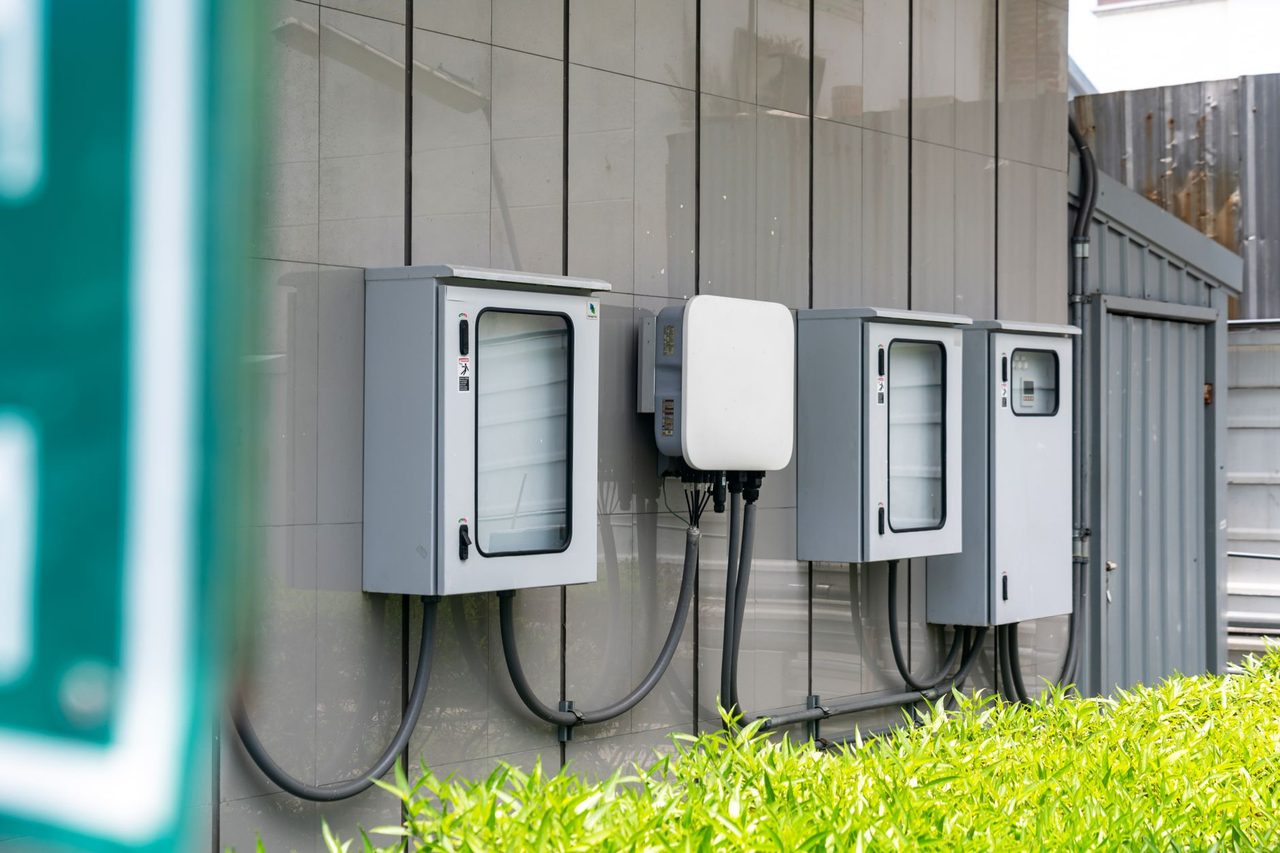
Photo: panumas nikhomkhai on Pexels
India’s utility-scale and C&I solar market in 2026 is focused on a narrower set of priorities than the headline capacity numbers suggest: lower EPC rework, cleaner commissioning, tighter availability guarantees, and fewer latent defects that show up after the first monsoon or summer peak. In that context, string combiner box design deserves far more attention than it usually gets.
The string combiner box, or SCB, sits in an awkward zone of responsibility. Designers treat it as a standard catalogue item, procurement teams often buy on lowest compliant cost, and O&M teams inherit the consequences when nuisance fuse operations, SPD failures, overheated glands, water ingress or poor current balancing begin to surface. For lenders and asset owners, these “small” failures can become a measurable generation and reliability problem, especially across multi-MW portfolios.
This article looks at SCB design for Indian solar projects in 2026: how to size and specify boxes, how to coordinate fuses and surge protection, what derating realities matter in Rajasthan, गुजरात, Tamil Nadu or Maharashtra, and what EPC teams should lock down at design, FAT, site installation and commissioning stages.
Why SCB design still matters in 2026 Indian solar plants
A common misconception is that modern high-current modules and advanced string inverters have reduced SCB importance. In practice, the opposite is often true in large block designs, repowering situations and cost-optimised EPC layouts.
Three market shifts have made SCB design more sensitive:
- Module current has increased materially. Mainstream 2026 utility modules can have Imp values around 17 A to 19 A, with Isc commonly above 18 A and bifacial gain potentially pushing effective operating current further under high albedo conditions.
- Ambient temperatures in project states routinely force enclosure and component derating. Inside-box temperatures can exceed 65°C to 75°C in summer afternoons if layout and ventilation are poor.
- Lightning and surge exposure remain underestimated, especially in open-field sites with long homerun lengths and imperfect bonding practices.
For a 50 MWac to 100 MWac plant, even a 0.15% to 0.30% annual energy loss from SCB-related downtime, mismatch, poor terminations or repeated field intervention is financially material. At an effective realised tariff or savings value of Rs 2.8/kWh to Rs 4.5/kWh depending on project type, the lifetime value at risk is not trivial.
SCB architecture choices: when to use what
In India, SCBs are most common where multiple strings are paralleled before feeding central inverters, inverter duty transformers, or longer DC homeruns. In pure string-inverter topologies, SCBs may be reduced or eliminated depending on inverter MPPT architecture and field block design. But many EPC teams still use external combiners to improve cable economics, simplify trenching or suit land geometry.
The right architecture depends on four variables:
- Number of strings per MPPT or DC input block
- Maximum string current under module technology selected
- Distance from table to inverter or pooling point
- Site maintainability philosophy
Typical SCB configurations in Indian projects include:
- 8-in-1 and 12-in-1 for smaller blocks and C&I ground-mount systems
- 16-in-1, 20-in-1 and 24-in-1 for central inverter utility projects
- Smart SCBs with string current monitoring, fuse blown indication, SPD status and internal temperature alarms
For utility assets above 25 MW, smart SCBs are increasingly justified. The capex premium is modest compared with the cost of manual fault localisation across hundreds of MWp. For C&I consumers, especially open-access or captive plants where every outage hour affects bill savings and banking economics, visibility into string-level underperformance is also worth paying for.
A good design principle is simple: do not over-combine to save enclosure count if it raises fault current, heat density, maintenance complexity and cable congestion. Over-combination often looks efficient on BOQ spreadsheets and underperforms in the field.
Fuse sizing, reverse current protection and current derating
Fuse selection is the most commonly mishandled SCB design decision. Many teams still apply generic rules without checking module-series data, expected reverse current withstand and realistic operating conditions.
The basic design logic is:
- Check the module manufacturer’s maximum series fuse rating.
- Determine how many strings are paralleled.
- Calculate the possible reverse current into a faulted string.
- Verify whether string fuse protection is required under the number of parallel strings used.
- Size fuse links and holders for DC duty, ambient temperature and enclosure thermal rise.
In many modern plants, once three or more strings are paralleled, string fusing becomes necessary unless the module datasheet and fault study clearly justify otherwise. Designers should not treat legacy 15 A assumptions as safe defaults. With today’s higher-current modules, 20 A, 25 A or application-specific gPV fuse ratings may be more appropriate, but only if they remain within the module’s maximum allowable series fuse value.
Key 2026 field realities:
- High enclosure temperatures materially reduce fuse carrying capability.
- Poorly crimped terminations create local heating that operators often mistake for “bad fuse quality”.
- Mixed-string populations due to replacement modules can distort current sharing.
- Bifacial gain in high-reflectance terrain may increase current stress beyond conservative desktop assumptions.
A practical EPC rule is to test SCB thermal behaviour under representative worst-case current, not just nameplate aggregation. That means checking busbar temperature rise, fuse-holder hot spots, terminal derating and gland area heat build-up.
For lenders and independent engineers, it is reasonable in 2026 to ask for:
- Fuse coordination calculations
- Module max-series-fuse compliance evidence
- Current derating basis at 50°C ambient or site-specific maximum
- FAT temperature-rise records for representative SCB assemblies
Surge protection, earthing and insulation coordination
India’s lightning exposure and switching surge environment continue to drive avoidable SCB failures. SPD specification is too often reduced to a line item: “Type II DC SPD provided.” That is not enough.
The SPD design should consider:
- Plant earthing philosophy and measured earth grid performance
- Array field exposure and structure bonding continuity
- Whether LPS exists and how separation distances are managed
- Maximum open-circuit voltage of the string at minimum site temperature
- Inverter DC input protection and coordination with SCB-level devices
For 1500 Vdc plants, the selected DC SPD must be matched carefully to the system maximum voltage and protection concept. An underrated SPD may fail prematurely; an oversized one may not provide effective protection at the required level. Remote signalling contacts are valuable where SCBs are dispersed and routine physical inspection is infrequent.
Common Indian site problems include:
- SPD installed but earth bond path is long, loose or corroded
- Mixed earthing hardware leading to galvanic deterioration
- Improper cable routing increasing loop area and surge exposure
- Water ingress after first monsoon causing insulation tracking around SPD bases or terminals
Insulation coordination is especially important in dusty, humid and saline environments. IP rating on paper is not enough. Enclosure gasket quality, UV stability, breathing arrangement, drain strategy and condensation management determine whether the SCB survives three summers and monsoons without recurring maintenance.
Enclosure, busbar and thermal design: where cheap boxes fail
The fastest way to create future O&M pain is to under-specify enclosure and internal thermal design. In many Indian projects, SCBs are mounted in direct solar exposure with inadequate stand-off, poor shading logic and no attention to internal heat evacuation.
Important design checks include:
- Enclosure material suitability for UV, temperature and corrosion conditions
- Minimum practical ingress protection, typically IP65 or better depending on application
- Adequate spacing between fuse holders, busbars, SPD modules and terminals
- Gland plate layout that avoids cable bending stress and crowding
- Short, low-resistance current path design
- Internal segregation to reduce accidental contact and ease maintenance
Busbar design is frequently treated as a commodity decision. It should not be. Cross-section, plating, creepage and clearance distances, fastening torque and temperature-rise performance all matter. If a box is combining 16 to 24 strings, busbar heating under realistic current and ambient conditions must be demonstrated, not assumed.
Thermal design should also account for soiling. Fine dust deposition can impair venting or create tracking paths over time. In desert-edge or cement-belt sites, this effect is not theoretical.
From an EPC execution perspective, this is where Procurement & vendor management and QA/QC & HSE enforcement add real value. A competent EPC partner should not only source compliant SCBs but also qualify suppliers on thermal test evidence, production consistency, traceability and field failure response.
QA/QC checkpoints from design freeze to commissioning
A surprising number of SCB defects are injected after design approval, not before it. Substituted glands, alternate fuse makes, thinner busbars, changed enclosure vendors and poor site terminations can all defeat a good single-line concept.
A robust QA/QC plan should cover four stages.
Design stage:
- Approved GA, SLD and wiring schematic
- Current and voltage design basis
- Fuse, holder and SPD datasheet approval
- Enclosure IP, UV and flammability requirements
- Terminal block and busbar short-time withstand verification
Factory acceptance stage:
- Visual and dimensional inspection
- Material traceability for enclosure, busbar, fuse holders, SPDs and terminals
- Torque verification records
- Routine insulation resistance and polarity checks
- Functional test of monitoring, alarms and indication
- Temperature-rise or type-test evidence review
Site installation stage:
- Correct mounting height and accessibility
- Gland orientation and sealing quality
- Minimum bend radius and cable dressing
- Lug crimp quality and ferrule selection
- Earth continuity and bonding
- Label durability and as-built string numbering accuracy
Commissioning stage:
- String polarity confirmation
- Open-circuit voltage and current sanity checks
- Insulation resistance trend by feeder block
- SCB monitoring point validation in SCADA
- Thermography under load to identify hot spots
- Verification of fuse ratings against approved BOM
Thermography is particularly valuable during early operation. A box that is electrically “healthy” on continuity and insulation checks may still show poor contact resistance at one fuse holder or termination under actual current.
This is exactly why experienced contractors treat SCBs as part of Testing, commissioning & handover, not just supply-and-install hardware.
Commercial and bankability implications for developers, C&I buyers and lenders
SCB design choices affect more than reliability. They influence project economics, insurer comfort and dispute risk.
For developers:
- Lower field failure rates reduce defect-liability cost and O&M mobilisation
- Better string monitoring shortens fault resolution time
- High-quality SCBs improve confidence in performance guarantee discussions
For C&I buyers:
- Fewer daytime faults mean better energy offset and lower diesel or grid dependence
- Better visibility helps reconcile monthly savings and SLA enforcement
- Reduced DC-side incidents improve plant safety in occupied industrial campuses
For lenders and investors:
- SCB quality is a useful proxy for overall BOS discipline
- Repeat SCB failures often correlate with broader EPC quality weaknesses
- Better component traceability helps root-cause analysis and warranty recovery
In 2026, insurer scrutiny on electrical fire initiation points has also increased. While inverters and AC panels draw more attention, DC combiner failures remain a credible ignition source where hot joints, degraded insulation or poor surge management exist.
Cost-wise, trying to save a few paise/Wp through aggressive SCB down-specification rarely survives lifecycle analysis. Even if the initial capex delta appears meaningful on a 100 MWp purchase order, one season of repeated maintenance, string outages or replacement campaigns can wipe out the saving.
What a practical 2026 SCB specification should include
If you are issuing a tender or reviewing an EPC package in India this year, a practical SCB specification should clearly state:
- System voltage and string electrical parameters at site-specific temperature limits
- Number of inputs per SCB and spare philosophy
- String fuse requirement and approved rating logic
- DC SPD class, voltage rating and signalling requirement
- Enclosure material, IP rating, UV resistance and corrosion suitability
- Busbar material, plating and temperature-rise limits
- String monitoring accuracy and communications protocol, if applicable
- Terminal, gland and lug make-approval process
- FAT, routine testing and field thermography requirements
- Warranty terms and replacement response timelines
Where module technology, inverter topology and field layout are evolving quickly, SCB design should be reviewed as a system decision, not a purchase item. That is particularly true for large utility and open-access projects where module current, cable economics and inverter architecture interact in non-obvious ways.
A disciplined SCB package sits comfortably within broader Solar & hybrid plant EPC execution, because it links design assumptions directly to procurement quality, safe installation and long-term yield retention.
The Indian solar market does not have a shortage of sophisticated generation models or financing structures. What it still needs, plant by plant, is better execution discipline on small but consequential electrical packages like SCBs. In 2026, that is where avoidable risk still hides.
If you are reviewing a new solar EPC package, repowering an existing asset, or trying to reduce DC-side failures in operation, contact Growthifye’s advisory desk for a practical review of design, procurement, QA/QC and commissioning risks.
Explore Growthifye's related capabilities
This analysis connects directly to our advisory practice: Solar & hybrid plant EPC · BESS system integration · Balance of system & civil works · Procurement & vendor management.
About the author

Chief Executive Officer, Growthifye — With over 23 years in management consulting, Sudarshan has taken businesses from concept to scale — building and scaling new-age digital and energy businesses.
- 23+ years in management consulting
- EY alumnus
- Led large-scale BESS programmes, capital raises and advisory mandates
Want this analysis applied to your project?
Talk to our team