India Solar Evacuation HT Yard & Substation EPC 2026: Design, ALMM, Cost and Risk
By Sudarshan Karweer · sudarshan@growthifye.com · +91 84510 99371 (Call / WhatsApp) · 2026-08-28
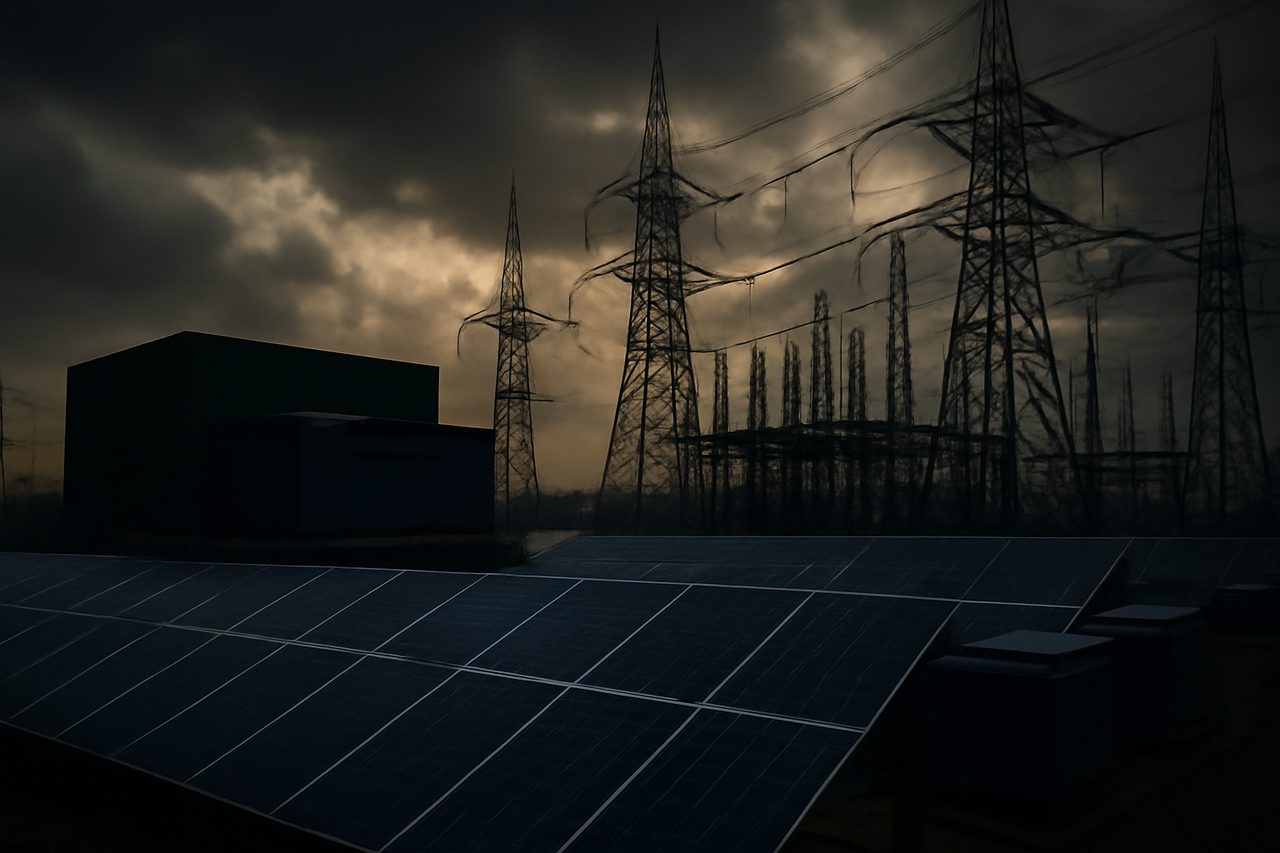
India’s solar market in 2026 is far more mature on modules, inverters and DC design than it is on evacuation execution. Many projects that look healthy on tariff, CUF and equipment pricing still lose months at the HT yard, pooling substation or utility interconnection stage. For C&I open-access plants, group captive portfolios, utility-scale parks and solar-wind-hybrid assets, the evacuation package now deserves board-level attention because it can shift COD, liquidated damages, IDC, deemed-generation claims and first-year revenue.
This article focuses on a topic distinct from mainstream module, inverter and plant-quality discussions: solar evacuation infrastructure EPC in India, especially the 11 kV, 22 kV, 33 kV and 66 kV interface, plant switchyard design, pooling substation scope, metering architecture, utility approvals, protection philosophy and construction-quality controls. In 2026, developers who treat evacuation as a late-stage balance-of-plant item are still paying for avoidable redesign, transformer bottlenecks, utility rejection notes and expensive change orders.
For Growthifye’s clients across C&I, utility and hybrid portfolios, the key lesson is simple: evacuation is no longer a downstream package. It is a bankability package.
Why evacuation EPC has become a first-order project risk in 2026
Three things have changed in India over the last 24 months.
First, project sites are moving farther from easy interconnection points. Good irradiation and lower land rates are often found where 33 kV and 66 kV networks are already stressed, or where bay availability at the nearest substation is uncertain. This is particularly visible in Rajasthan, गुजरात, Maharashtra, Karnataka, Andhra Pradesh and Madhya Pradesh for open-access and hybrid projects.
Second, utility scrutiny of interconnection studies, relay settings, ABT-compliant metering, SCADA integration and fault-level impact has become tighter. DISCOMs and STUs are less willing to accept incomplete drawings or generic protection logic. They increasingly expect OEM-backed calculations, short-circuit studies, earthing studies, cable sizing notes and manufacturer test certificates before granting final energisation approval.
Third, the cost of delay is higher. Even with module prices stabilising versus the peak volatility of earlier years, interest during construction, transmission application fees, land lease costs and contracted-power penalties make each month of slippage expensive. For many open-access plants selling effective landed power at roughly Rs 3.2-4.6/kWh equivalent versus industrial grid tariffs in the Rs 6.5-9.5/kWh band, a 60-90 day delay can materially erode equity IRR.
That is why evacuation EPC now needs the same attention usually given to modules and inverters.
Choosing the right evacuation architecture: 11 kV to 66 kV and beyond
The right architecture depends on project size, buyer type, utility requirements and distance to the interconnection point.
For small behind-the-meter and captive plants, 11 kV evacuation may still work where the contracted load and internal distribution system support it. But once projects scale meaningfully, 33 kV is often the practical baseline in India for open-access and ground-mounted C&I assets. Large plants and pooled portfolios may move to 66 kV or 132 kV depending on state norms, evacuation distance and bay availability.
Typical broad ranges seen in 2026 are:
- 1-5 MWac: often 11 kV or 33 kV depending on site and utility acceptance
- 5-25 MWac: commonly 33 kV evacuation with plant-level pooling
- 25-75 MWac: 33 kV to 66 kV, often with dedicated pooling substation and utility bay coordination
- 75 MWac and above: 66 kV or 132 kV becomes common, especially where line length is material or hybrid augmentation is planned
The decision is not only technical. It changes:
- Transformer sizing and redundancy philosophy
- Protection scheme complexity
- Metering and communication requirements
- Land take for switchyard and control room
- Statutory approvals
- Construction schedule and outage coordination
- Capex per MW and future expandability
A common mistake in 2026 is under-planning for future augmentation. Developers build a solar-only 33 kV yard and later try to add BESS or wind pooling, forcing relay revisions, new panels, breaker replacements and civil rework. If augmentation is likely, the initial yard philosophy should preserve spare feeder bays, panel space, SCADA IO margin and battery-ready auxiliary supply architecture. This is particularly relevant for projects where Growthifye may later deliver BESS system integration alongside solar expansion.
Core EPC scope in a solar HT yard or pooling substation
Evacuation scope is often underestimated because budgets focus on the transmission line headline cost. In practice, the plant-side HT package is a full engineering workstream.
A standard 33 kV or 66 kV evacuation package may include:
- Power transformer or inverter-duty transformer selection
- HT switchgear or outdoor switchyard equipment
- Circuit breakers, isolators, CTs, PTs/CVTs, lightning arresters and insulators
- Relay and protection panels
- Metering panels with main and check meters as per utility specification
- Control and relay room, AC/DC distribution boards, battery bank and charger
- Earthing grid, risers and equipment bonding
- Lightning protection system
- HT cable network, cable trenches and terminations
- Gantries, structures and bus arrangement
- Bay extension works at utility substation, where applicable
- Transmission line from plant to interconnection point
- SCADA/RTU integration and communication links
- Testing, statutory inspection and energisation support
Depending on soil, flood level and utility standards, civil scope can become 10-20% of the evacuation package cost. Black cotton soil, rocky strata, high water table and monsoon-prone sites can materially increase foundation, trench and earthing costs. This is why early geotechnical work matters even for what some teams still call “electrical BoP.”
A capable EPC team should integrate evacuation engineering with Balance of system & civil works rather than treat substation work as a disconnected vendor package. That interface discipline often decides whether the actual site execution remains on the critical path.
2026 cost benchmarks: what developers should budget
Exact costs vary sharply by state, utility specification, line length, transformer size and whether bay extension at an existing substation is available. Still, some practical 2026 budgeting ranges are useful.
For a ground-mounted solar project in India, indicative plant-side HT yard and evacuation costs may look like this:
- 11 kV internal evacuation for smaller projects: roughly Rs 0.12-0.22 crore/MW depending on switchgear philosophy and cable lengths
- 33 kV plant pooling and evacuation excluding long transmission line: roughly Rs 0.22-0.45 crore/MW
- 33 kV evacuation including moderate line length and utility interface works: often Rs 0.35-0.75 crore/MW
- 66 kV pooling substation and evacuation for larger projects: often Rs 0.45-0.95 crore/MW, sometimes higher for difficult bays, complex protection or long lines
- Dedicated bay extension or terminal bay works at STU/DISCOM substation: can range from tens of lakhs to several crores depending on configuration and utility scope split
Transmission line cost can dominate where the interconnection point is far away. As a rule of thumb, each additional kilometre of overhead line, route complexity, forest crossing, railway crossing, highway crossing or river crossing can significantly alter economics and schedule.
Developers should also budget for non-equipment items often missed at bid stage:
- Utility application and supervision charges
- Statutory inspection fees
- Protection study and third-party approvals
- Communication system and leased line cost
- Energy meter procurement from approved makes
- Spare relay and panel modifications after utility comments
- Shutdown coordination and contingency works
Lenders in 2026 are increasingly asking whether evacuation capex includes all utility-mandated scope, not just EPC contractor assumptions. If not, the result is a late equity top-up or strained contingency.
Utility approvals, metering and protection: where schedules slip
Most serious schedule overruns in evacuation EPC come from documents and approvals, not from steel erection.
The common failure points are:
- Applying for interconnection before the single-line diagram is truly frozen
- Incomplete load flow, fault level or protection coordination studies
- Mismatch between inverter reactive power capability and utility grid-code expectations
- Utility comments requiring revised CT/PT ratios, relay logic or meter placement
- Delays in approved-make compliance for switchgear, meters and relays
- Bay extension scope ambiguity between plant owner and utility
- Communication protocol mismatch for SCADA/SLDC integration
For open-access plants, ABT-compliant main and check metering, meter testing, sealing protocol and telemetry requirements must be frozen early. In some states, developers still underestimate the lead time for meter approval, remote communication validation and data visibility tests. It is not enough to install a meter; the meter has to be accepted.
Protection philosophy also needs more rigor in 2026 because inverter-based generation changes fault behaviour versus conventional sources. Utilities now routinely ask for:
- Overcurrent and earth-fault protection coordination
- Directional elements where network conditions require them
- Transformer differential and REF protection
- Busbar protection for larger substations
- Breaker failure logic at higher voltages
- Disturbance recorder and event logger functionality
- Anti-islanding coordination aligned with inverter control settings
Developers should insist on vendor-backed relay setting calculations and cross-check them during design review. Generic cut-copy-paste settings from old jobs remain a real field problem.
This is where disciplined Procurement & vendor management creates tangible value. The best commercial quote is not the best project outcome if the vendor lacks utility approval experience in that state.
Quality and construction priorities that protect COD and long-term reliability
Evacuation assets are unforgiving. A module defect may degrade output gradually; a poorly executed termination, panel wiring error or earthing defect can stop export entirely.
In 2026, the best-performing EPC programs are focusing on a few specific quality gates:
- Factory acceptance tests for protection panels, meters and control logic before dispatch
- Verification of make/model approvals against utility list and contract BoQ
- Transformer routine and special test witness points where feasible
- Earthing-grid continuity and earth resistance testing by location, not only site average
- Correct gland, lug and crimping practices for HT/LT control cables
- Moisture control and sealing in marshalling kiosks and panels
- Numerical relay firmware/version control
- Cable identification, ferruling and as-built documentation discipline
- Primary and secondary injection tests before energisation
- Interlock verification and trip-circuit supervision tests
In high-temperature Indian sites, panel ventilation, dust ingress protection and battery room thermal management deserve more attention than they often get. Many nuisance trips and communication failures trace back to these basics.
The evacuation package should be integrated with QA/QC & HSE enforcement from day one. Outdoor switchyard work, stringing, erection near live corridors, battery-bank installation and testing activities present risks that cannot be managed by generic site safety paperwork alone.
Commissioning readiness should also be measured through a punch-point lens. Practical questions include:
- Are all relay setting files approved and backed up?
- Are CT polarity and metering circuits verified end-to-end?
- Has telecom redundancy been validated?
- Are spare breakers, relays or critical cards available?
- Are utility witness tests pre-booked?
- Is the as-built SLD identical to the energisation dossier?
Projects that answer these questions early reach Testing, commissioning & handover with far fewer surprises.
Special considerations for CFA-linked and hybrid projects
While central financial assistance is more commonly discussed around rooftop, PM Surya Ghar and selected DCR-linked segments, developers should remember that subsidy-linked or scheme-linked projects often carry tighter documentation expectations. If the evacuation package changes installed capacity, export configuration or metering logic versus sanctioned plans, downstream compliance complications can arise.
For hybrid projects, the evacuation philosophy must consider simultaneous and non-simultaneous export, controller logic, ramp-rate obligations and BESS operating modes. A solar plant that is initially designed as pure PV may need different relay logic and metering segregation once storage is added. Owners planning future augmentation should therefore avoid a narrow least-cost design that cannot scale.
This is particularly important where a project may evolve into a dispatchable C&I solution with evening support. The HT yard and control architecture should not become the bottleneck to that strategy.
A practical 2026 checklist before financial close or EPC award
Before FC or final EPC award, project sponsors should have clear answers to the following:
- What voltage level has been confirmed, and by whom?
- Is bay availability formally established at the interconnection substation?
- What utility-approved equipment makes apply in this state?
- Are interconnection line route constraints mapped on ground, not just on GIS?
- Has the capex budget included utility charges and bay-extension contingencies?
- Is the transformer and relay philosophy future-ready for hybridisation?
- Are metering, communication and telemetry requirements documented in writing?
- Are long-lead items aligned with realistic approval timelines?
- Has the EPC scope split between plant, line contractor and utility been closed without gaps?
- Do the schedule and LD assumptions reflect real approval dependencies?
If even three or four of these points are unresolved, the project likely carries hidden schedule and cost risk.
India’s 2026 solar market rewards precision. The industry has become sophisticated in DC design, module selection and performance analytics, but evacuation remains the place where too many otherwise strong projects still lose certainty. The owners and lenders who win are the ones who price the interconnection package correctly, lock the approval path early and execute substation works with the same rigor they apply to generation equipment.
For developers, C&I buyers and investors looking to reduce COD risk, evacuation EPC should be treated as a strategic work package, not a postscript. Growthifye supports clients across Solar & hybrid plant EPC with integrated engineering, commercial diligence and execution planning so that the path from inverter output to billable export is bankable from day one.
If you are evaluating a new solar or solar-plus-storage project in India, contact Growthifye’s advisory desk for a practical review of your evacuation design, utility interface, EPC scope and schedule risk before award.
Explore Growthifye's related capabilities
This analysis connects directly to our advisory practice: Solar & hybrid plant EPC · BESS system integration · Balance of system & civil works · Procurement & vendor management.
About the author

Chief Executive Officer, Growthifye — With over 23 years in management consulting, Sudarshan has taken businesses from concept to scale — building and scaling new-age digital and energy businesses.
- 23+ years in management consulting
- EY alumnus
- Led large-scale BESS programmes, capital raises and advisory mandates
Want this analysis applied to your project?
Talk to our team