India Solar BOS Engineering 2026: Structures, Cabling, SCB Design and EPC Risk
By Sudarshan Karweer · sudarshan@growthifye.com · +91 84510 99371 (Call / WhatsApp) · 2026-08-28
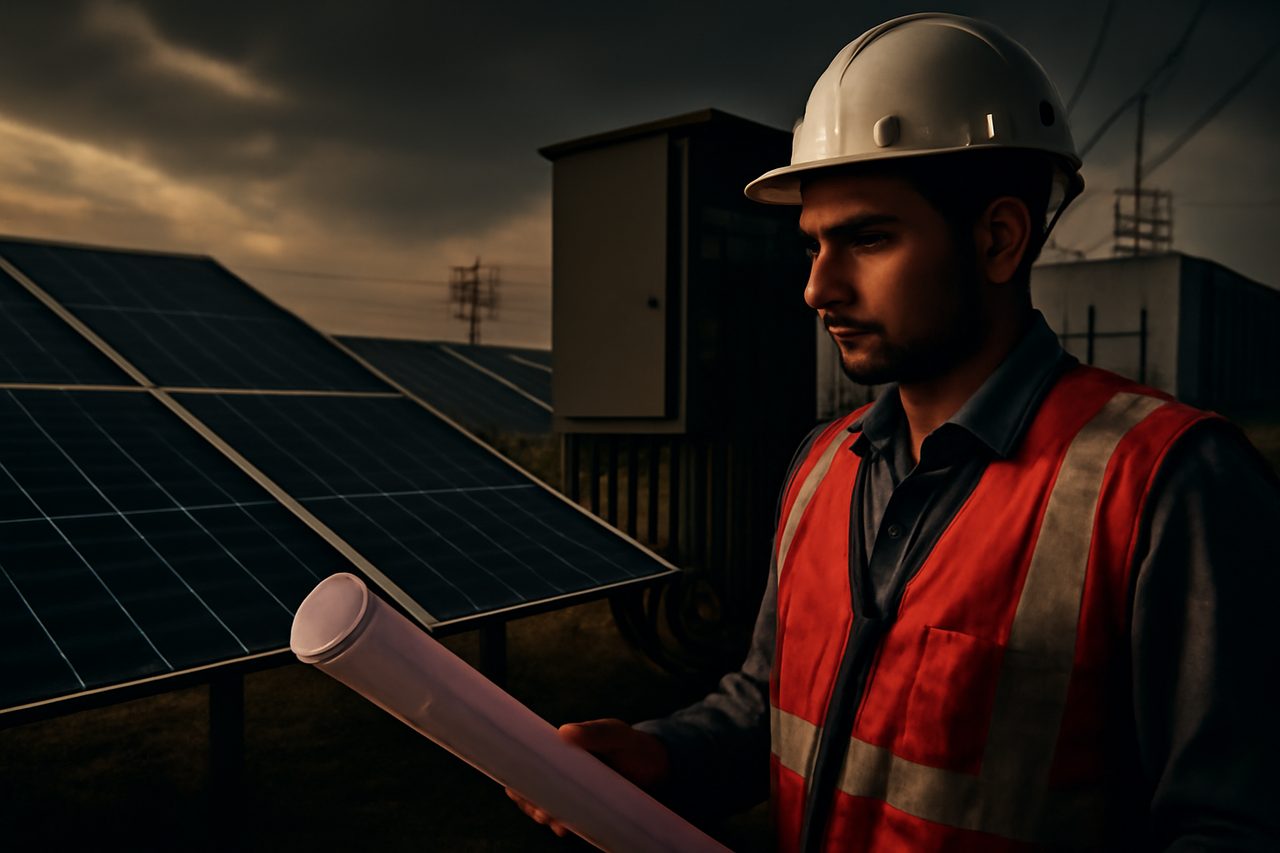
India’s utility-scale and C&I solar market in 2026 is no longer only about module selection, inverter topology or headline EPC price. A growing share of project underperformance is now traced to balance-of-system decisions: pile depth, tracker/fixed structure detailing, DC combiner strategy, cable sizing, earthing layout, corrosion protection, trenching quality, drainage and terminations. These are not glamorous topics, but they decide whether a plant delivers 99%+ availability with manageable O&M or slips into recurring faults, hot joints, cable damage and insurance disputes.
For developers, lenders, C&I consumers and utilities, BOS engineering has become a bankability issue. On many Indian sites, module and inverter pricing is increasingly standardised by ALMM, domestic sourcing requirements in some schemes, and maturing vendor lists. That means execution quality in civil and electrical BOS is often where projects are won or lost.
This article looks at the 2026 Indian context for solar BOS engineering, with a practitioner focus on structure design, SCBs, DC and AC cable architecture, earthing, corrosion, drainage, QA/QC and how these choices affect yield, schedule and finance outcomes.
Why BOS now matters more in Indian solar EPC
In 2026, large-format modules above 600 W, higher DC currents, longer table lengths and tighter EPC timelines are putting new stress on conventional BOS design habits. A project can procure compliant modules and ALMM-listed inverters, yet still suffer avoidable losses because the rest of the system was value-engineered too aggressively.
Typical BOS-related underperformance in Indian solar plants now shows up in five ways:
- energy loss due to cable voltage drop, mismatch and avoidable clipping at combiner or inverter input level
- repeated forced outages from DC connector heating, SCB fuse failures, SPD failures or AC cable joint issues
- mechanical damage from inadequate wind design, poor torque control, bolt loosening or seasonal flooding
- accelerated corrosion in coastal, high-humidity, industrial or saline environments
- delayed commissioning because of incomplete as-built documentation, earthing non-conformities or protection coordination issues
For lenders, these are not minor punch-list items. A 0.8% to 1.5% annual energy gap versus base case can compress DSCR on tightly priced projects. On open-access C&I projects with tariffs in the roughly Rs 3.10-4.40/kWh range depending on state, wheeling structure and contract tenor, BOS-linked losses directly affect customer savings and PPA credibility. On utility projects bidding aggressively near discovered tariff levels, there is even less room to absorb poor design.
Structure engineering: the cheapest-looking option is often the costliest
Structure design is still one of the most under-scoped areas in Indian EPC. Developers often compare Rs/Wp numbers without asking enough about steel grade, coating system, section thickness, wind assumptions, geotechnical basis, bolt standards and installation tolerances.
In 2026, the structure conversation should start with site class, not catalogue drawings. A Rajasthan site with hard strata and low flood risk needs a different foundation and corrosion approach than a black-cotton-soil site in Maharashtra or a coastal location in गुजरात or Tamil Nadu. Geotechnical investigation quality matters. Using sparse bore logs or over-generalised soil assumptions can create later pile refusal, rework, excessive concrete consumption or long-term settlement problems.
Key structure-engineering checkpoints include:
- design wind speed based on applicable IS codes, terrain category and local gust exposure
- module mounting configuration matched to current large-format dimensions and clamp-zone requirements
- pile pull-out and lateral load validation through field testing, not only desk assumptions
- corrosion protection strategy based on environment: hot-dip galvanisation thickness, post-galv treatment and cut-edge repair protocol
- torque specifications, bolt grade verification and tightening records during erection
- drainage and plinth levels to prevent waterlogging around foundations, inverter stations and RMUs
A common 2026 mistake is to optimise tonnage so aggressively that erection tolerances become unmanageable. Ultra-light sections may save a few paise/Wp upfront but can increase installation defects, module stress, fastener loosening and higher replacement rates after strong wind events. The right question is not “what is the lowest steel consumption” but “what is the lowest lifecycle structural cost at target availability.”
For many projects, the best outcomes come when Balance of system & civil works is reviewed together with module dimensions, cleaning method, site grading and cable routing rather than as separate packages.
DC design in 2026: higher currents, smarter SCB philosophy and cable discipline
As module current levels rise, DC-side engineering needs more discipline than before. Legacy design templates built around older module formats can create hidden losses or thermal risks when reused without recalculation.
String sizing in 2026 is not only a voltage question. It must also consider seasonal temperature envelope, inverter MPPT window, clipping economics, DC oversizing philosophy and cable current carrying capacity under Indian ambient conditions. In hot states, derating assumptions for cables in trenches, ducts or shared routes are frequently underestimated.
SCB design deserves renewed focus. Some projects try to minimise combiner count to reduce capex and simplify layout. That can work if cable lengths, current ratings, maintenance access and fault isolation logic remain sound. But over-consolidated combiner architecture may increase string home-run lengths, DC losses, fault-location complexity and repair time.
What to check in SCB engineering:
- input count and current rating aligned with actual string current plus margin
- fuse coordination and availability of replacement parts from credible suppliers
- Type II SPD selection, monitoring features and replacement philosophy after surge events
- ingress protection appropriate for dust, humidity and monsoon exposure
- gland and termination quality, including UV-resistant accessories and proper ferruling/lugging
- layout that enables safe maintenance clearance and minimises accidental cable strain
On many Indian sites, measured DC losses creep above model assumptions because of a series of small design and execution misses: undersized cable sections, excessive route detours, poor bend management, shared trenches causing thermal buildup, and weak termination practices. A design assumption of sub-1.5% DC loss can become 2.0%+ in operation if BOS execution is careless.
A good EPC team should model cable economics properly. For example, increasing DC cable cross-section or changing combiner distribution may marginally increase initial capex but improve lifetime yield enough to justify the decision, especially on high-CUF sites with expensive open-access delivered power.
AC collection, transformer yard interfaces and protection coordination
AC-side BOS is another area where low-bid decisions can become expensive later. In 2026, evacuation interfaces are tighter, utility expectations are higher, and projects often connect into already constrained substations or private HT networks with non-trivial protection requirements.
The core AC engineering questions are:
- should the project use distributed inverter stations or fewer larger blocks?
- what is the optimal LT-to-HT architecture for cable lengths and maintenance?
- how should transformer loading and harmonic performance be evaluated under actual generation profiles?
- how will protection settings coordinate with utility requirements, captive loads or OA interconnection conditions?
Frequent AC BOS mistakes in India include underestimated voltage drop on long LT runs, insufficient segregation between control and power cables, poor trench water management, inadequate gland plate sealing, and rushed terminations before monsoon windows. These issues can trigger nuisance trips, partial discharge risk, moisture ingress and prolonged commissioning delays.
From a financing perspective, evacuation readiness and transformer/RMU yard completion often determine revenue start date more than module installation progress. A project that is “mechanically complete” but not electrically coherent is not commercially ready.
This is where Procurement & vendor management becomes critical. Cable, tray, gland, lug, transformer, RMU and protection-relay packages are often procured from multiple vendors. Without strict interface control, responsibility gaps appear exactly where faults later occur: at joints, glands, marshalling boxes, relay settings and SCADA integration points.
Earthing, lightning and corrosion: invisible systems that decide reliability
Earthing is still treated too often as a compliance tick-box. In reality, it is a functional reliability system. With larger sites, more distributed electronics and harsher surge environments, earthing design quality has a direct impact on inverter health, SCB survival and personnel safety.
A proper 2026 approach includes separate design attention for:
- equipment earthing
- n- lightning protection system layout
- earthing of module structures and moving elements where applicable
- SCB, inverter, transformer and control-panel earthing continuity
- soil resistivity mapping across the site, not a single generic assumption
- corrosion behaviour of earth electrodes and strips over project life
In high-resistivity soils, trying to hit low resistance values only by adding more material without a sound grid design can be wasteful. In corrosive environments, poor selection of earthing material and jointing method leads to rapid deterioration and hidden reliability risk. Coastal and chemical-industrial belts need especially careful material selection and inspection planning.
Lightning protection also needs realism. Installing air terminals without ensuring true bonding continuity, SPD coordination and maintained earth paths creates false comfort. Many post-monsoon failures blamed on “natural causes” are actually design or maintenance shortcomings.
Corrosion management goes beyond steel galvanisation. It includes fasteners, cable trays, clamps, hardware interfaces, cut edges, weld touch-up quality, earthing joints and enclosure hardware. In coastal India, a few grams of saved coating can become years of reduced life.
Civil BOS: grading, roads, drainage and trench execution are yield issues too
Civil works are often seen as enabling works rather than generation assets. That mindset is wrong. Drainage, grading and trench quality directly affect uptime, cable life, structure stability and O&M cost.
Recurring field problems across Indian solar sites include:
- trench collapse or waterlogging causing cable sheath damage and access difficulty
- inadequate cross-drainage leading to seasonal flooding near inverter stations
- internal roads too weak for maintenance vehicles during monsoon
- poor compaction around foundations and equipment pads
- uncontrolled runoff causing erosion below table lines
For C&I captive and group-captive plants, where every month of delayed stabilisation affects contracted savings, these issues have immediate commercial impact. On utility plants, civil deficiencies often emerge strongly only in the first or second monsoon, by which time EPC teams may already be demobilised and claims become contentious.
The practical solution is simple but often skipped: site hydrology should be reviewed early, before finalising array layout, trench levels and equipment-pad elevations. A one-time drainage redesign may add modest capex but save repeated outages and repair campaigns.
QA/QC, documentation and lender diligence in 2026
Lenders and sophisticated offtakers in 2026 increasingly ask tougher BOS questions during technical diligence. They want more than a generic EPC warranty. They want evidence that design assumptions, material approvals, inspection records and as-builts are coherent.
A strong BOS QA/QC framework should cover:
- approved vendor list with traceable material test certificates
- incoming inspection for steel, cables, lugs, glands, SPDs, fuses and hardware
- geotechnical and pile test records linked to actual foundation execution zones
- torque logs, pull-test or sample validation reports where relevant
- cable route drawings reconciled with site execution
- earthing continuity and resistance test records by area/block
- thermography and sample joint inspection before handover
- red-line markups converted to final as-built packs before COD handover
For lenders, recurring red flags include inconsistent cable schedules, missing foundation quality records, non-traceable hardware substitutions, incomplete earth-pit test data and handover dossiers that do not match installed reality. These gaps slow disbursements, complicate insurance claims and weaken warranty enforcement.
This is why Testing, commissioning & handover should not be treated as the end of the project. It is the stage where all BOS quality decisions become visible. If documentation is weak, even a technically decent plant becomes hard to defend in performance disputes.
What developers should ask their EPC partner before award
In a competitive market, many BOS problems start with vague bid comparisons. Before awarding a project, developers and C&I buyers should ask for explicit answers on the following:
- What soil investigation density has been assumed, and who bears redesign risk if actual conditions differ?
- What galvanisation standard and minimum coating thickness are included?
- What DC and AC loss assumptions are built into the guaranteed performance model?
- How are cable derating factors calculated for local ambient, grouping and trench conditions?
- What is the SCB philosophy, and how will maintainability be ensured?
- What corrosion category has been considered for the site?
- What drainage return-period basis has been used for grading and runoff planning?
- Which BOS items can be substituted after award, and what approval process applies?
- What QA hold points will the owner or lender engineer witness?
These questions improve outcomes far more than shaving a few paise/Wp off an initial quote.
In 2026, solar project success in India is increasingly shaped by execution depth, not just equipment headlines. Modules and inverters matter, but BOS engineering is where reliability is either built or quietly lost. Developers, lenders and C&I buyers who take a sharper view on structures, SCBs, cabling, earthing, corrosion and civil detail will see fewer surprises in yield, availability and lifecycle cost.
Growthifye supports clients across Solar & hybrid plant EPC and related advisory scopes with practical attention to bankability, constructability and long-term performance. If you are evaluating a new solar project, refinancing an operating asset or tightening EPC specifications, contact Growthifye’s advisory desk for a project-focused review.
Explore Growthifye's related capabilities
This analysis connects directly to our advisory practice: Solar & hybrid plant EPC · BESS system integration · Balance of system & civil works · Procurement & vendor management.
About the author

Chief Executive Officer, Growthifye — With over 23 years in management consulting, Sudarshan has taken businesses from concept to scale — building and scaling new-age digital and energy businesses.
- 23+ years in management consulting
- EY alumnus
- Led large-scale BESS programmes, capital raises and advisory mandates
Want this analysis applied to your project?
Talk to our team