
India Solar BOS Cost Optimisation 2026: Structures, Cables, ALMM and EPC Guide
By Sudarshan Karweer · sudarshan@growthifye.com · +91 84510 99371 (Call / WhatsApp) · 2026-09-17
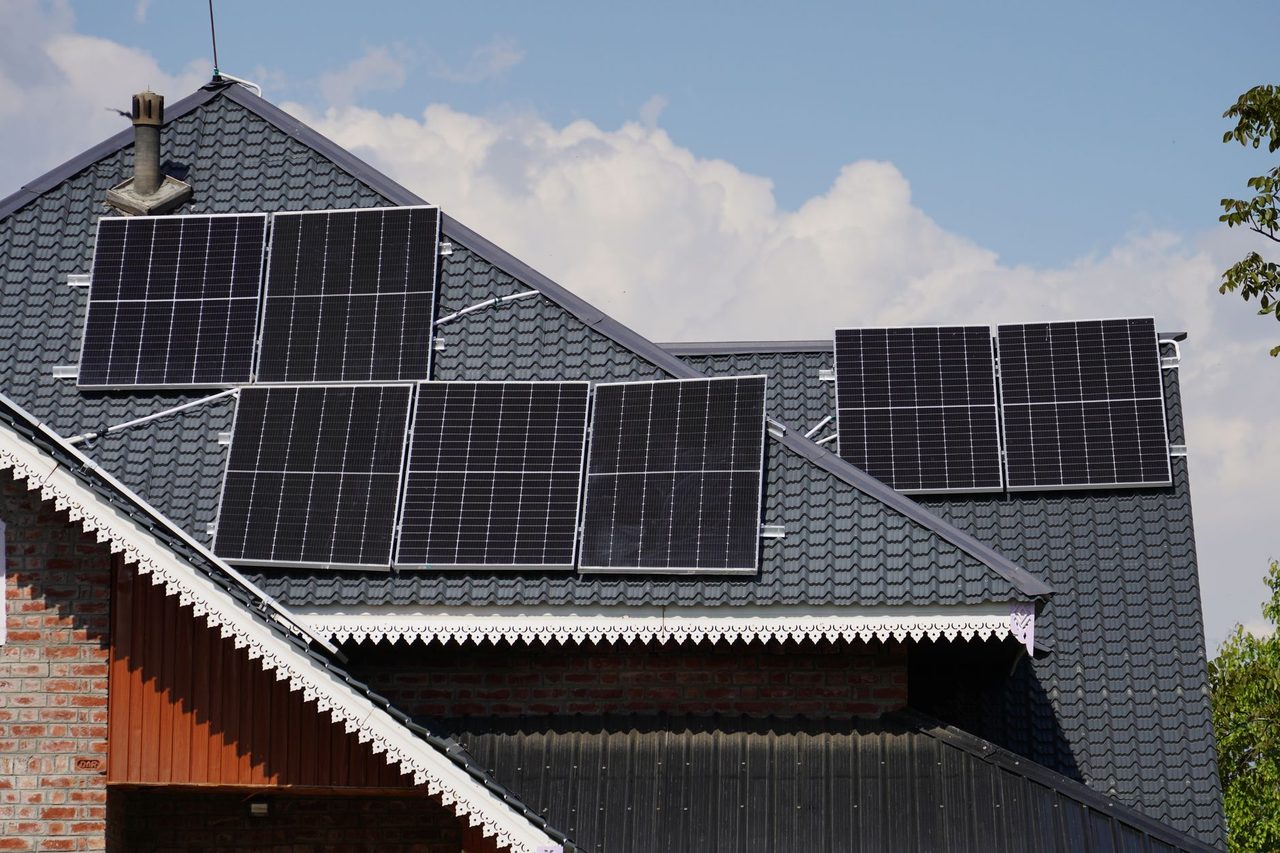
Photo: Iqbal farooz on Pexels
India’s solar market in 2026 is no longer a pure module-price story. For developers, C&I consumers, lenders and utilities, balance-of-system decisions are often where project value is won or lost. Modules may still account for the largest line item, but BOS design, procurement and execution now determine whether a plant lands on time, survives monsoon and wind events, clears commissioning smoothly, and delivers the P90 that underwriting assumed.
For Indian projects, BOS cost optimisation is not about indiscriminate cost cutting. It is about reducing rupees per MW without increasing lifecycle risk. In practice, that means disciplined choices on MMS steel tonnage, cable topology, trenching, inverter station layout, SCADA architecture, earthing interfaces, and vendor qualification under ALMM-linked procurement constraints. The wrong savings can reduce capex by 1-2% and destroy 4-6% of project value through generation loss, rework, liquidated damages or claims.
In 2026, this issue is sharper because three forces are acting at once:
- ALMM and domestic supply-chain realities are changing lead times and approved vendor pools
- Grid interconnection timelines remain uncertain in several states, making EPC schedule discipline critical
- Tariffs in both utility and C&I segments remain competitive enough that even Rs 0.05-0.12/kWh of avoidable lifecycle cost matters materially
This article lays out a practitioner framework for solar BOS cost optimisation in India, with a focus on structures, cables, procurement, construction quality and commissioning readiness.
Why BOS now decides project competitiveness in India
In a typical Indian utility-scale fixed-tilt solar project in 2026, BOS plus EPC services can represent roughly 35-50% of non-land capex depending on module choice, voltage architecture, terrain, evacuation scope and owner-furnished items. In C&I open-access or captive projects, BOS sensitivity can be even higher because of smaller package sizes, more difficult sites, tighter shutdown windows and more bespoke interconnection requirements.
As module ASP volatility has moderated relative to the disruption seen in prior years, developers are looking harder at BOS levers such as:
- Module mounting structure weight optimisation without under-design
- DC cable length reduction through better block planning
- AC collection voltage and transformer sizing choices
- Reduction in civil overdesign for roads, foundations and drainage
- Smarter packaging of inverter stations and HT yards
- Better procurement sequencing for long-lead electrical equipment
For lenders, the concern is straightforward: BOS is where hidden technical debt often sits. A low capex project can still become a weak asset if there is under-engineered galvanisation, inconsistent cable quality, poor trench compaction, unverified torqueing, or delayed auxiliary system completion. These issues may not stop first power, but they show up later as availability loss, insurance disputes or repeated corrective works.
Structure and foundation optimisation: save steel, not safety margin
In many Indian solar plants, mounting structures and foundations are among the biggest controllable BOS cost buckets. Depending on wind zone, topography, corrosion environment and tracker versus fixed-tilt selection, MMS and foundation packages can contribute 8-14% of project capex.
The cost optimisation mistake is familiar: teams compare vendor quotes only on tonnes per MW. That metric matters, but it is incomplete. The more useful decision lens includes:
- Tonnes per MW at final approved layout, not conceptual yield assumptions
- Zinc coating class and corrosion allowance for site conditions
- Pile refusal risk or geotechnical uncertainty provisions
- Connection hardware standardisation and torque traceability
- Erection productivity per table and per gang per day
- Transportability and site handling losses
For fixed-tilt sites in India with relatively benign terrain, a structure vendor may offer a noticeably lighter design that appears to save Rs 2.5-5 lakh/MW. But if the design increases erection complexity, introduces more field drilling, or tightens foundation tolerances beyond realistic site execution capability, the apparent material saving can be wiped out by labour inefficiency and rework.
A robust 2026 approach is to optimise at the system level:
- Use geotechnical campaigns dense enough to avoid widespread pile redesign after mobilisation
- Match row spacing, table size and road layout with actual construction access needs
- Evaluate pile versus RCC foundation economics based on refusal probability, water table and monsoon window
- Verify corrosion design for coastal, high-humidity or chemically aggressive industrial sites
In several Indian states, monsoon-driven delays still create cost overrun exposure because civil and piling fronts are not aligned with drainage planning. A project that saves 1% on structure design but loses 20-30 days to waterlogging has not been optimised.
DC and AC cabling: the cheapest quote often becomes the costliest network
After structure and inverters, cable systems are one of the most frequent sources of concealed BOS inefficiency. In 2026, copper and aluminium cost movements still affect EPC economics, but design choices matter more than commodity timing alone.
The first rule is simple: optimise layout before optimising conductor size. Too many projects try to save money by shaving conductor cross-section while leaving avoidable route length untouched. Better block planning can reduce DC homerun lengths, trench congestion and voltage-drop exposure at the same time.
For Indian utility-scale projects, practical cable optimisation should test:
- Stringing architecture and SCB location strategy
- Inverter station placement relative to array geometry
- Trench sharing between DC, AC and communication systems where standards permit
- AC collection voltage selection and feeder balancing
- Cable derating based on actual soil temperature and grouping assumptions
A cable package that is 3-4% cheaper on procurement can become a major risk if terminations, armour quality, insulation consistency or drum handling control are weak. Lenders and owners should be particularly cautious where there is:
- Excessive reliance on paper compliance without routine or type-test validation
- Substitution requests after LOA due to vendor backlog
- Inadequate drum-length planning causing joint proliferation
- Poor gland and lug compatibility management at site
On large ground-mount projects, even a 0.3-0.5% generation loss due to avoidable DC voltage drop or thermal derating can materially affect DSCR. At tariffs in the range of roughly Rs 2.4-3.2/kWh for many utility structures, and effective delivered value much higher in C&I open-access applications, these losses are not trivial.
ALMM, domestic sourcing and procurement sequencing in 2026
ALMM compliance continues to influence procurement strategy far beyond the module package itself. In practice, ALMM-linked planning affects mechanical interfaces, cable schedules, logistics windows, mounting compatibility and the overall EPC sequence.
The 2026 procurement challenge is not only approved-list compliance. It is also the interaction between:
- Module dimensions and structure standardisation
- Domestic manufacturing lead times for modules and key electrical equipment
- Vendor financial strength and after-sales support credibility
- Batch-wise quality consistency across multi-GW supply commitments
A common project failure mode is late module finalisation causing redesign in structure member sizing, clamp locations, string plan and even DC cable quantities. This creates avoidable chaos in procurement and site productivity.
The better model is integrated Procurement & vendor management with design freeze discipline. Before issuing major BOS POs, the EPC and owner should lock:
- Final module make, dimensions, electrical characteristics and approved tolerances
- Inverter selection and station architecture
- Earthing, cable trench and road interface drawings
- Construction methodology matched to the site seasonality calendar
Domestic sourcing can support schedule resilience when handled properly, but only if vendor capacity claims are stress-tested. In 2026, many Indian suppliers can meet quality and scale expectations, but not all can do so while holding delivery commitments during sector demand spikes. Therefore, bid evaluation should assign explicit weight to:
- Monthly manufacturing capacity actually allocable to the project
- Historic dispatch performance, not brochure capacity alone
- Inspection readiness and document traceability
- Availability of spares and replacement timelines
Civil works, drainage and internal roads: the silent BOS overruns
Civil packages are often treated as secondary in solar because the plant is perceived as mechanically repetitive. That is a mistake. Civil oversights are among the most common reasons for monsoon damage, internal logistics delays and expensive post-COD rectification.
In many Indian projects, the biggest preventable problems are basic:
- Inadequate stormwater flow mapping across the site
- Overcut or undercompacted cable trenches
- Road widths that do not suit actual equipment movement
- Poorly coordinated plinth levels for inverter and transformer stations
- Foundation execution before final drainage logic is stabilised
Drainage deserves special mention. A drainage package that appears expensive at bid stage can be significantly cheaper than repeated access loss, foundation scouring or cable trench collapse during one intense rainfall season. For sites in Rajasthan this may be a lower annual concern than in parts of Gujarat, महाराष्ट्र, Telangana, Karnataka, Odisha or eastern states, but local cloudburst and runoff patterns can still be project-critical.
Owners should demand civil design tied to hydrology and actual contour logic, not only generic benchmark sections. Cost optimisation here means building only what the site needs, but definitely building what the site needs.
Quality assurance is a financial control, not only an engineering function
By 2026, experienced lenders and infrastructure investors increasingly view QA/QC as part of capex protection. The reason is clear: many BOS defects are cheap to prevent and expensive to cure.
This is where QA/QC & HSE enforcement has a direct commercial role. A disciplined quality system on solar EPC should include:
- Approved ITPs for piling, structures, cabling, terminations, earthing and equipment installation
- Incoming material inspection linked to PO specifications and test certificates
- Hold points for torque checks, insulation resistance, continuity and polarity verification
- Foundation and trench inspection records with geotagged evidence
- Punch-list closure logic before energisation pressure takes over
Typical BOS quality misses that later damage returns include:
- Mixed fastener grades or coating mismatch leading to accelerated corrosion
- Improper cable dressing causing insulation damage and water ingress risk
- Inconsistent crimping quality and uncontrolled lug substitutions
- Transformer and inverter auxiliary systems left incompletely integrated at first energisation
- Missing as-built documentation that complicates O&M and claims resolution
For lenders, one practical takeaway is to align disbursement milestones with physical and quality evidence, not only quantity certification. A project can be 90% billed and still far from truly ready if inspections, records and interface works are weak.
Commissioning readiness and handover: BOS value is proven at the end
Many developers focus on BOS cost up to mechanical completion, but the real test is whether the plant commissions without prolonged punch points, nuisance trips or data gaps. A well-optimised BOS package should reduce the friction between construction completion and revenue operation.
Testing, commissioning & handover quality depends on early preparation, not end-stage firefighting. By the time pre-commissioning starts, the project should already have:
- Final red-line drawings consolidated into controlled as-builts
- Complete test packs for cables, transformers, inverters and protection systems
- Calibrated meters and verified SCADA point mapping
- Spare inventory and critical consumables available on site
- OEM attendance windows locked for integrated testing
In India, COD delays can arise from seemingly minor BOS gaps such as unresolved communication interfaces, incomplete yard illumination and auxiliaries, protection setting mismatches, or transformer oil documentation issues. None of these sound strategic, but each can hold up revenue start.
Developers should also align EPC closure metrics to operational reality. Mechanical completion is not enough. Better closure criteria include:
- Stable PR validation over an agreed window
- Verified communication uptime across all major equipment
- Completion of statutory safety signages and access controls
- Full O&M manuals, warranties and spare lists handed over
- Defect liability process clearly documented with response timelines
This is especially important for C&I consumers where internal power reliability and demand-charge economics depend on a smooth transition from project completion to sustained plant performance.
A practical 2026 checklist for BOS cost optimisation in India
For developers, C&I buyers and lenders evaluating a solar project today, the most useful questions are often simple:
- Has the team optimised layout to reduce cable and road quantities before negotiating unit rates?
- Is structure design benchmarked on lifecycle durability and constructability, not only steel weight?
- Are ALMM-linked module decisions fully frozen before major BOS release?
- Do civil and drainage designs reflect actual site contours and rainfall behaviour?
- Are procurement schedules realistic for domestic vendor lead times in 2026?
- Is quality documentation strong enough to support insurance, lender review and O&M handover?
- Are commissioning interfaces planned early across OEMs, SCADA, protection and evacuation assets?
The Indian solar market is mature enough now that asset quality and execution discipline will increasingly separate high-value portfolios from merely low-bid portfolios. BOS is where that separation often begins.
For project owners looking to improve bankability and execution outcomes, Growthifye supports Solar & hybrid plant EPC and Balance of system & civil works with a focus on procurement discipline, quality control and practical commissioning readiness.
If you are evaluating a new solar or solar-plus-storage project in India, contact Growthifye’s advisory desk for a technical and commercial review of your EPC strategy, BOS design and delivery risk.
Explore Growthifye's related capabilities
This analysis connects directly to our advisory practice: Solar & hybrid plant EPC · BESS system integration · Balance of system & civil works · Procurement & vendor management.
About the author

Chief Executive Officer, Growthifye — With over 23 years in management consulting, Sudarshan has taken businesses from concept to scale — building and scaling new-age digital and energy businesses.
- 23+ years in management consulting
- EY alumnus
- Led large-scale BESS programmes, capital raises and advisory mandates
Want this analysis applied to your project?
Talk to our team

