
India Solar BESS Fire Safety 2026: EPC Design, NFPA, CFA and Insurer Guide
By Sudarshan Karweer · sudarshan@growthifye.com · +91 84510 99371 (Call / WhatsApp) · 2026-09-07
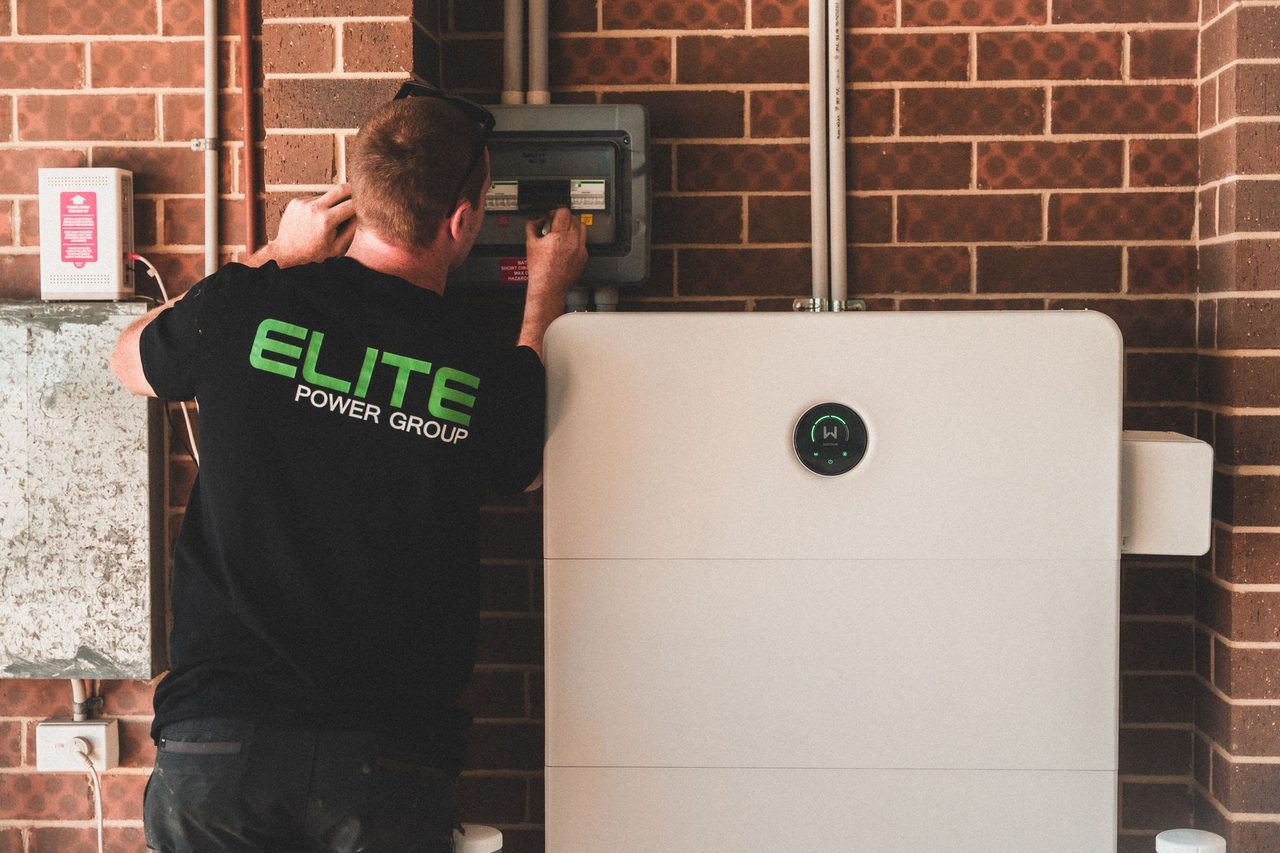
Photo: Elite Power Group on Pexels
India’s utility-scale and C&I storage market is moving from pilot-scale enthusiasm to insurer- and lender-driven discipline. In 2026, the technical conversation is no longer limited to round-trip efficiency, AC/DC coupling, augmentation timing, or revenue stacking. Fire safety architecture has become a first-order bankability issue for solar and solar+BESS projects, especially where projects sit near industrial loads, substations, warehouses, process plants, or densely used campuses.
For Indian developers, EPC contractors, C&I offtakers, DISCOM-facing projects, and lenders, the practical question is simple: what does a defensible BESS fire-safety design look like in 2026, and how does it affect capex, schedule, insurance, and commissioning? This article addresses that question with an Indian implementation lens.
Why fire safety is now a project-finance issue in India
In 2026, BESS fire incidents globally continue to shape underwriting standards, owner’s engineer checklists, and lender technical due diligence. In India, three market shifts have amplified the issue:
- Larger project sizes, with 20 MWh to 200+ MWh systems now common in tenders and C&I aggregation portfolios
- Greater use of containerised lithium-ion systems near occupied facilities or electrical yards
- Tighter scrutiny from insurers, state electrical inspectorates, fire departments, and corporate EHS teams
For many projects, the delay risk from unresolved fire-safety design can exceed the direct capex impact of the safety systems themselves. A two- to eight-week delay in statutory clearance, insurer review, or performance test readiness can materially affect COD-linked revenue, peak-season availability, and debt drawdown timing.
Indian project teams should treat fire safety not as a late-stage OEM package review item, but as an EPC design stream starting at land-use planning and single-line development. This is especially true where storage is paired with solar under captive, group captive, open-access, or behind-the-meter industrial models.
Code framework in 2026: what Indian projects are actually being checked against
India still does not operate on a single BESS-specific fire code equivalent that overrides all others in every state and use case. In practice, robust projects in 2026 are being designed by mapping multiple layers of compliance and guidance:
- National Building Code of India, as applicable to fire and life safety, access, separation and emergency planning
- State fire department requirements and local authority approvals
- Central Electricity Authority and state electrical inspector requirements for electrical safety, earthing, protection and interconnection areas
- OEM design manuals and UL/IEC-certified equipment conditions of use
- International references commonly requested by insurers and lenders, including NFPA 855, UL 9540, UL 9540A, and relevant IEC battery safety standards
- Factory Mutual or insurer-specific loss prevention recommendations where applicable
In India, the practical reality is that insurers and lenders often look for international test evidence even if local authority review is less prescriptive. That means a project may be legally permissible yet still face insurance exclusions, higher deductibles, reduced business interruption cover, or lender reservations if the fire strategy is weak.
A sound owner’s specification in 2026 should therefore require:
- Documented fire-risk philosophy at concept stage
- Cell-to-container hazard mitigation narrative from OEM
- Gas detection, smoke detection, thermal monitoring and suppression philosophy
- Setback and segregation drawings integrated with site layout
- Emergency response plan coordinated with site operator
- Acceptance testing and alarm-cause-and-effect documentation prior to COD
Chemistry and architecture choices: not all MWh are equal in hazard profile
In India, lithium iron phosphate has become the dominant chemistry for many stationary BESS applications because of cost trajectory, thermal stability perception, and supply-chain availability. However, the market sometimes overstates chemistry as a complete fire-safety answer. LFP can reduce risk relative to some other lithium-ion chemistries, but it does not remove thermal runaway, off-gassing, reignition, or propagation concerns.
At project level, risk is shaped by architecture as much as chemistry:
- Cell format: prismatic, pouch and cylindrical designs behave differently under abuse conditions
- Rack density: higher energy density can improve economics but complicate heat rejection and event management
- Container size: 5 MWh+ containers can improve land efficiency but may elevate event consequence if isolation and propagation controls are weak
- HVAC design: poor airflow balance, dust loading, clogged filters or high ambient temperatures can create chronic stress in Indian conditions
- PCS and transformer co-location: poor separation can increase collateral damage during an event
In hot Indian climates, particularly where summer ambient temperatures exceed 45°C, thermal margins matter. BESS containers designed around mild-climate assumptions may suffer excessive auxiliary consumption, derating, or thermal non-uniformity. That creates both performance and safety issues.
As a rule of thumb for 2026 project screening:
- Developers should closely interrogate any design that pushes very high usable energy per container without clear propagation test evidence and emergency venting logic
- C&I sites with occupancy nearby should prefer conservative spacing and access over maximum MWh per acre
- Owners should request auxiliary load estimates for peak summer conditions because under-designed cooling can silently increase lifecycle risk
What EPC teams must lock in during layout and BoS design
Many BESS fire-safety failures originate not inside the battery, but in poor site integration. This is where EPC discipline matters. For Indian projects, fire safety must be embedded into Solar & hybrid plant EPC and Balance of system & civil works from the first coordinated layout.
Critical design issues include:
- Setbacks between BESS containers, inverter rooms, transformers, switchgear buildings and site boundary
- Internal road width and turning radius for fire tender access
- Drainage and spill management to avoid water accumulation near energized equipment
- Segregation between battery blocks and control room or O&M facilities
- Earthing and bonding quality across containers, PCS skids and auxiliary systems
- Cable routing to minimise fault escalation across adjacent units
- Blast relief and vent discharge orientation away from occupied or critical areas
There is no universal spacing number suitable for every site because spacing depends on tested configuration, container construction, suppression system design, authority expectations and adjacent asset criticality. But in 2026, trying to compress layout aggressively to save a few thousand square metres often proves expensive later. On C&I campuses where land is constrained, the better answer is usually to reduce block density or split the system into fire-separated zones rather than relying on paperwork to compensate for poor physical arrangement.
Typical Indian EPC omissions still seen in reviews include:
- Firewater network considered after electrical layout freeze
- No clear zoning between battery blocks and oil-filled transformers
- Detector and alarm interfaces not coordinated with SCADA, PPC and emergency shutdown logic
- HVAC fresh-air intake and exhaust placement that can compromise neighboring enclosures
- Inadequate night-lighting and signage for emergency intervention
These are not cosmetic issues. They influence approval timelines, emergency response effectiveness, and the scale of damage during a fault.
Detection, suppression and isolation: what insurers expect to see
Insurers in 2026 usually ask for more than a generic statement that the OEM container is “fire safe.” They want a layered protection strategy with evidence. For Indian projects, that generally means four lines of defence:
- Early detection
- Thermal runaway management
- Fire suppression or fire control
- Electrical and operational isolation
Early detection normally combines multiple signals:
- Cell or module temperature monitoring
- Rack-level voltage deviation analytics
- Smoke detection
- Gas detection for off-gassing signatures
- HVAC fault and abnormal thermal pattern alarms
For suppression, the Indian market shows mixed practice. Some systems rely primarily on clean-agent deployment inside enclosures, others on aerosol systems, others on water-based approaches for exposure protection and event control. The right solution depends on tested equipment design and local emergency doctrine. What matters is not marketing language but demonstrated cause-and-effect logic.
Project teams should ask:
- What exact event threshold triggers local alarm, remote alarm, shutdown, HVAC action and suppression release?
- Is suppression intended to extinguish incipient fire, slow propagation, or only protect adjacent equipment?
- What evidence exists from full-scale or representative testing?
- How is reignition risk managed after first response?
- What manual override and lockout protocols exist?
Electrical isolation is equally important. During an abnormal event, the system must move to a known safe state. That requires:
- Coordinated BMS, EMS, PCS and switchgear interlocks
- Remote emergency stop logic with defined hierarchy
- Isolation procedures for both DC and AC sides
- Communication fail-safe behaviour documented and tested
On many Indian sites, the weak point is not the battery OEM but interface engineering between OEM package, PCS vendor, SCADA integrator, and EPC switchgear design. Strong Procurement & vendor management is therefore essential to prevent multi-vendor gaps.
Commissioning and acceptance: the evidence package that reduces disputes
In 2026, a BESS project should not reach COD with only generic FAT records and OEM brochures. Fire-safety acceptance needs a documented evidence package reviewed by the owner, lender’s engineer, and insurer where required.
At minimum, the commissioning dossier should include:
- Approved fire-safety philosophy and latest as-built layout
- Equipment certificates and test references for container, battery racks, PCS and suppression systems
- Cause-and-effect matrix for alarms, shutdowns and suppression actions
- Detector calibration and loop checks
- HVAC functional tests under alarm and shutdown conditions
- Emergency stop verification at local and central points
- Integration test records between BMS, EMS, PCS, SCADA and fire alarm systems
- Insulation resistance, earthing continuity and protection coordination records
- Site emergency response plan and mock-drill report
For large projects, stakeholders increasingly ask for scenario-based integrated testing, not just point-to-point signal checks. Example scenarios include:
- High-temperature alarm at module or rack level
- Gas detection above threshold in one container
- Loss of HVAC in high ambient condition
- Communication loss between BMS and plant controller
- Transformer fire in adjacent block requiring BESS isolation
- Black-start or auxiliary supply failure during emergency mode
This is where disciplined Testing, commissioning & handover can protect developers from post-COD disputes. If an event occurs and logs show the trip sequence was never fully tested, claims handling becomes harder and O&M responsibility can quickly become contentious.
Cost, insurance and bankability implications in 2026
A stronger fire-safety package increases capex, but the right benchmark is not only rupees per MWh. It is total project risk cost.
In today’s Indian market, incremental capex for upgraded fire detection, suppression integration, segregation works, and emergency infrastructure can be modest relative to project value, often in the low single-digit percentage range of total BESS block cost depending on architecture and site constraints. By contrast, weak design can trigger:
- Higher insurance premium rates
- Larger deductibles
- Restricted coverage terms
- Delayed financial close or extra lender conditions precedent
- Additional AHJ observations and rework
- Lower acceptable site density for future expansion
For C&I customers evaluating tariff impact, this matters because storage economics are often underwritten on narrow spreads. A project saving a small capex amount up front but losing weeks of commissioning or facing insurance penalties can easily see IRR erosion greater than the original saving.
Developers should also remember that CFA-linked or scheme-linked timelines can amplify schedule risk. Where projects rely on specific milestone dates for subsidy eligibility or contracted commissioning windows, delayed safety approvals can directly affect realised economics.
A practical 2026 checklist for Indian developers and offtakers
Before freezing a solar+BESS or standalone BESS project, ask the following:
- Has the fire strategy been developed at concept stage, not after OEM award?
- Does the selected battery system have credible large-scale fire test references?
- Are setbacks, access roads and drainage integrated into the approved civil layout?
- Have local authority, insurer and lender expectations been mapped early?
- Is the event logic between battery, PCS, SCADA and fire systems fully defined?
- Are emergency response roles assigned for owner, EPC, O&M and local responders?
- Has summer ambient performance been stress-tested for the actual site?
- Is the commissioning plan scenario-based and document-rich enough for claim defence?
The answer to BESS fire safety in India is not fear, and it is not blanket overdesign. It is disciplined engineering, tested architecture, and early coordination across OEMs, EPC, operator, insurer and authority.
As storage deployments scale across industrial campuses, renewable parks and grid-support assets, the projects that clear approvals faster and attract stronger financing terms will usually be the ones that treat safety evidence as part of bankability, not an afterthought.
If you are evaluating a solar+BESS project, a retrofit, or an insurer-driven design review, contact Growthifye’s advisory desk for practical support on design risk, EPC package review, compliance strategy and commissioning readiness.
Explore Growthifye's related capabilities
This analysis connects directly to our advisory practice: Solar & hybrid plant EPC · BESS system integration · Balance of system & civil works · Procurement & vendor management.
About the author

Chief Executive Officer, Growthifye — With over 23 years in management consulting, Sudarshan has taken businesses from concept to scale — building and scaling new-age digital and energy businesses.
- 23+ years in management consulting
- EY alumnus
- Led large-scale BESS programmes, capital raises and advisory mandates
Want this analysis applied to your project?
Talk to our team