
India Renewable Energy DSCR Optimisation 2026: Structuring Debt for Faster Closure
By Sudarshan Karweer · sudarshan@growthifye.com · +91 84510 99371 (Call / WhatsApp) · 2026-09-18
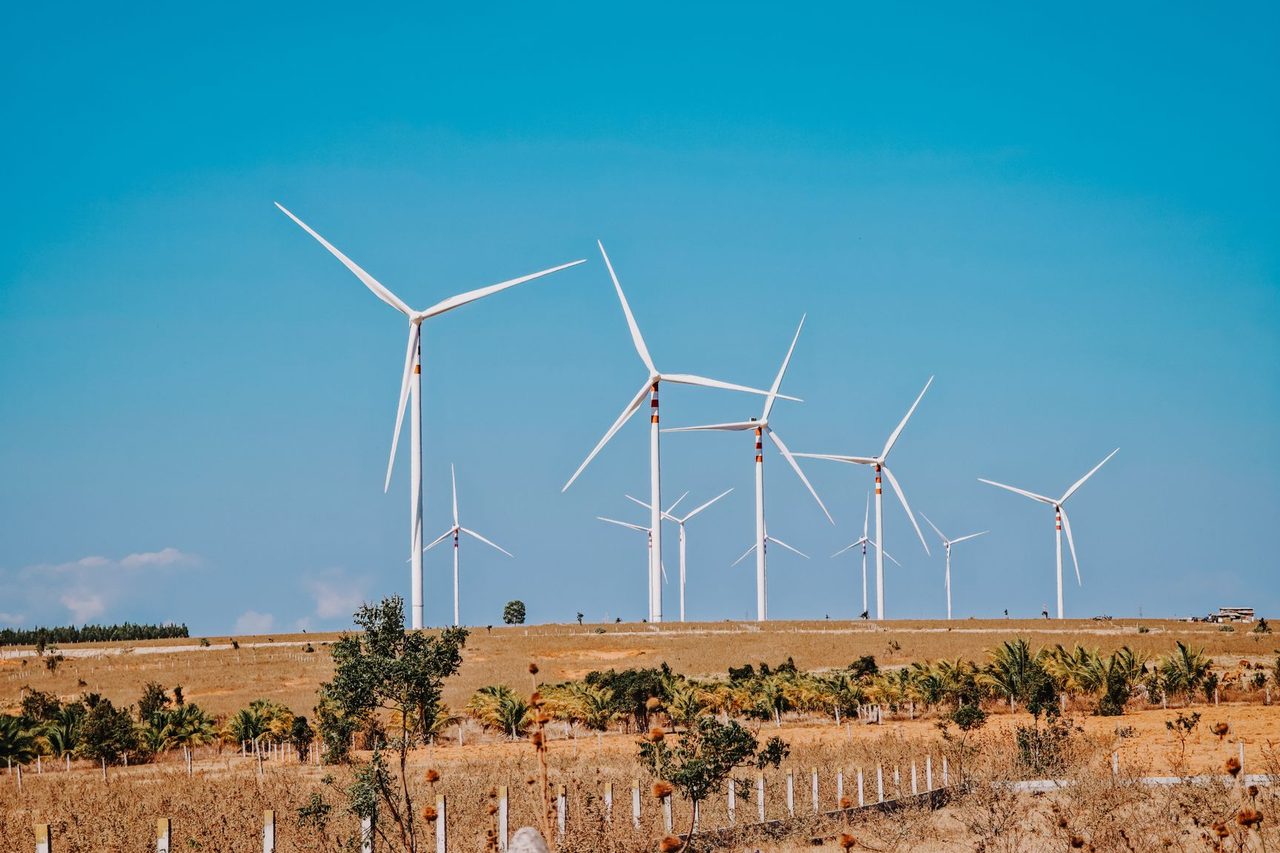
India’s renewable-energy financing market in 2026 is no longer defined only by who can secure debt, but by who can structure debt that closes fast, prices well and survives operating volatility. Across utility-scale solar, wind, hybrid and storage-linked projects, one metric is repeatedly at the centre of lender negotiations: debt service coverage ratio, or DSCR.
For Indian developers, EPC sponsors, C&I offtakers and lenders, DSCR is not just a credit metric in the financial model. It determines leverage, repayment shape, reserve sizing, covenant headroom, refinancing potential and, in many cases, whether a project reaches financial close at all. In a market where tariffs remain tight, equipment costs have normalised unevenly, grid-curtailment risks vary by state, and offtaker credit still matters, optimising DSCR has become a core financing skill.
This article explains how DSCR optimisation works in the Indian renewable-energy market in 2026, what numbers lenders are actually testing, and how sponsors can improve bankability without relying on unrealistic generation assumptions.
Why DSCR matters more in 2026
In simple terms, DSCR compares cash available for debt service with scheduled principal and interest. For lenders, it answers one question: can the project comfortably pay debt from operating cash flow under base case and downside conditions?
In 2026, the reason DSCR has become more important is straightforward:
- Utility tariffs discovered in recent auctions remain competitive, often in the range of roughly Rs 2.45-3.20 per kWh depending on tender structure, location and delivery profile
- C&I open-access projects can achieve stronger realised tariffs, but charges such as wheeling, banking, CSS and AS continue to change by state
- Hybrid and firm-power structures are adding complexity to energy yield and dispatch assumptions
- Storage economics are improving, but debt sizing for standalone and co-located systems still requires careful treatment of degradation, augmentation and contracted revenue certainty
- Lenders are more selective on leverage after seeing execution delays, curtailment pockets and payment-cycle stress in some counterparties
The result is that even a project with a strong PPA can struggle if the debt structure is too aggressive for the cash-flow profile.
What lenders in India are testing on DSCR
Most lenders in India are not looking at one single DSCR number. They examine a package of ratios and sensitivities. In 2026, the typical focus areas include:
- Minimum annual DSCR in the base case
- Average DSCR over the loan tenor
- DSCR under downside generation scenarios
- DSCR under delayed receivables assumptions
- Project life coverage in some cases, especially for longer-tenor assets
- Tail period between final debt repayment and PPA or useful asset life
As a practical market range, many utility-scale solar and wind loans in India are still expected to demonstrate:
- Minimum annual DSCR around 1.15x-1.20x in stronger cases
- More conservatively, 1.20x-1.25x where offtaker quality, curtailment or execution risk is higher
- Average DSCR often around 1.25x-1.35x depending on technology and lender appetite
For C&I projects, particularly open-access portfolios with medium-rated offtakers, some lenders may seek more headroom because payment security can be weaker than central-agency backed utility PPAs. For storage-linked projects, DSCR analysis may be more conservative if revenue depends on dispatch assumptions, merchant exposure or evolving ancillary-service frameworks.
Institutions such as IREDA, PFC and REC remain central to India’s renewable-energy debt market, but commercial banks, NBFCs and AIF-backed private credit are also evaluating projects with increasingly detailed cash-flow scrutiny. The headline coupon matters, but lenders are often more focused on whether debt sculpting matches actual generation and receivable patterns.
The biggest drivers of DSCR in solar, wind and storage projects
Sponsors often assume DSCR is mainly a function of interest rate and leverage. In reality, six variables usually drive the outcome.
1. Net generation assumption
This is the first place lenders will challenge optimism. If the P50 estimate is being used too aggressively, or if degradation assumptions are too soft, DSCR may look acceptable on paper but fail in credit review.
For 2026 transactions, prudent lenders generally want:
- Conservative CUF or net PLF assumptions grounded in independent energy assessment
- State-specific curtailment adjustment where relevant
- Realistic auxiliary consumption and evacuation-loss treatment
- Degradation assumptions aligned with technology and OEM warranty terms
For solar, a 50-100 bps change in net CUF can materially alter annual DSCR. For wind, inter-annual variability can make downside case modelling even more important.
2. Tariff realisation and charge leakage
For utility projects, tariff visibility may be strong under long-term PPAs, but payment timing still affects debt service. For C&I projects, the issue is broader: the contracted tariff is only one part of the picture.
Lenders increasingly ask:
- What happens if banking rules tighten?
- Are open-access charges fixed, exempted or exposed to revision?
- Is pass-through available under the consumer contract?
- What is the net delivered tariff after state-level charges?
A project that looks healthy at a headline tariff of Rs 4.25 per kWh can weaken quickly if net realised revenue falls by Rs 0.20-0.35 per kWh due to charge revisions or settlement losses.
3. Receivables cycle
DSCR is based on cash available, not invoiced revenue. This makes receivables assumptions critical.
In 2026, payment cycles can still vary significantly:
- Strong C&I offtakers may pay in 30-60 days
- Some utility counterparties may average 90-180 days or more unless payment security structures are robust
- Hybrid and RTC-style contracts may involve more complex settlement timing
Longer receivables can force larger working-capital buffers or reserve support, reducing distributable cash and constraining debt service flexibility.
4. Repayment profile
One of the most effective ways to improve DSCR is to match principal repayment to project cash generation rather than use a rigid straight-line schedule.
Common tools include:
- Moratorium during construction and initial stabilisation
- Back-ended or sculpted amortisation linked to projected CFADS
- Quarterly or semi-annual repayment aligned to seasonality
- Balloon elements in limited cases, though many lenders remain cautious
For wind projects with seasonal output concentration, poor amortisation design can create artificial DSCR stress in low-wind periods even if annual cash generation is adequate.
5. O&M and lifecycle cost assumptions
Understating O&M may inflate DSCR in early-stage models. Lenders now look more carefully at:
- Module cleaning and inverter replacement expectations
- Wind turbine major maintenance reserves
- BESS augmentation and replacement strategy
- Land lease escalation
- Evacuation and SLDC-related charges
- Insurance cost trends
For storage assets, augmentation capex treatment is particularly important. If future performance maintenance is ignored, DSCR can be overstated.
6. Reserve requirements and covenant restrictions
A project with acceptable pre-reserve DSCR can still become tight after accounting for:
- DSRA funding
- n- MRA or major maintenance reserves in wind/storage structures
- Restricted cash waterfall provisions
- Distribution lock-up triggers
These items matter because they affect equity cash flow and can alter sponsor willingness to accept lower leverage or tighter covenants.
Practical levers to optimise DSCR without weakening credibility
The right goal is not to manufacture a higher DSCR. It is to create a financing structure that lenders trust and sponsors can execute.
Use realistic downside cases early
Before approaching lenders, run downside scenarios that include:
- 3%-5% lower net generation
- 30-90 day receivables stretch
- O&M inflation above base case
- Delayed commissioning and IDC increase
- Lower merchant or uncontracted revenue where relevant
If the project fails under mild downside assumptions, the debt ask is probably too high. This is where Lender-grade financial modelling creates value: the model should answer lender questions before the term sheet stage, not after.
Sculpt debt to CFADS, not sponsor ambition
Debt sculpting remains one of the most practical DSCR tools in Indian project finance. A sculpted schedule can improve minimum DSCR while preserving acceptable leverage, especially for:
- Seasonal wind assets
- Solar projects with back-loaded charge changes
- Hybrid plants with complex generation patterns
- Storage-linked projects with contracted availability-style payments
However, over-sculpting can simply shift stress to later years. Lenders will test whether the repayment profile remains resilient once degradation and cost escalation are included.
Improve payment security, not just pricing
A lower coupon cannot compensate for weak collections. For many projects, especially C&I and state-utility exposure, stronger payment design can support better debt terms.
This may include:
- Letter of credit arrangements
- Escrow structures
- Defined late-payment remedies
- Security deposit mechanisms
- Step-in protections for lenders
- Tripartite or trust-and-retention account controls where feasible
Better payment security may allow lenders to accept a tighter minimum DSCR threshold than they would under weaker collections visibility.
Separate construction risk from operating risk
One reason projects struggle in debt committees is that construction uncertainty contaminates operating-case DSCR analysis. Sponsors can improve financeability by clearly allocating:
- EPC completion risk
- Module/turbine/BESS supply risk
- Interconnection milestones
- Performance LDs
- Delay LD coverage
When construction risk is contractually addressed, lenders are often more comfortable underwriting operating-case cash flows at efficient leverage levels.
Ring-fence state and regulatory risks in C&I portfolios
For open-access and group-captive transactions, portfolio structuring can be as important as project sizing. Mixing consumers across states or across different charge regimes without clear risk allocation can create unstable DSCR outcomes.
Useful structuring steps include:
- State-by-state sensitivity analysis for OA charges
- Consumer concentration caps
- Contract provisions for regulatory pass-through where enforceable
- Multi-buyer portfolio diversification
- Credit screening based on payment track record and rating profile
This is also where Green financing frameworks can help present the risk architecture coherently to lenders and investors evaluating diversified portfolios.
Technology-specific DSCR considerations in 2026
Utility-scale solar
Solar remains the most straightforward technology to finance, but margins are thin. DSCR pressure typically emerges from low tariffs, curtailment pockets, and aggressive leverage assumptions. For many projects, optimising evacuation readiness and reducing receivable drag matter more than negotiating a marginally lower coupon.
Wind
Wind financing still requires more careful generation-risk treatment. P90-style downside testing, seasonality-aware repayment schedules and maintenance reserve planning are central. Lenders may also scrutinise OEM support quality more closely than in standard solar deals.
Solar-wind hybrid
Hybrid projects can improve overall cash-flow smoothness, which is positive for DSCR, but only if resource assessments, evacuation design and dispatch assumptions are coherent. Poorly integrated hybrid modelling can create false comfort.
Storage and storage-linked projects
Battery projects in 2026 are gaining lender attention, especially where revenue is contracted through capacity, availability or fixed-service payments. But lenders remain cautious where revenue is partly merchant or dependent on evolving market design. Key DSCR topics include degradation, augmentation timing, round-trip efficiency, warranty structure and replacement-cost assumptions.
What sponsors should prepare before lender outreach
To improve closure speed, sponsors should go to market with a credit-ready package rather than a basic teaser. At minimum:
- Independent energy yield assessment
- Detailed capex and IDC build-up
- State-specific revenue bridge for C&I deals
- Base case and downside DSCR analysis
- Proposed amortisation and covenant structure
- Reserve policy and waterfall logic
- PPA or ESA payment-security summary
- Sensitivity on commissioning delay and cost overrun
Projects that arrive with this level of preparation usually negotiate from a stronger position on leverage, covenants and processing timelines. They also reduce the risk of late-stage term-sheet changes that damage sponsor returns.
The 2026 takeaway for India renewable-energy financing
In India’s current market, DSCR optimisation is really about disciplined structuring. The most financeable projects are not those with the most aggressive assumptions. They are the ones where generation, tariff, collections, reserves and amortisation fit together in a way lenders can underwrite with confidence.
For developers, this means treating DSCR as a design variable from day one, not as a ratio to fix just before credit committee. For C&I consumers and utilities, it means recognising that payment discipline and contract design directly affect financing cost. For lenders and policymakers, it means that scalable renewable deployment still depends on cash-flow realism at the project level.
If you are evaluating a solar, wind, hybrid or storage transaction in 2026, the right question is not simply how much debt the project can raise. The right question is how much debt it can sustain through real operating conditions while preserving bankability, refinanceability and equity value.
Growthifye supports clients on Green financing frameworks and Lender-grade financial modelling for renewable-energy transactions across India, helping sponsors and offtakers structure debt cases that are both bankable and execution-ready.
If you are planning a financing, refinancing or lender engagement process, contact Growthifye’s advisory desk for a transaction-focused assessment.
Explore Growthifye's related capabilities
This analysis connects directly to our advisory practice: Green financing frameworks · Sustainability-linked loans · Blended & concessional finance · Impact quantification & MRV.
About the author

Chief Executive Officer, Growthifye — With over 23 years in management consulting, Sudarshan has taken businesses from concept to scale — building and scaling new-age digital and energy businesses.
- 23+ years in management consulting
- EY alumnus
- Led large-scale BESS programmes, capital raises and advisory mandates
Want this analysis applied to your project?
Talk to our team

