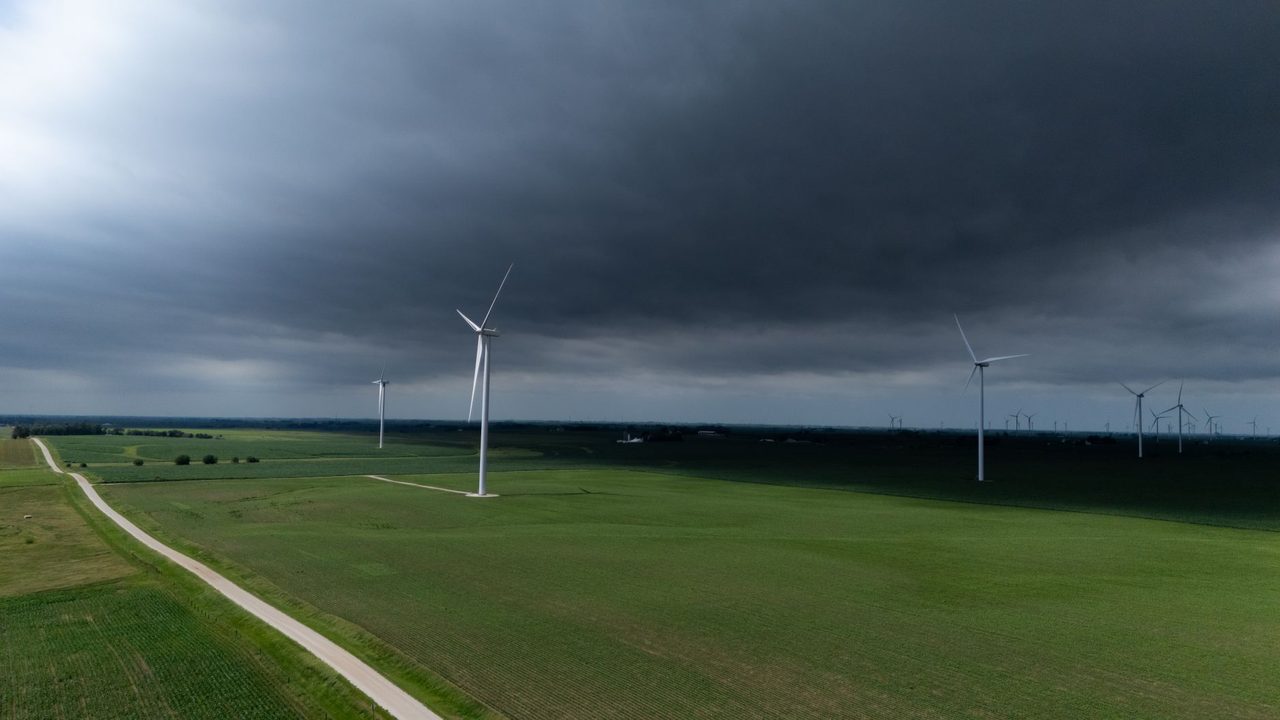
India RE Takeout Financing 2026: Construction-to-Operation Debt Strategy
By Sudarshan Karweer · sudarshan@growthifye.com · +91 84510 99371 (Call / WhatsApp) · 2026-08-29

India’s renewable-energy financing market in 2026 is no longer just about securing debt; it is about sequencing debt correctly. For developers, EPC players, C&I platform owners and even utilities procuring renewable power, one of the most important questions is not whether capital is available, but when each type of capital should enter the project and on what terms. That is where takeout financing matters.
In India, many renewable projects are still financed either with a single long-term project loan from day one or with developer balance-sheet support followed by a later refinance. But a more disciplined construction-to-operation debt strategy is increasingly relevant as project sizes rise, storage is added, evacuation timelines remain uncertain and lenders differentiate more sharply between construction risk and operating risk.
Takeout financing, in simple terms, means one lender or debt pool funds construction and early ramp-up, and another lender or debt pool refinances or replaces that exposure after pre-agreed milestones such as COD, generation stabilisation or a DSCR test. In 2026, this matters for utility-scale solar, wind, hybrid projects, C&I open-access portfolios and storage-backed assets because the cost of debt, lender appetite and covenant tolerance differ materially between pre-COD and post-COD phases.
For sponsors that structure it well, takeout debt can reduce blended borrowing cost, protect liquidity during construction and improve equity returns without taking reckless merchant or execution risk. For sponsors that structure it poorly, it can create a refinancing cliff, consent disputes and value leakage at exactly the wrong time.
Why takeout financing is gaining traction in 2026
India’s renewable sector has expanded into a more segmented financing market. Construction lenders and operating-asset lenders are not always the same institutions, and they do not underwrite the same risks the same way.
Several 2026 factors are driving this shift:
- Solar and hybrid projects are seeing tighter execution windows, especially where substation readiness and transmission commissioning are not fully aligned with plant completion.
- Battery energy storage systems are introducing performance and augmentation questions that many vanilla project lenders still price conservatively during construction.
- Open-access and group-captive C&I portfolios often need faster drawdown and more flexible structuring than traditional long-tenor debt can provide at initial closure.
- Public-sector lenders such as IREDA, PFC and REC remain active, but many transactions still require phased debt strategy depending on project type, sponsor profile and offtake structure.
- Private credit and NBFC capital can move faster during development and build-out, but usually at a higher cost than operating-asset debt.
The result is a widening spread between construction-period funding and post-COD operating debt. In 2026, all-in rupee cost for construction-led debt in riskier or time-sensitive situations can be 10.5% to 13.5%, while seasoned operating projects with robust offtake and clean performance data may refinance into roughly 8.25% to 10.25% territory depending on tenor, counterparty risk, leverage and security package. Even a 150 to 300 basis-point reduction after COD can materially improve project-level cash flows.
Where takeout structures work best
Takeout financing is not a universal answer. It is most useful where construction risk and operating risk are meaningfully different and where post-COD bankability can be demonstrated clearly.
The strongest use cases in India in 2026 include:
- Utility-scale solar projects with signed SECI, NTPC, state utility or high-quality private PPAs where commissioning risk exists but operating cash flow is expected to be predictable after stabilisation.
- Wind and hybrid projects where resource assessment, grid readiness and technology interfaces make some lenders cautious pre-COD, but where operating history can unlock better debt terms later.
- C&I open-access portfolios aggregated across states, especially where initial warehousing or platform-level debt is needed before projects are ring-fenced and refinanced asset by asset or pool by pool.
- Solar plus storage and standalone storage projects where lenders may want to see dispatch behaviour, degradation assumptions and availability performance before extending full-tenor operating debt.
- Acquisition-plus-repowering or acquisition-plus-capex strategies where transitional debt bridges the asset into a cleaner long-term financing package.
It is less suitable where offtake is weak, land or evacuation is unresolved, sponsor equity is thin, or the refinancing thesis depends on heroic tariff assumptions. If the project will not meet the credit filters of takeout lenders in 12 to 18 months, then the structure only postpones the problem.
Core structure: from construction debt to operating debt
A typical takeout structure in India RE in 2026 has four stages.
First, the sponsor secures construction funding. This may come from an NBFC, infrastructure debt provider, specialised project lender, bank consortium, or a structured facility at platform level. The facility usually covers EPC payments, IDC, contingency, transmission interface costs and, where allowed, interest reserve support.
Second, the parties define the takeout conditions upfront. These conditions are critical. They often include:
- Mechanical completion and successful commissioning
- Provisional COD or final COD certification
- PPA effectiveness and no material default
- Minimum plant load factor or CUF track record over a defined period
- DSCR threshold based on actual generation or lender-approved base case
- No unresolved claims with EPC or key equipment suppliers
- Validity of key permits, land rights and evacuation access
Third, the project enters the stabilisation window. This period may run 3 to 12 months depending on technology and lender comfort. Solar projects with straightforward evacuation may require shorter seasoning. Wind, hybrid and storage-linked projects may need longer.
Fourth, the takeout lender refinances the construction debt, partly or fully. The new loan usually carries a longer tenor, lower pricing and tighter operating covenants. The security package gets re-perfected or novated, lender technical assumptions are reset and reserve requirements may change.
In practice, the best outcomes come when the sponsor aligns both lender groups from the start. If the takeout debt is only discussed after delays or performance issues emerge, negotiating power falls sharply.
Key commercial terms in the Indian market
The economics of takeout financing depend on the spread between the initial and final debt, but also on fees, prepayment terms and leverage discipline.
In 2026, practitioners should focus on these commercial points:
- Initial leverage: Construction lenders may support 70:30 debt-equity on strong utility-scale solar, but riskier structures may require effective leverage of 65:35 or lower until COD. For C&I and storage-heavy cases, lenders may haircut expected revenues more aggressively.
- Takeout leverage: Post-COD lenders may size debt to actual or revised P90 output, contracted cash flows and tested O&M assumptions. If actual generation underperforms the original model by 4% to 7%, refinance proceeds may be lower than expected.
- DSCR: Operating lenders in India commonly target minimum DSCR of around 1.20x to 1.30x on stronger contracted assets, with average DSCR often above 1.30x to 1.40x depending on counterparty and technology mix. Merchant tails or partially contracted structures can push required cushions higher.
- Tenor: Construction debt may run 12 to 24 months with extension options. Takeout debt may run 12 to 18 years door-to-door equivalent, though actual sculpting depends on PPA tenor and asset life.
- Fees: Upfront fee, commitment fee, processing charges, legal and technical DD costs, swap or hedging costs where applicable, and prepayment penalty can erode headline savings if not modelled correctly.
- Reserves: Debt service reserve account requirements often become more formal after takeout. Some lenders may also require major maintenance or battery augmentation reserves where relevant.
This is where Lender-grade financial modelling becomes non-negotiable. The sponsor has to model not just one debt case, but a transition path: construction drawdown, IDC, delay sensitivity, commissioning timing, seasoning period, refinance date, revised amortisation and covenant headroom under downside scenarios.
Risks that can break a takeout strategy
Takeout financing creates value only if refinance certainty is real. The biggest execution mistakes usually come from underestimating conditions precedent and overestimating post-COD lender appetite.
Watch the following risk areas closely:
- COD mismatch: The construction lender may define completion differently from the takeout lender. If one accepts provisional energisation but the other wants final commissioning plus billing history, the project can get stranded between facilities.
- Generation variance: A solar project with lower-than-modelled CUF due to curtailment, soiling, inverter outages or weak irradiation can fail debt sizing tests even if the plant is otherwise healthy.
- Counterparty deterioration: If a state DISCOM’s payment record worsens or a C&I offtaker mix weakens, the operating lender may reprice or reduce sanctioned debt.
- Evacuation and curtailment: Renewable projects in states with grid congestion may be technically commissioned but commercially below expected output. Lenders increasingly want evidence that curtailment assumptions are realistic.
- Documentation gaps: Security sharing, escrow mechanics, assignment of project documents and lender consent architecture must be planned at entry. Weak intercreditor design can delay or block the handover.
- Refinancing market timing: If rupee rates remain elevated or liquidity tightens, the refinance may still happen but on weaker terms than originally assumed.
A common error in 2026 is assuming that every COD project automatically qualifies for cheaper debt from IREDA, PFC or REC. These lenders remain central to the market, but they still apply their own appraisal standards, sector exposure limits, offtake views and documentation requirements. The right approach is to underwrite to actual lender filters rather than market folklore.
How different stakeholders should approach takeout debt
Developers should use takeout structures to preserve speed during execution while still locking in a pathway to cheaper operating debt. But they should avoid over-levering construction facilities in the hope that future lenders will bail out weak assumptions. Equity discipline still matters.
C&I platform owners should think portfolio-first. Smaller projects across multiple states can be warehoused or built under a flexible facility and later refinanced once commissioning data, customer diversification and payment records are visible. However, cross-defaults, captive compliance and state-level open-access policy risk need careful treatment.
Lenders should distinguish between temporary construction complexity and structural credit weakness. A project with a high-quality EPC wrap, strong sponsor support and contracted offtake may deserve a well-structured takeout path even if initial execution risk is above plain-vanilla standards.
Utilities and policymakers should recognise that financing frictions affect tariffs and deployment speed. Faster land, transmission and approval processes directly reduce the premium that construction lenders charge. In effect, execution certainty is a financing subsidy even when no explicit subsidy exists.
A practical execution checklist for 2026
Sponsors considering takeout financing should test the following before signing the first term sheet:
- Is the expected refinance lender identified, or at least is the lender universe clearly mapped?
- Are COD, stabilisation and debt sizing tests defined precisely and consistently?
- Have base case, P90 and downside cases been run for both pre- and post-takeout structures?
- Are prepayment fees or minimum interest lock-ins acceptable if the takeout happens early?
- Is the project bankable under actual 2026 tariffs and payment-cycle assumptions, not outdated benchmarks?
- For C&I assets, are customer concentration, security deposit norms and open-access charges reflected conservatively?
- For storage or hybrid assets, are dispatch assumptions and augmentation capex realistically reserved?
- Is there a backstop if the takeout is delayed by 3 to 6 months?
Sponsors that can answer these questions well usually secure better economics because lenders see a planned transition, not a rescue refinance.
Takeout financing is not just a debt product. It is a strategy for matching capital to risk over a project’s life cycle. In a 2026 Indian market defined by tighter underwriting, technology complexity and sharper lender segmentation, that strategy can be the difference between an efficient capital stack and an expensive one.
For developers, C&I asset owners and investors, the practical objective is clear: use higher-cost, flexible money only for the period in which flexibility is genuinely needed, then move decisively into long-tenor operating debt once the asset has earned it. Done properly, this can improve project bankability, protect equity IRR and reduce avoidable refinancing stress.
Growthifye supports clients on Green financing frameworks and Lender-grade financial modelling for renewable and storage transactions across development, construction and operating stages. If you are evaluating a construction-to-operation debt strategy or preparing a takeout refinance, contact Growthifye’s advisory desk.
Explore Growthifye's related capabilities
This analysis connects directly to our advisory practice: Green financing frameworks · Sustainability-linked loans · Blended & concessional finance · Impact quantification & MRV.
About the author

Chief Executive Officer, Growthifye — With over 23 years in management consulting, Sudarshan has taken businesses from concept to scale — building and scaling new-age digital and energy businesses.
- 23+ years in management consulting
- EY alumnus
- Led large-scale BESS programmes, capital raises and advisory mandates
Want this analysis applied to your project?
Talk to our team