
India Data Centre Open Access Strategy 2026: Wheeling, CSS and Banking Risks
By Sudarshan Karweer · sudarshan@growthifye.com · +91 84510 99371 (Call / WhatsApp) · 2026-09-17
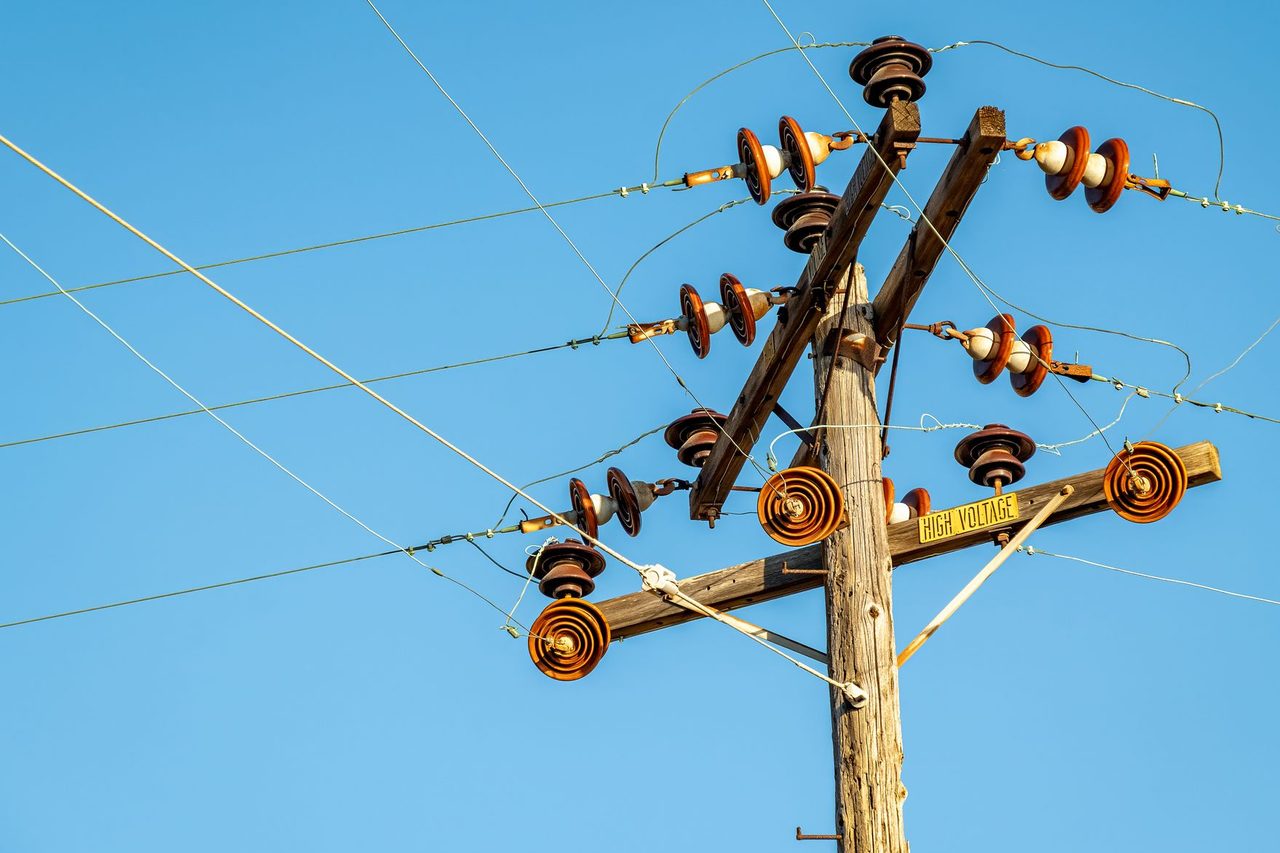
Photo: David McElwee on Pexels
India’s data centre market is scaling fast, but the energy strategy conversation often jumps directly to PPA price, battery sizing or hourly clean-energy matching. A less glamorous but more decisive issue sits underneath all of that: how open access is structured, approved, scheduled and settled at the state and inter-state level.
For a hyperscale or colocation facility, a 10–100 MW power portfolio can look attractive on paper if a solar, wind or hybrid tariff appears lower than utility supply. In practice, delivered economics depend on cross-subsidy surcharge, additional surcharge, wheeling and transmission charges, banking rules, standby supply terms, deviation settlement exposure and curtailment treatment. In 2026, these variables differ sharply by state and by procurement structure.
This article focuses on a distinct angle from PUE, BESS ROI, 24/7 CFE, grid connectivity and captive-power topics already discussed elsewhere: how Indian data centres should evaluate open access route selection and risk allocation in 2026, and where engineering choices need to be aligned with commercial contracting.
Why open access is now a board-level issue for data centres
Data centres are unusually sensitive to energy procurement structure for three reasons.
- Power is a large operating cost line item, especially for high-density facilities with IT loads above 10 MW.
- Uptime requirements mean that energy cost cannot be considered separately from redundancy, ramp response and outage recovery.
- Sustainability targets increasingly require not just annual renewable percentages, but cleaner hourly supply profiles, reduced diesel runtime and stronger auditability.
In several Indian states in 2026, a large HT consumer can still face utility tariffs in a broad range of roughly Rs 7.0-10.5/kWh depending on voltage level, time-of-day design, demand charges, fuel adjustment and local surcharges. Open-access renewable supply may appear available at generation-side tariffs of around Rs 2.8-4.5/kWh for solar and Rs 3.2-5.0/kWh for wind or hybrid structures, but that is not the delivered cost to the data centre meter.
Once you add ISTS/STU charges where applicable, wheeling, losses, scheduling fees, SLDC charges, banking costs or restrictions, CSS and additional surcharge where not exempt, the effective landed cost can move by Rs 1.5-4.0/kWh or more relative to the ex-bus tariff. That spread determines whether the strategy creates stable savings or simply imports basis risk into a mission-critical load.
Route selection in 2026: captive, third-party OA, utility green tariff or hybrid stack
For data centres, there is no universal best model. The right route depends on load factor, site location, state regulations, balance sheet appetite and uptime architecture.
The main pathways are:
- Third-party open access
- - A generator sells power to the data centre through open access.
- - Usually offers contracting flexibility and potentially lower upfront commitment.
- - Often exposed to CSS and additional surcharge unless state-specific exemptions apply.
- Captive or group captive
- - Can reduce or eliminate CSS subject to legal tests on ownership and consumption.
- - Requires careful compliance on shareholding, consumption ratio and annual true-up.
- - Better suited where the offtaker wants medium- to long-term control over supply economics.
- Utility green tariff or green open access product
- - Lower execution complexity in some jurisdictions.
- - Useful where open-access approvals are slow or uncertain.
- - Usually offers weaker price advantage than a well-structured direct procurement model.
- Layered portfolio
- - Utility firm power for base reliability.
- - Open-access RE for energy-cost optimisation.
- - On-site BESS and limited on-site generation for ramping, backup optimisation and resilience.
- - This is often the most bankable structure for data centres because it separates reliability from commodity-price optimisation.
In 2026, many data centre buyers are realising that route selection is not just a legal or tariff issue. It is a load-shape issue. A facility with relatively flat 24x7 demand can absorb wind-heavy profiles differently from a campus with phased commissioning, modular halls and uneven occupancy ramp-up. That is why Load & reliability engineering should be done before commercial term-sheet finalisation, not after.
The charge stack that changes project viability
Open access economics are won or lost in the charge stack. Teams that compare only utility tariff versus PPA tariff usually understate the delivered cost by 20-50%.
A practical 2026 evaluation should model at least the following items monthly and annually:
- Energy charge under utility supply
- Demand charge and contract demand implications
- Time-of-day or time-of-use differentials
- Fuel and power purchase adjustment surcharge
- Electricity duty and taxes where applicable
- Cross-subsidy surcharge
- Additional surcharge
- STU or CTU transmission charge
- Wheeling charge
- Transmission and distribution losses
- Scheduling and system operation charges
- Banking charge, if banking is allowed
- Banking drawdown restrictions by time block or season
- DSM or deviation costs, directly or passed through by supplier
- Curtailment and deemed generation settlement treatment
- Standby supply cost during RE shortfall
- BESS dispatch value in avoided peak drawal or backup support
For many states, banking has become materially less favourable than buyers assumed a few years ago. Monthly banking windows, lower settlement ratios, peak-hour withdrawal restrictions or banking charges can reduce the value of solar-heavy portfolios for round-the-clock loads. For a data centre, that usually means a pure solar OA strategy is less attractive unless paired with hybridisation, storage or a utility-firming arrangement.
As an illustration, assume a 20 MW average data centre load, annual consumption of about 175 GWh, and a utility blended landed tariff of Rs 8.40/kWh. A third-party solar-wind hybrid may be contracted at a blended generation tariff of Rs 4.10/kWh. After adding OA charges, losses and scheduling, landed renewable energy may reach Rs 6.00-7.10/kWh. If standby utility supply for residual balancing and occasional shortfall is purchased at high marginal tariff blocks, the effective portfolio cost can rise further. A 50-70 paise/kWh modelling error on a 175 GWh annual load means Rs 8.75-12.25 crore of annual variance. That is material for both operators and lenders.
Scheduling, DSM and curtailment: the hidden operational risks
For data centres, the open-access conversation cannot stop at tariff. Scheduling discipline and settlement risk matter because they affect both cost and operational confidence.
Key 2026 realities include:
- Renewable generation profiles remain weather-sensitive, especially during monsoon transitions.
- Forecasting quality differs widely across generators and schedulers.
- State-level curtailment practices and outage communications are not uniform.
- Deviation penalties can be contractually pushed down, shared or socialised depending on PPA design.
- Short-term market purchases to cover shape mismatch can become expensive during evening peaks or network congestion.
A data centre buyer should therefore ask five specific questions before signing:
- Who bears DSM, forecast error and balancing power cost?
- Is curtailment classified by grid-security event, economic backing down or transmission constraint?
- Is there deemed generation compensation, and at what valuation?
- What is the supplier’s replacement-power obligation during outage or under-generation?
- How are congestion and transmission unavailability handled, especially for inter-state supply?
This is where 24/7 clean power contracting becomes operational rather than theoretical. Even if the buyer is not targeting a formal hourly clean-energy claim, hourly portfolio balancing reduces both diesel dependence and expensive last-mile market purchases.
State variation in approvals and banking can outweigh headline tariff
One of the biggest errors in the Indian market is assuming a procurement model proven in one state will transfer cleanly to another. It often will not.
In 2026, three state-level variables deserve extra attention:
- Approval timelines
- - Connectivity studies, no-objection processes and open-access approvals can delay energisation by months.
- - Phased data centre commissioning can suffer if energy contracts assume earlier load migration than approvals permit.
- Banking design
- - Some states offer restricted banking windows or disallow banking for certain consumer categories.
- - Others may permit banking but settle surplus at low pooled purchase cost, sharply reducing residual energy value.
- Surcharge volatility
- - CSS and additional surcharge trajectories can change viability for third-party structures.
- - Captive-compliance failure can retrospectively expose the buyer to surcharge claims.
For developers and lenders, this means site selection and power strategy should be assessed together. A city with strong fibre, land access and customer demand may still be less attractive if its power-procurement regime creates recurring uncertainty or materially raises delivered energy cost.
That is why Grid connectivity & redundancy analysis should not be run independently from open-access charge modelling. The best technical site may not be the best energy site once wheeling paths, substation capacity, standby terms and state-specific open-access rules are priced properly.
Where on-site BESS changes the open-access equation
BESS is often discussed only in the context of diesel reduction or 24/7 CFE matching. In open-access design, it also has a more immediate role: reducing the cost of mismatch between contracted renewable profile and inflexible data centre load.
A modestly sized BESS can create value through:
- Intra-day shifting of excess solar or hybrid supply
- Reduction of high-cost utility drawal during evening peaks
- Management of renewable ramps to reduce dependence on diesel or fast-start backup
- Support during transfer events and short-duration grid disturbances
- Better use of restricted banking regimes by storing rather than exporting some surplus energy
The economics depend on use case. For example, a 20 MW data centre with a 10 MW / 20 MWh BESS may not materially replace long-duration shortfall energy, but it can reduce expensive peak drawal and support backup optimisation. If the spread between avoided peak utility power and absorbed daytime renewable surplus is around Rs 3-5/kWh on dispatched energy, and the battery cycles selectively rather than continuously, the business case can be robust even without assigning a notional carbon value.
However, BESS should not be used to hide a structurally poor procurement design. If the OA portfolio is fundamentally misaligned with the load shape or state banking rules, storage alone will not rescue the economics. The correct approach is portfolio-first, battery-second.
A lender-grade decision framework for 2026
For boards, investors and lenders evaluating data centre power strategy, a disciplined framework is more useful than a generic “RE first” narrative.
A practical sequence is:
- Define critical load, redundancy standard and outage tolerance by load block.
- Build an 8760 load forecast, including ramp-up by hall or phase.
- Map utility tariff outlook, including demand and ToD structure.
- Compare third-party OA, captive, group captive and utility green options state by state.
- Model delivered cost with full charge stack and loss assumptions.
- Stress-test banking, curtailment, congestion and DSM scenarios.
- Quantify standby supply requirement and utility fallback cost.
- Evaluate BESS for peak shaving, shape correction and backup optimisation.
- Align PPA, scheduling and SLA obligations with actual operating risk.
- Ensure financing assumptions use delivered portfolio cost, not generation tariff alone.
The output should be a board-ready decision on three things:
- Lowest realistic landed cost range
- Reliability performance under stressed conditions
- Contract structure that remains compliant and financeable over the term
For most Indian data centres in 2026, the answer will not be a single-source solution. It will be a layered energy stack combining utility reliability, carefully chosen open-access procurement, tighter scheduling discipline and selective storage.
What the market is likely to do next
Over the next 12-24 months, the market is likely to move in five directions.
- More hybrid renewable portfolios rather than single-resource PPAs
- Greater use of captive structures where policy and balance sheet allow
- Tighter scrutiny of surcharge and banking risk in lender due diligence
- More granular scheduling, forecasting and settlement analytics
- Wider deployment of storage for operational flexibility, not just backup reduction
This will reward operators that treat energy as core infrastructure rather than a procurement afterthought. In a business where uptime commitments and EBITDA margins are both unforgiving, the difference between a headline-low tariff and a genuinely resilient delivered-cost strategy is substantial.
For data centre sponsors, utilities, developers and policymakers, the implication is clear: open access remains a powerful lever in India, but only when commercial structure, regulation and system engineering are designed together.
If you are evaluating open-access power for a new or existing data centre, contact Growthifye’s advisory desk for a practical review of tariffs, approvals, risk allocation and portfolio design.
Explore Growthifye's related capabilities
This analysis connects directly to our advisory practice: Load & reliability engineering · 24/7 clean power contracting · Grid connectivity & redundancy · On-site generation & BESS.
About the author

Chief Executive Officer, Growthifye — With over 23 years in management consulting, Sudarshan has taken businesses from concept to scale — building and scaling new-age digital and energy businesses.
- 23+ years in management consulting
- EY alumnus
- Led large-scale BESS programmes, capital raises and advisory mandates
Want this analysis applied to your project?
Talk to our team

