India Data Centre Energy Strategy 2026: PUE Optimisation, EMS and BESS ROI
By Sudarshan Karweer · sudarshan@growthifye.com · +91 84510 99371 (Call / WhatsApp) · 2026-09-16
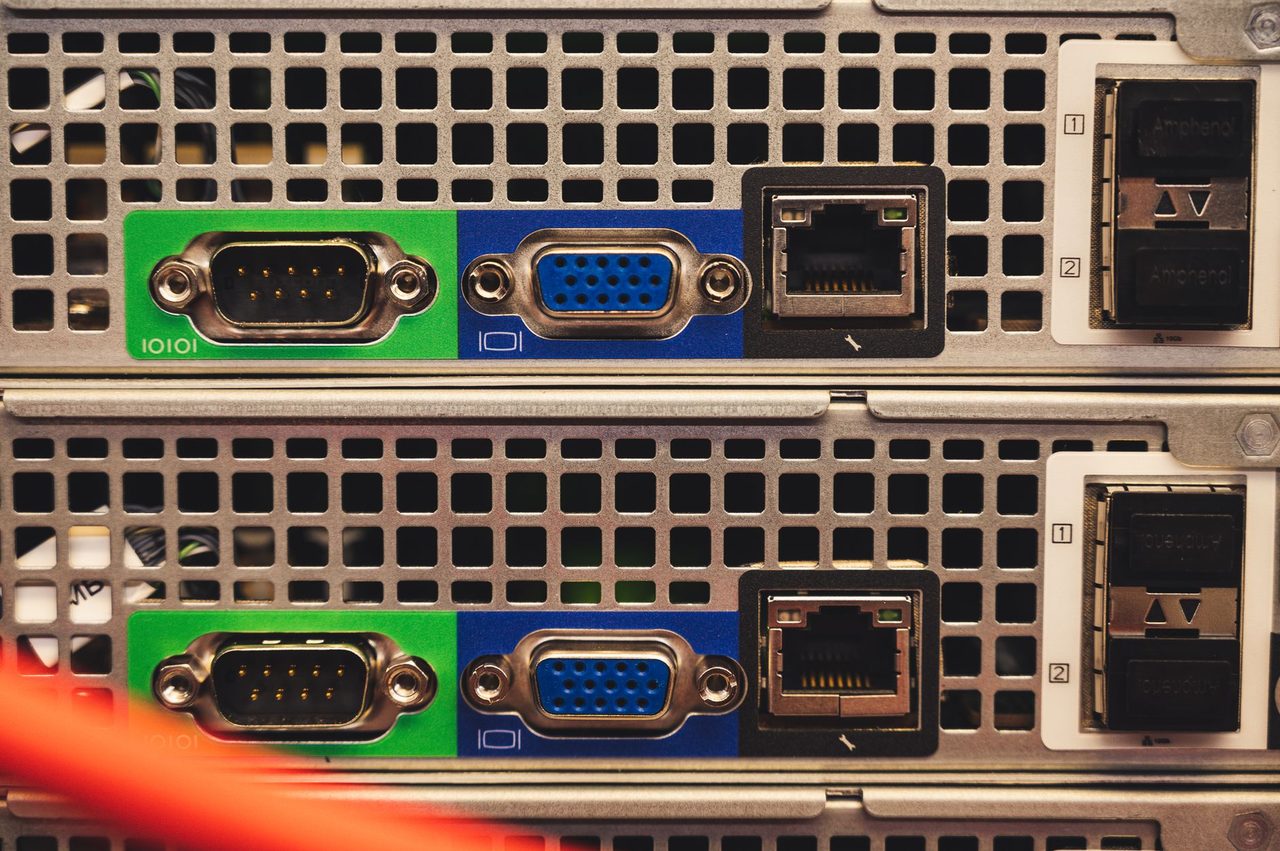
Photo: Brett Sayles on Pexels
India’s data-centre market is adding IT load fast, but the commercial conversation on energy is still too procurement-heavy. In 2026, the bigger differentiator is increasingly operational: how efficiently a facility converts incoming electrical energy into usable IT work, how intelligently it controls flexible loads and storage, and how well those decisions translate into lower cost, lower diesel dependence and higher resilience.
For operators in Mumbai, Chennai, Hyderabad, Noida and emerging edge locations, this means the energy strategy cannot stop at open access, captive structures or RTC supply. It must extend into real-time site optimisation. In practice, three levers now matter together: PUE optimisation, a production-grade energy management architecture, and on-site BESS sized for economics as well as reliability.
This article focuses on that integrated site strategy for Indian data centres in 2026: where the savings actually come from, what numbers to underwrite, and what lenders, utilities and developers should test before approving capex.
Why this topic matters in 2026
Most Indian data centres still treat facility efficiency, battery systems and tariff response as separate engineering workstreams. That is leaving money on the table.
A modern site may be facing all of the following at once:
- DISCOM demand charges in the range of roughly Rs 250/kVA/month to above Rs 500/kVA/month depending on state and voltage level
- Time-of-day energy price differentials that can move by Rs 1.0-3.0/kWh or more between shoulder and peak windows
- High DG backup readiness requirements despite low annual runtime targets
- Cooling energy accounting for around 25-40% of total facility energy in many Indian climates, depending on density and system design
- UPS and transformation losses that become material at scale
- Corporate pressure to show hourly clean-energy progress, even where the commercial instrument is still monthly or block-based
A 30 MW IT-load campus operating at an annualised PUE of 1.45 consumes about 381.4 GWh/year at the facility level. If that same site improves to 1.35, annual energy falls to about 354.8 GWh/year. That is a reduction of roughly 26.6 GWh/year.
At an all-in delivered electricity cost of Rs 8.0/kWh, that is approximately Rs 21.3 crore/year in gross energy savings. Even after allowing for partial-load effects, redundancy constraints and implementation costs, the economic signal is too large to ignore.
This is why PUE optimisation is no longer just a sustainability KPI. It is a bankable cost-reduction tool that also improves the effectiveness of BESS and EMS decisions.
Start with the right metric stack, not just nameplate PUE
One recurring problem in board discussions is that PUE is treated as a single headline number without a control-oriented metric stack underneath it. For investment decisions, that is not enough.
In 2026, data-centre operators should track at least six layers:
- Design PUE at reference ambient conditions
- Measured annualised PUE by block, hall and campus
- Cooling system kW/RT or equivalent chiller plant efficiency trend
- Electrical distribution losses from incoming point to rack-level delivery
- Marginal PUE during peak ambient and partial-load operation
- Carbon or clean-energy intensity by hour, aligned to site demand
Why does marginal PUE matter? Because many Indian facilities still run below ultimate design occupancy. At lower IT utilisation, fixed cooling and electrical overheads can materially worsen effective efficiency. A campus that looks acceptable at stabilised full load may be expensive during the long ramp-up period.
The engineering implication is simple: optimise for part-load reality, not only for brochure conditions.
That means reviewing:
- Chiller sequencing and condenser-water reset logic
- CRAH/CRAC fan-speed control and static-pressure bands
- Supply-air temperature setpoints versus actual IT inlet compliance
- Free-cooling or economiser feasibility where climate and filtration economics support it
- UPS loading bands and modular right-sizing
- Transformer loading and harmonic loss impacts
- Lighting, auxiliary and water-system parasitics
For lenders and investors, measured data quality is equally important. If submeters do not cleanly split IT, cooling, UPS losses, lighting, pumps and common auxiliaries, the operator cannot verify savings or dispatch storage optimally.
This is where Energy management systems becomes central. An EMS for a data centre should not be a reporting dashboard alone. It must ingest interval data from utility incomers, DGs, UPS, chillers, pumps, cooling towers, major feeders and BESS, then execute control logic against tariffs, reliability constraints and operating envelopes.
The 2026 business case for on-site BESS in Indian data centres
BESS economics for data centres are often misunderstood because teams evaluate storage only as a diesel-reduction asset or only as a tariff-arbitrage asset. In reality, the strongest cases in India usually combine several value streams.
A front-of-meter or behind-the-meter BESS at a data-centre site can create value through:
- Peak demand shaving to reduce billing demand
- Time-of-day arbitrage where tariff spreads justify cycling
- Improved ride-through and reduced DG starts for short disturbances
- Support for no-break transfer strategies in coordination with UPS topology
- Renewable shape balancing for captive or open-access supply portfolios
- Power-quality support depending on converter capabilities and integration design
- Deferred electrical infrastructure augmentation in select cases
As of 2026, installed BESS capex in India remains highly configuration-dependent. For a commercial-grade, containerised lithium-ion system with PCS, EMS integration, HVAC, fire safety and balance-of-plant, many projects still underwrite in a broad range around USD 180-280/kWh equivalent at site level, though imported component pricing, PCS specification, safety philosophy, duration and redundancy can move this materially. In rupee terms, fully installed costs for data-centre-grade systems can land far above utility-scale benchmarks because of site constraints, performance guarantees and integration complexity.
What should operators model first? Not energy arbitrage alone.
Take a hypothetical 20 MW facility with a recorded monthly billing demand close to contract demand and a peak-shaving opportunity of 3-5 MW during defined windows. If the applicable demand charge is Rs 350/kVA/month and a 4 MW BESS can reliably reduce billable peak by 3.5 MVA, annual gross savings may approach Rs 1.47 crore before losses and degradation adjustments. If the same battery also performs one partial arbitrage cycle per day with a net margin of Rs 1.5/kWh over 4 MWh dispatched average, that adds about Rs 0.22 crore/year. Add avoided DG fuel and maintenance from fewer nuisance starts or short-duration disturbances, and the economics improve further.
However, the biggest mistake is oversizing for stacked value that cannot all be captured simultaneously. A battery reserved for reliability cannot be assumed fully available for daily arbitrage during all periods. State-of-charge reservation, outage risk, UPS coordination and black-start philosophy must drive dispatch constraints.
This is where On-site generation & BESS planning needs to be tied tightly to the site’s one-line diagram, UPS architecture, DG transfer logic and utility event history.
EMS architecture: what separates a dashboard from an operating system
In procurement documents, EMS is often underspecified. For a serious data-centre application, the system should be designed as an operating layer that closes the loop between measurement, forecasting and control.
At minimum, the 2026 EMS stack should include:
- Revenue-grade metering at incomers and major export-import points
- High-resolution submetering for chillers, pumps, cooling towers, UPS modules, PDUs, lighting and BESS
- Tariff engine covering ToD, demand charges, penalties and contracted capacity terms
- Weather and ambient feed for cooling-load prediction
- IT-load forecast input from operations planning
- Battery dispatch optimiser with degradation-aware logic
- Alarm and event correlation across utility, DG, UPS and BESS systems
- Cybersecurity controls aligned with critical infrastructure practice
- Audit trail for setpoint changes and manual overrides
The control philosophy should answer practical questions, such as:
- When should chillers be pre-cooled or thermal inertia used ahead of peak tariff windows?
- What minimum state of charge must be reserved for ride-through under N-1 conditions?
- Under what grid-quality thresholds should BESS support be enabled before DG start?
- How should battery dispatch change when ambient conditions push cooling loads sharply higher?
- How should the site prioritise savings versus resilience during utility constraints?
Without this logic, the battery becomes an expensive static asset and PUE initiatives remain engineering studies rather than monetised outcomes.
For Indian sites with mixed sources of power, EMS also helps reconcile grid supply, captive or open-access renewable scheduling, and site-level consumption. That is becoming more valuable as operators seek cleaner hourly supply positions without compromising uptime.
PUE optimisation opportunities with the fastest payback
Not every data-centre efficiency measure requires a major retrofit. In India’s 2026 market, some of the best payback opportunities are still in controls, sequencing and airflow management.
Typical no- or low-regret measures include:
- Raising chilled-water temperature where IT inlet conditions allow
- Tightening hot-aisle/cold-aisle containment integrity
- Eliminating bypass airflow and blanking-panel gaps
- VFD optimisation for pumps and fans
- Chiller sequencing revisions to avoid inefficient low-load operation
- Cooling tower fan and approach-temperature optimisation
- UPS module rationalisation to keep loading in a better efficiency band
- Harmonic mitigation review where excess losses are measurable
- Preventive maintenance linked to measured efficiency drift rather than static intervals
What savings are realistic?
For an operating Indian facility with weak airflow discipline and conservative setpoints, a 0.05-0.12 PUE improvement is often still available without redesigning the entire plant. On a 15 MW average IT load, even a 0.07 PUE reduction can cut annual energy by roughly 9.2 GWh. At Rs 8.5/kWh, that is about Rs 7.8 crore/year gross.
These savings also improve the BESS business case indirectly:
- Lower auxiliary load means smaller battery capacity is needed to cover equivalent critical durations
- Reduced peak cooling demand can improve demand-shaving performance
- Lower total site consumption can improve the clean-energy matching ratio
- Reduced thermal stress can make load forecasts more predictable for EMS dispatch
In short, the cheapest kilowatt-hour for a data centre is often the one not consumed by avoidable cooling and electrical losses.
How utilities, developers and lenders should evaluate projects
For utilities, data-centre load growth is commercially attractive but operationally sensitive. Sites have high reliability expectations, rapidly changing ramp profiles and increasingly sophisticated behind-the-meter assets. Utilities should therefore assess data-centre interconnections not just as static loads but as controllable nodes that may include BESS, DG, advanced EMS and future flexible demand capabilities.
For RE developers and energy suppliers, the implication is that supply contracts need closer integration with site behaviour. A site with strong EMS and BESS can absorb a more nuanced supply shape than one relying purely on flat contracted blocks. That can lower portfolio balancing costs if structured properly.
For lenders, the diligence checklist should include:
- Historical interval load data, not only monthly bills
- Verified PUE trend and submetering coverage
- Utility tariff structure and expected revisions in the state
- BESS use-case hierarchy and availability assumptions
- Degradation model and augmentation plan
- Integration risk with UPS, DG and protection systems
- Fire safety design, suppression and isolation philosophy
- O&M capability and spare strategy
- Cybersecurity and control-system resilience
- Measurement and verification plan for savings claims
Projects fail underwriting when sponsors double-count value streams, assume unrealistic cycle depth, or ignore the operational constraint that data centres are reliability assets first and merchant optimisation assets second.
A robust approach is to rank value streams in order:
- Reliability and power-quality support
- Demand-charge reduction
- Diesel runtime reduction for short events
- ToD arbitrage
- Renewable shape alignment and reporting benefits
Only after the first two or three are validated should additional upside be added to the base case.
A practical roadmap for Indian data-centre operators
A sensible 2026 roadmap is phased, data-led and financeable.
Phase 1: Establish the baseline
- Clean one-line and meter architecture
- 12 months of interval data consolidation
- Hall-wise and system-wise PUE decomposition
- Utility tariff and demand-charge analysis
- Event log review for sags, outages and DG starts
Phase 2: Capture operational efficiency
- Cooling and airflow optimisation
- UPS and transformer efficiency review
- EMS functional specification
- Quick-payback controls retrofits
Phase 3: Size storage properly
- Define reliability reserve requirement
- Identify realistic peak-shaving windows
- Test ToD arbitrage only after reserve logic is fixed
- Simulate dispatch using actual load and tariff data
Phase 4: Integrate clean supply and controls
- Align site load profile with contracted clean-energy shape
- Build hourly visibility of consumption and supply
- Refine dispatch rules for high-ambient and grid-event days
Phase 5: Institutionalise governance
- Monthly energy-performance review
- Savings verification against weather and occupancy normalisation
- Battery degradation and augmentation tracking
- Annual retuning of EMS algorithms and setpoints
Operators that follow this route usually avoid the two common extremes: buying an oversized battery with weak control logic, or running a sophisticated plant on manual heuristics that leave efficiency savings uncaptured.
The strategic point is clear. For Indian data centres in 2026, energy competitiveness will come from integrating facility efficiency, controls and storage into a single operating model. Procurement still matters, but the site itself is now a major source of value creation. Better PUE lowers cost. Better EMS turns data into dispatch. Better BESS design improves resilience while monetising flexibility. Together, they create a more financeable and more defensible energy strategy.
Growthifye supports data-centre operators, developers and investors with Load & reliability engineering, Energy management systems and On-site generation & BESS advisory tailored to Indian market conditions. If you are evaluating a new campus, retrofit or investment case, contact Growthifye’s advisory desk to discuss a practical roadmap.
Explore Growthifye's related capabilities
This analysis connects directly to our advisory practice: Load & reliability engineering · 24/7 clean power contracting · Grid connectivity & redundancy · On-site generation & BESS.
About the author

Chief Executive Officer, Growthifye — With over 23 years in management consulting, Sudarshan has taken businesses from concept to scale — building and scaling new-age digital and energy businesses.
- 23+ years in management consulting
- EY alumnus
- Led large-scale BESS programmes, capital raises and advisory mandates
Want this analysis applied to your project?
Talk to our team