India Data Centre Diesel Backup Optimisation 2026: DG Runtime, BESS and Compliance
By Sudarshan Karweer · sudarshan@growthifye.com · +91 84510 99371 (Call / WhatsApp) · 2026-09-15
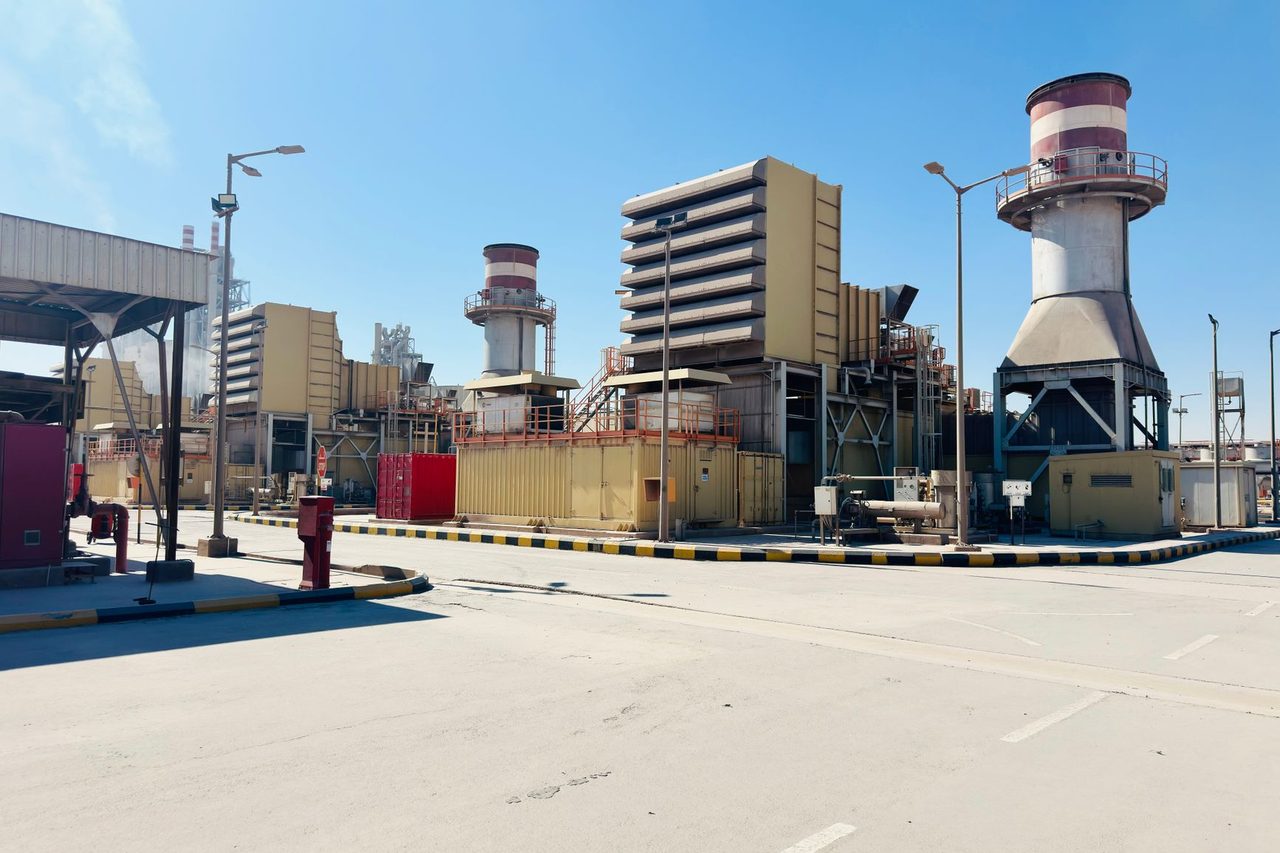
Photo: Mumtaz Niazi on Pexels
# India Data Centre Diesel Backup Optimisation 2026: DG Runtime, BESS and Compliance
India’s data centre market has matured beyond the old backup-power rulebook of “install more DGs and enough fuel for the worst day”. In 2026, diesel strategy is no longer only a resilience question. It is now a cost, emissions, permitting, air-quality, control-system and financing issue.
For hyperscale, colocation and enterprise data centres in India, backup architecture must work under three concurrent realities:
- grid outages are less frequent in top-tier locations than a decade ago, but voltage events, transfer disturbances and feeder constraints still matter
- diesel gensets remain indispensable for long-duration backup and black-start support
- battery energy storage systems are increasingly viable for ride-through, peak shaving, fast reserve and reduced DG starts
This has changed the optimisation problem. The key question is no longer whether to have DGs. It is how to minimise diesel runtime, low-load operation, testing losses and emissions exposure while preserving uptime commitments and regulatory compliance.
A robust 2026 strategy typically blends DGs, UPS, on-site BESS, transfer logic, fuel planning and energy controls into a single reliability stack. For many facilities, this is now a board-level issue because diesel consumption directly affects operating cost, customer ESG scrutiny, lease commitments and local authority relations.
Why diesel backup strategy is changing in 2026
Several factors are forcing Indian data centre operators to revisit conventional backup design.
First, diesel economics have become more material. Bulk HSD prices vary by state and procurement structure, but delivered industrial diesel for standby fleets commonly lands around Rs 88-98/litre in many major markets in 2026. At a specific consumption of roughly 0.24-0.28 litres/kWh for medium-speed standby operation, the variable fuel cost alone can reach about Rs 21-27/kWh before lubricants, maintenance reserves and auxiliary loads. At poor loading, the effective cost rises further.
Second, low-load DG operation remains a chronic issue in oversized backup systems. Data centres are often built in phases, while DG plants are installed for final capacity or near-final redundancy. During early occupancy, individual units may run well below the preferred 60-80% loading band. That increases wet stacking risk, carbon deposits, maintenance frequency and fuel inefficiency.
Third, urban air-quality oversight is tighter. State pollution control boards, local fire authorities and industrial departments are more attentive to stack compliance, acoustic limits, fuel storage, test schedules and emergency-use claims. Backup fleets that were historically ignored outside outage events are now being examined more closely, especially in NCR, Mumbai Metropolitan Region, Chennai peripheries, Bengaluru clusters and Hyderabad growth corridors.
Fourth, customers increasingly ask better questions. Large cloud and colocation tenants are no longer satisfied with generic backup statements. They want transparency on transfer performance, diesel autonomy, black-start logic, outage survivability and emissions mitigation during prolonged disruptions.
Finally, BESS costs and controls have improved. For high-reliability C&I applications, installed four-hour lithium-ion systems in India still vary widely by chemistry, integration and fire-safety scope, but turnkey ranges of about Rs 4.8-6.8 crore/MWh are increasingly seen for robust commercial deployments in 2026. Shorter-duration systems for power-quality support and DG optimisation can be more attractive on a Rs/site basis than a pure energy-cost view suggests.
The real cost of diesel in data centres
Most business cases still underestimate the full cost of backup diesel. Fuel is only the visible component.
A practical total-cost lens should include:
- delivered fuel cost and intra-site handling losses
- annual DG maintenance contracts, consumables and overhaul reserves
- periodic no-load or low-load test inefficiency
- synchronisation panel and breaker maintenance
- lube oil, coolant and filter replacement
- compliance costs linked to emissions, stack testing and acoustic controls
- fuel inventory carrying cost and degradation management
- outage-related staffing and emergency logistics
- hidden IT risk from transfer events or poor power quality during DG transitions
For many facilities, once all-in standby generation cost is annualised over actual runtime, the effective energy cost from DG operation can exceed Rs 28-35/kWh for real-world intermittent usage. That matters because even if grid outages are infrequent, repeated testing and transfer exercises can create significant lifetime cost.
There is also a reliability paradox. Excess DG capacity improves nameplate redundancy but can reduce operational quality if units spend years underloaded. More machines do not automatically mean better resilience. Better dispatch logic often does.
This is where Growthifye’s Load & reliability engineering approach becomes relevant. The goal is to size and stage backup assets around actual IT ramp, mechanical load, redundancy philosophy and outage-duration scenarios, not only around a static peak-load assumption.
Where BESS fits in a diesel-minimisation architecture
BESS is not a replacement for long-duration diesel backup in most Indian data centres today. It is a control and optimisation layer that can materially reduce diesel starts, smooth transfers and improve loading.
In practice, BESS can deliver value in five distinct use cases.
- Ride-through for sub-minute to multi-minute disturbances, avoiding unnecessary DG starts for brief grid events
- Seamless transfer support during feeder interruptions, reducing stress on UPS and rotating equipment
- DG loading support, where batteries absorb or inject power so running gensets stay closer to efficient loading bands
- Black-start and restart sequencing support for selected systems
- Time-of-day optimisation when the same BESS is also integrated with tariff management, demand control or solar
For example, a 20 MW IT-plus-MEP data centre with total critical backed load of 28 MW may historically start multiple DGs on every feeder interruption, even if grid restoration occurs within a few minutes. If a 10-15 MW / 20-30 MWh BESS is configured to hold critical load through short events and support staged generator commitment, diesel starts can fall sharply. In facilities with frequent momentary disturbances, this alone may justify a meaningful portion of the battery capex.
There is also an efficiency gain. Suppose the site needs 12 MW during an outage window but the available generator block size forces operation of 3 x 5 MVA units at poor load factor. A BESS-enabled dispatch scheme may let the site run 2 generators near optimal loading while batteries manage transient peaks and step loads. Fuel burn per useful kWh drops, maintenance stress reduces and response quality improves.
This architecture is especially compelling where outages are not extremely long but grid quality is inconsistent. In such cases, diesel is still mandatory for endurance, while BESS prevents overreaction to every disturbance.
Growthifye’s On-site generation & BESS capability is well aligned to these configurations because the design question is not merely battery sizing. It is the interaction between UPS topology, DG minimum load, protection coordination, transfer sequencing, cooling continuity and operating philosophy.
Design choices that determine whether the strategy works
Many diesel-plus-BESS projects underperform because the design remains vendor-led rather than scenario-led. In 2026, four engineering decisions matter most.
1) Define outage classes, not one generic outage
A site should classify disturbances into at least four buckets:
- sub-second and power-quality events
- 1-15 minute feeder interruptions
- 15-120 minute outages
- prolonged outages beyond two hours, including regional fuel-logistics risk
Each class should have a separate response logic. If every event triggers the same DG sequence, the asset mix is not optimised.
2) Size DG blocks to phase load growth
Oversized fixed blocks create chronic underloading in early years. A better approach is staged installation or modular capacity blocks aligned to contracted IT capacity, with clear N, N+1 or 2N logic by phase. For some campuses, leasing temporary standby capacity during early ramp may be more economical than installing all final DGs upfront.
3) Set minimum-load and synchronisation logic properly
DG OEM recommendations on minimum loading cannot be treated casually. A poorly tuned synchronisation system can keep too many units online for too long. Controls should enable:
- automatic de-commitment of excess generators as load stabilises
- BESS smoothing for large motor starts and cooling transients
- spinning reserve targets based on actual criticality, not arbitrary legacy settings
- test-mode operation that prevents prolonged no-load running
4) Integrate BESS with site EMS and UPS logic
Battery value is lost if it is electrically isolated from broader site controls. The BESS should exchange status with the EMS, DG controllers, UPS, switchgear and sometimes cooling plant controls. A data centre that deploys storage only as a standalone asset misses much of the operating benefit.
Compliance, permitting and lender diligence points
Diesel optimisation is also a compliance strategy. By 2026, serious projects should build a documented evidence trail covering emissions, safety and emergency-use justification.
Key diligence areas include:
- CPCB and state pollution control requirements for DG stack emissions and stack height
- consent-to-establish and consent-to-operate conditions where applicable
- PESO considerations for bulk fuel storage and handling systems
- fire authority approvals for diesel storage, transfer pumps, containment and battery rooms
- acoustic enclosure compliance at site boundary and near sensitive receptors
- emergency runtime assumptions versus actual fuel autonomy on site
- fuel polishing, water contamination checks and long-duration storage quality controls
- battery fire detection, suppression zoning and thermal runaway response plan
Lenders and large tenants increasingly ask for evidence that backup architecture has been stress-tested against realistic outage durations, not only against a single design-day assumption. They also want to see that environmental non-compliance will not force constrained operation during emergencies.
A prudent underwriting checklist should ask:
- How many annual DG start events are expected under actual grid conditions?
- What percentage of those starts can BESS eliminate?
- What is the minimum stable loading band for each genset model?
- How many hours of on-site diesel autonomy exist at N and N+1 conditions?
- What is the site’s refuelling plan during city disruption or extreme weather?
- Can cooling and life-safety systems be prioritised differently from non-critical load during extended events?
These are not secondary details. They directly affect uptime bankability.
A practical 2026 business case framework
For Indian data centres, the best diesel-optimisation investments usually pencil out from avoided starts, avoided low-load inefficiency, maintenance savings and improved reliability rather than from energy arbitrage alone.
A practical business case should quantify:
- baseline annual DG runtime hours by event type
- number of annual starts and short-cycle operations
- litres/kWh at actual loading, not brochure loading
- annual maintenance cost per DG and overhaul reserve assumptions
- expected BESS contribution to avoided starts and better generator loading
- value of avoided UPS stress and reduced transfer risk
- cost of tenant-facing outage incidents or SLA exposure
- optional upside from using the same BESS for tariff optimisation or solar integration
Consider a stylised example. A 30 MW critical-load campus sees 80 grid disturbance events annually, but only 10 of them extend beyond 15 minutes. If BESS avoids generator start for 60 of the short events and allows fewer units to run during half of the longer events, the savings may come from:
- lower fuel consumption
- fewer maintenance intervals tied to starts and runtime
- reduced need for no-load or low-load test runs
- lower probability of transfer-related trips
In some cases, the simple payback for the battery component attributable to backup optimisation can land in the 4-7 year range, depending on event frequency, diesel cost, DG oversizing and whether additional use cases are stacked. Sites with poor power quality or frequent nuisance starts often see stronger economics than sites with very stable utility supply.
But owners should avoid one mistake: forcing the BESS business case entirely through peak-shaving assumptions. For data centres, resilience-led value often dominates. The economic model should reflect that reality.
What developers, utilities and policymakers should do next
Data centre backup architecture is becoming a system-planning issue, not merely a mechanical-electrical package item.
Developers should move diesel strategy earlier in project development, before finalising electrical single-line diagrams and capacity phasing. The right answer may differ sharply between Chennai, Mumbai, Hyderabad, Noida and Pune because grid quality, land constraints, ambient conditions, pollution sensitivity and fuel logistics all differ.
Utilities and state agencies should recognise that high-quality grid service to data centre clusters reduces standby diesel dependence. Better feeder reliability, transparent outage data and faster restoration protocols can directly lower urban diesel burn.
Policymakers should also enable cleaner backup transitions through clearer treatment of behind-the-meter BESS paired with critical facilities. Ambiguity around approvals, metering boundaries and emergency-operating logic still slows deployment in some jurisdictions.
For owners and operators, the 2026 message is straightforward: keep diesel for endurance, but stop using it as the first response to every grid event. A modern architecture combines UPS, DG, controls and storage so each asset does only the job it is best suited for.
That is the route to lower fuel cost, fewer starts, stronger compliance and better uptime quality.
If your team is evaluating DG right-sizing, BESS integration, transfer philosophy or a new backup-power standard for an Indian data centre, contact Growthifye’s advisory desk. We help clients turn reliability requirements into bankable technical design, operating strategy and investable project scope.
Explore Growthifye's related capabilities
This analysis connects directly to our advisory practice: Load & reliability engineering · 24/7 clean power contracting · Grid connectivity & redundancy · On-site generation & BESS.
About the author

Chief Executive Officer, Growthifye — With over 23 years in management consulting, Sudarshan has taken businesses from concept to scale — building and scaling new-age digital and energy businesses.
- 23+ years in management consulting
- EY alumnus
- Led large-scale BESS programmes, capital raises and advisory mandates
Want this analysis applied to your project?
Talk to our team