India Data Centre 24/7 CFE 2026: Hourly Matching, CERC DSM and BESS Design
By Sudarshan Karweer · sudarshan@growthifye.com · +91 84510 99371 (Call / WhatsApp) · 2026-09-15

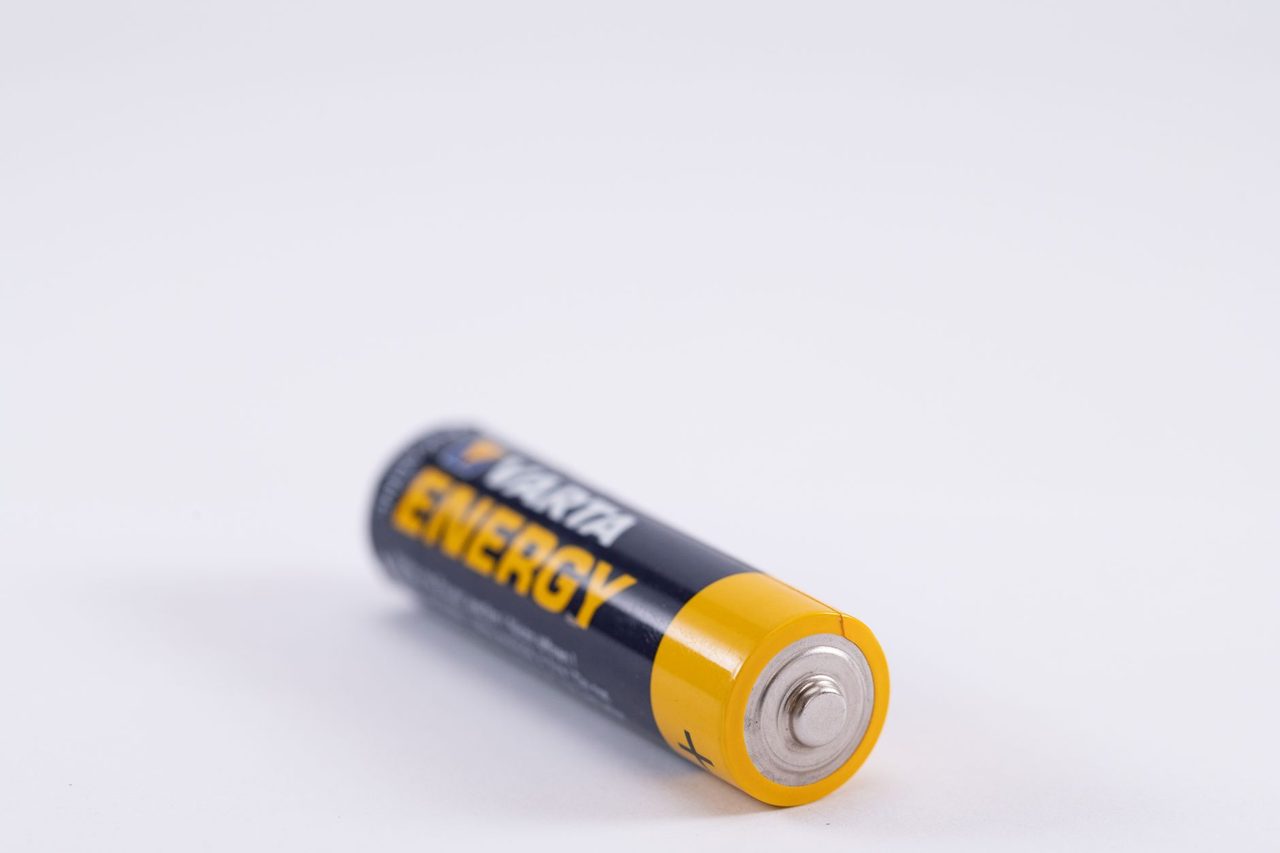
Photo: Brett Sayles on Pexels
India’s data-centre market is now large enough that power procurement is no longer a support function; it is a board-level risk, cost and customer-commitment issue. In 2026, the next step beyond annual renewable-energy sourcing is 24/7 carbon-free energy, or 24/7 CFE: matching data-centre consumption with clean electricity on an hourly basis as closely as feasible, while preserving uptime, power quality and tariff competitiveness.
For Indian operators, however, 24/7 CFE is not a simple import of US or European procurement models. India’s state-wise retail tariffs, open-access charges, banking limits, scheduling rules, deviation settlement, transmission congestion, curtailment history and standby requirements all shape what “hourly matching” can mean in practice. A facility in Chennai, Hyderabad, Navi Mumbai or Noida may face very different economics for the same target. The right strategy is therefore not a slogan but an engineered combination of load analysis, contracting, scheduling discipline, on-site storage and auditable energy accounting.
This article sets out a practical 2026 framework for Indian data centres pursuing 24/7 CFE, focusing on hourly matching, CERC DSM implications, battery sizing logic, and contract architecture that can survive lender, customer and regulator scrutiny.
What 24/7 CFE means for an Indian data centre in 2026
At its core, 24/7 CFE means measuring the facility’s hourly load and comparing it with the hourly clean-energy supply portfolio attributable to that load. Unlike annual matching, where a data centre can buy enough renewable energy over a year to offset total consumption, hourly matching highlights the actual temporal gap between consumption and clean generation.
For data centres, this matters for three reasons:
- customer requirements are becoming more granular, especially from hyperscalers and colocation clients with science-based decarbonisation targets
- grid stress is rising in several states during evening peaks and high-temperature months, making hourly resilience and price shaping more valuable
- lenders and counterparties increasingly distinguish between annual renewable procurement and operationally credible round-the-clock clean supply
In practice, an Indian data centre’s 24/7 CFE score in 2026 depends on five layers:
- the shape of the IT and cooling load, including night/day variation and seasonal peaks
- the renewable supply mix, usually solar-heavy unless paired with wind or hybrid contracts
- access to grid imports under retail or open-access structures
- storage and backup flexibility, especially BESS and DG coordination
- metering, scheduling and settlement capability sufficient for hourly accounting
A conventional annual renewable strategy may achieve 60-100% annual energy offset with relatively low complexity. A high hourly match, say 70-90% across the year, is much harder. Solar alone will usually produce strong daytime coverage but large evening and night deficits. Wind can reduce this gap, but output remains seasonal and locationally variable. BESS improves hourly alignment, but at current 2026 costs, using batteries to carry a large base load across long nighttime durations is still capital intensive unless the facility optimises the residual shape rather than trying to eliminate it entirely.
Why annual RE percentages are no longer enough
Many Indian C&I buyers still communicate targets such as “100% renewable electricity” based on annual units procured. That metric is easy to explain but weak as an operational signal. A data centre running at 20 MW average load consumes about 175 GWh per year. An annual renewable contract for the same volume says little about whether clean power was available in the 8 pm to 2 am interval when solar output is zero and grid marginal emissions are often higher.
That distinction now affects commercial outcomes.
First, enterprise customers increasingly ask for hourly or at least time-sliced reporting. Second, annual matching can mask significant exposure to evening tariffs, congestion and balancing costs. Third, where operators intend to make premium sustainability claims, poor temporal alignment creates reputational and audit risk.
A practical hourly matching framework for Indian data centres should therefore classify energy into the following buckets:
- direct hourly clean match from contracted generation
- shifted clean match via BESS dispatch
- unmatched grid supply during deficit hours
- surplus clean generation in hours where contracted output exceeds load
This classification helps management answer three hard questions:
- what share of the load is truly covered hour by hour?
- what does each additional percentage point of hourly match cost?
- which interventions improve both cost and resilience instead of only optics?
That is where Growthifye’s 24/7 clean power contracting and Energy management systems capabilities become relevant: not just signing PPAs, but building a dispatchable, measurable portfolio that can actually perform against an hourly target.
The 2026 Indian market context: tariffs, charges, DSM and congestion
In 2026, the economics of 24/7 CFE are driven as much by market rules as by technology costs. Data-centre operators need to model at least four cost layers beyond the generator tariff.
The first is delivered energy cost under the chosen route:
- state retail supply for HT/EHT consumers can still land in roughly the Rs 7.0-10.5 per kWh range depending on state, contracted demand, time-of-day slabs and electricity duty
- open-access renewable power may show attractive base tariffs, often around Rs 2.8-4.5 per kWh at generator busbar for solar, wind or hybrid projects, but delivered cost can rise materially after wheeling, transmission, CSS where applicable, standby, scheduling, SLDC fees, losses and banking treatment
- firmed renewable products or RTC structures can settle materially above plain-vanilla solar because the seller is pricing shape risk, imbalance and firming resources
The second layer is time-of-day exposure. States continue to sharpen ToD signals, especially for peak evening demand. A portfolio that reduces import during 18:00-23:00 can save disproportionately more than one that merely lowers annual units.
The third layer is deviation and balancing risk. Under the CERC Deviation Settlement Mechanism and related scheduling discipline in ISTS-connected transactions, poor forecasting and schedule management create cash leakage. Exact rates vary with market and system conditions, but the principle is consistent: if your renewable portfolio and storage strategy are not operated with dispatch discipline, your notional cheap energy becomes expensive.
The fourth layer is congestion and curtailment. Even when annual CUFs look acceptable, hourly matching suffers if power cannot be scheduled when needed due to transmission constraints or if generation is concentrated in a single renewable profile. In 2026, several buyers have learned that a low tariff quote from a remote renewable project is less useful if actual hourly deliverability is weak during critical load hours.
For this reason, any 24/7 CFE plan should include a location-adjusted deliverability model, not just an annual energy model.
Portfolio design: solar, wind, hybrid and BESS by load shape
The central design question is simple: what portfolio gets the highest reliable hourly clean match at acceptable landed cost?
For an Indian data centre, the answer usually starts with the load shape.
Consider three stylised examples:
- Base-load colocation facility: 15 MW nearly flat load, load factor above 0.9
- Hyperscale campus with cooling variation: 25 MW average, daytime rise of 10-15%
- AI-heavy site with intermittent compute ramps: 30 MW base with short-duration spikes and high power-quality sensitivity
A flat load is the hardest to match with standalone solar. If a 15 MW average-load site procures enough solar to cover a large share of annual consumption, midday surplus can be substantial while nighttime deficit remains large. Adding wind improves nocturnal and monsoon coverage. In many Indian cases, a solar-wind hybrid ratio around 55:45 to 70:30 by annual generation is worth testing, but the optimum depends heavily on project location, evacuation path and seasonal coincidence with the load.
BESS then addresses the residual mismatch. But here operators should avoid a common mistake: sizing batteries to chase annual marketing claims rather than the economic deficit blocks.
A practical battery sizing sequence is:
- establish 15-minute or hourly load profile for a full year
- map expected renewable generation profile by contracted asset, with losses and curtailment assumptions
- identify recurring deficit windows by month, not just annual average
- rank deficit windows by combined cost of grid import, ToD premium, DSM exposure and customer-value of higher hourly CFE
- size BESS first for the highest-value deficit blocks, then test incremental duration
For many Indian data centres in 2026, the first economically sensible BESS tranche is not 6-8 hours of deep energy shifting. It is more often 1-2 hours for peak shaving, schedule smoothing, transfer support, and selective evening firming. Depending on tariff spread and system design, some campuses may justify 3-4 hours, especially where evening tariffs are punitive or reliability services are highly valued. But using BESS to cover the entire night base load remains expensive unless paired with a broader contract portfolio and clear premium value from customers.
Indicatively, turnkey utility-scale or behind-the-meter BESS costs in 2026 can vary widely by chemistry, augmentation plan, PCS configuration, fire systems and import content, but many projects are still evaluated in a broad range around Rs 4.5-7.0 crore per MWh for robust C&I applications. The right question is not whether BESS is cheap or expensive in isolation; it is whether a specific dispatch use case beats the alternative cost of peak power, overbuilt contracting, diesel running, or underperformance against service-level and sustainability commitments.
Designing an hourly matching operating model
A 24/7 CFE strategy fails if it is treated as a static procurement exercise. It must be operated daily through metering, forecasting, scheduling and controls.
The operating model should include the following elements.
First, metering architecture. Revenue-grade interval metering is needed at utility incomers, renewable injection points where attributable, BESS charge/discharge nodes and major internal load blocks where practical. Without clean interval data, hourly claims are weak and dispatch optimisation is guesswork.
Second, forecasting. Renewable generation forecasts should be updated intraday, and cooling-load forecasts should factor ambient conditions, occupancy and IT utilisation trends. For data centres with significant AI or cloud workload concentration, load forecasting should reflect business-driven compute cycles, not just historical averages.
Third, scheduling hierarchy. Establish rules for which resource responds first in each interval:
- contracted renewable generation
- BESS for committed peak blocks or schedule corrections
- utility import under defined thresholds
- DG only for outage, test and emergency conditions
Fourth, battery dispatch logic. BESS should not be reserved only for backup-like symbolism. It should have a clear stacked-value role:
- limit import in high-price or high-emission hours
- smooth renewable forecast error to reduce deviation exposure
- support fast ride-through and transfer stability where configured
- reduce maximum demand and associated network charges where applicable
- improve hourly CFE score in the most material deficit windows
Fifth, claims governance. If the site communicates 24/7 CFE externally, it must define system boundaries, treatment of losses, treatment of battery round-trip efficiency, and whether imported grid power during deficit intervals is considered unmatched or partially matched through separate mechanisms. Ambiguity here creates audit and customer risk.
This is why Load & reliability engineering matters alongside commercial procurement. A data-centre energy portfolio cannot compromise uptime, selectivity, transfer performance, or power quality in pursuit of a higher sustainability metric.
What lenders, customers and boards will ask in 2026
By 2026, sophisticated stakeholders are no longer satisfied with generic claims like “renewable-backed facility.” They ask pointed questions.
Lenders will ask:
- what share of delivered energy is matched hourly versus annually?
- how are curtailment, forecast error and congestion treated in downside cases?
- what proportion of savings depends on policy-sensitive open-access assumptions?
- is BESS value based on tested dispatch cases or theoretical arbitrage only?
Customers will ask:
- can you provide monthly or hourly clean-energy reporting for my contracted footprint?
- what is the facility’s performance during evening peak periods?
- are diesel gensets part of normal energy balancing, or only emergency backup?
- how does your claim differ from annual REC-style accounting?
Boards will ask:
- what is the cost premium to move from annual matching to 70%, 80% or 90% hourly matching?
- which elements are no-regret because they also improve resilience and tariff management?
- what policy changes could impair the business case?
The strongest answers come from a scenario-based roadmap rather than a binary target. For example:
- Phase 1: 40-60% hourly match using hybrid open-access portfolio, interval metering and EMS visibility
- Phase 2: 60-75% through selective BESS, better scheduling and evening deficit reduction
- Phase 3: 75%+ through portfolio diversification, additional storage or locational optimisation of future capacity
This lets management compare marginal cost per additional matched MWh and avoid overcommitting to a single expensive architecture.
A practical 2026 roadmap for Indian data centres
For most Indian operators, the best path to 24/7 CFE is phased and auditable.
Start with a 12-month hourly baseline of load, tariff, outages, transfer events and power-quality disturbances. Then build a supply-stack model comparing retail supply, open-access solar, wind, hybrid and storage options on a delivered and settled basis. Include ToD tariffs, losses, wheeling, CSS, banking rules, schedule risk and realistic curtailment assumptions.
Next, define the target metric carefully. A facility does not need to claim “100% 24/7” on day one. It may be commercially smarter to commit to a transparent hourly match range with a stated improvement plan.
Then, prioritise no-regret actions:
- improve cooling and electrical efficiency so the hourly clean-energy requirement itself falls
- implement granular EMS for forecasting and battery dispatch visibility
- optimise demand profile to reduce the most expensive and least clean import hours
- diversify renewable shape instead of overbuying one resource
After that, size BESS around specific use cases, not generic duration headlines. In many cases the first battery MWh should solve schedule volatility, evening peak import and resilience support together. A battery justified only by one narrow revenue stream is more fragile than a battery with stacked technical and commercial value.
Finally, hardwire governance for claims, reporting and contract compliance. The credibility of a 24/7 CFE strategy depends as much on measurement and disclosure as on megawatts procured.
For Indian data centres, 2026 is the year to move from annual renewable percentages to operationally credible hourly clean-power strategy. The winners will be those who combine contracting, control systems, grid interface design and storage economics into one model rather than treating them as separate workstreams.
If your team is evaluating hourly clean-energy targets, BESS-backed firming, or a site-specific 24/7 CFE roadmap, contact Growthifye’s advisory desk for a practical assessment of tariffs, scheduling risk, contract design and project bankability.
Explore Growthifye's related capabilities
This analysis connects directly to our advisory practice: Load & reliability engineering · 24/7 clean power contracting · Grid connectivity & redundancy · On-site generation & BESS.
About the author

Chief Executive Officer, Growthifye — With over 23 years in management consulting, Sudarshan has taken businesses from concept to scale — building and scaling new-age digital and energy businesses.
- 23+ years in management consulting
- EY alumnus
- Led large-scale BESS programmes, capital raises and advisory mandates
Want this analysis applied to your project?
Talk to our team