India 2026 Internal Carbon Pricing Strategy for Industry and Net-Zero Capex
By Sudarshan Karweer · sudarshan@growthifye.com · +91 84510 99371 (Call / WhatsApp) · 2026-09-14
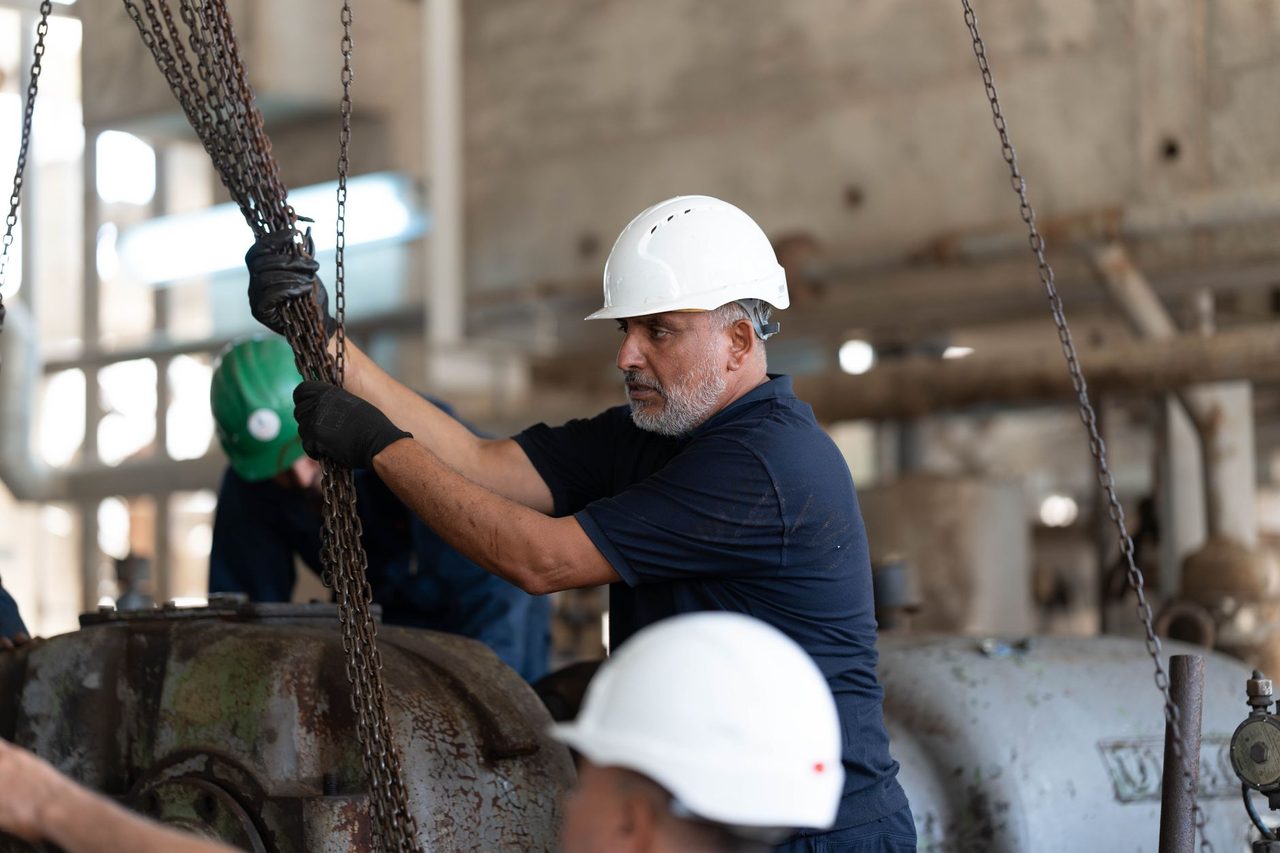
Photo: abdo alshreef on Pexels
Indian industry has spent the last three years building emissions inventories, supplier questionnaires, product carbon models and renewable-power strategies. In 2026, the next question is more commercial: how do boards convert climate data into investment decisions that survive tariff volatility, export pressure, and compliance carbon risk?
One answer is internal carbon pricing. For Indian commercial and industrial consumers, an internal carbon price is not a tax paid to the government. It is a decision tool used to compare projects, stress-test margins and rank decarbonisation options using a rupees-per-tonne CO2e value. Done well, it helps management answer practical questions: should a plant electrify low-temperature heat now or wait; is a waste-heat recovery project better than a short-payback compressed-air retrofit; when does green hydrogen become material; how should CBAM exposure change capex priorities; and how should a company prepare for India’s Carbon Credit Trading Scheme, or CCTS?
This article sets out how Indian manufacturers and infrastructure operators can design an internal carbon pricing framework in 2026, what price ranges are useful, where the model often fails, and how to link it to capex, procurement and audit-ready MRV.
Why internal carbon pricing matters in India in 2026
The case for internal carbon pricing in India is stronger in 2026 than it was even two years ago because three pressures are now converging.
First, compliance and quasi-compliance carbon signals are getting harder to ignore. India’s CCTS architecture is shaping board expectations around measurable abatement and verified baselines. Even where direct obligation is still phased, management teams want visibility on future carbon cost pass-through and the operational consequences of delayed action.
Second, export-facing sectors are dealing with customer and border-pressure signals. EU CBAM exposure continues to matter most for steel, aluminium, cement, fertiliser, hydrogen and electricity-linked value chains, but the wider effect is broader: buyers increasingly want transparent carbon data and credible decarbonisation pathways, not just annual disclosure.
Third, cost curves have moved. Open-access renewable power in several states remains materially cheaper than industrial grid tariffs for suitable load profiles. In many high-tariff states, delivered open-access solar or hybrid renewable power can still land in the range of roughly Rs 4.0-5.5/kWh depending on state charges, banking rules, contract tenor and profile risk, while industrial grid tariffs can sit around Rs 7-10/kWh or more for many consumers. At the same time, battery-backed round-the-clock structures, thermal electrification, biomass substitution, heat pumps and digital efficiency controls are becoming easier to compare on a common carbon-and-rupee basis.
An internal carbon price provides that common basis. It does not replace NPV, IRR or payback. It improves them by assigning an explicit value to avoided emissions, future compliance exposure, export resilience and avoided reputational friction.
What internal carbon pricing actually means
Companies often use the term loosely. In practice, there are three usable models.
- Shadow carbon price: a notional Rs/tCO2e value applied in capex appraisal, procurement evaluation or scenario analysis
- Internal fee: a business unit is charged internally for emissions, and funds are recycled into abatement projects
- Implicit carbon price: management back-solves the carbon value from prior investment decisions or abatement choices
For most Indian C&I firms in 2026, the shadow price is the best starting point. It is simpler, politically easier inside the organisation and immediately usable in plant-level investment committees.
A shadow price can be applied in several ways:
- Add a carbon cost line item to project cash flows
- Use it to rank projects with similar financial returns
- Stress-test product margins under future carbon-cost scenarios
- Evaluate supplier or fuel-switch decisions
- Prioritise plants with the highest rupee exposure per tonne avoided
The most effective design is rarely a single enterprise-wide number used forever. Better practice is a tiered framework: one near-term operating carbon price, one strategic 2030 planning price, and one high-stress case for export or compliance sensitivity.
How to set a practical carbon price in rupees per tonne
There is no single correct Indian internal carbon price in 2026. The right number depends on sector, export profile, energy mix, technology options and exposure to future regulation. But companies should avoid arbitrary values copied from multinational sustainability reports.
A practical framework is to use three bands.
- Base price: Rs 1,500-3,000/tCO2e
- Strategic planning price: Rs 3,000-6,000/tCO2e
- Stress-test price: Rs 6,000-10,000/tCO2e or higher for export-sensitive sectors
Why do these bands work?
The base price is usually enough to influence efficiency retrofits, renewable procurement choices, refrigerant management, fuel switching for low-temperature heat and selected electrification projects. The strategic range starts changing decisions on boilers, process redesign, waste heat, advanced controls and thermal-system replacement. The stress-test range becomes relevant where margin-at-risk from CBAM-style exposure, premium-customer requirements or future compliance carbon costs could be substantial.
Companies should not choose the price in isolation. They should anchor it to actual plant economics:
- Cost of abatement from a marginal abatement cost curve, or MACC
- Current and expected grid emission factor trajectory
- Avoided cost of fossil fuels such as furnace oil, LPG, diesel or coal
- Exposure to export customers asking for lower product emissions
- Likely timing of equipment replacement cycles
- Internal hurdle rates and weighted average cost of capital
For example, consider a low-temperature heat electrification project replacing LPG at a food-processing plant. If the switch raises electricity consumption but shifts part of the load to open-access renewable supply, the direct energy-cost delta might be neutral to mildly positive depending on load factor and state policy. Without a carbon price, the project may fail a simple payback test. Add an internal carbon price of Rs 4,000/tCO2e and avoided emissions of, say, 4,000 tCO2e per year, and the project receives an additional strategic benefit of Rs 1.6 crore per year in the decision model. That may move it above the investment threshold.
Where to apply internal carbon pricing first
Many companies start too broadly and lose momentum. In India, internal carbon pricing works best when first applied to four decision areas.
1) Industrial capex and retrofit prioritisation
This is the highest-value use case. Plant teams usually have a backlog of projects: VFDs, boiler upgrades, WHR, compressed-air optimisation, thermal insulation, solar open access, biomass handling, heat pumps, e-boilers, process controls, captive storage and demand-response systems. Financial returns often look close, especially after financing costs and operational risk are considered.
A carbon price helps create a more defensible ranking. Projects should be scored on:
- Levelised cost of abatement, Rs/tCO2e avoided
- Capex intensity, Rs crore per ktCO2e avoided
- Payback with and without carbon value
- Implementation risk and downtime requirement
- MRV confidence and auditability
This is where Net-zero roadmaps & MACC becomes genuinely commercial rather than just a reporting exercise.
2) Renewable electricity and market procurement
Internal carbon pricing is not only for onsite emissions. It also improves Scope 2 procurement strategy. Suppose a company is comparing grid-only supply, plain solar open access, a solar-wind hybrid PPA, and a firmer structure with storage or market purchases to cover evening loads. The cheapest tariff option may not produce the best combined result once carbon intensity, curtailment risk, banking rules and disclosure requirements are included.
For a plant paying Rs 8.5/kWh average landed grid power and evaluating open-access supply at Rs 4.5-5.2/kWh, the rupee savings may already justify action. But when multiple RE structures have similar energy economics, a carbon price can justify the cleaner profile or a higher-CFE supply arrangement if it materially reduces reported emissions or customer-facing product intensity.
That is one reason RE-led decarbonisation should be integrated with internal carbon pricing rather than handled as a separate procurement track.
3) Export portfolio and product margin stress testing
Exporting manufacturers should use internal carbon pricing at the product and plant level, not only corporate level. A tonne of emissions avoided at one site may have much greater commercial value if that plant feeds an EU-facing or climate-sensitive customer segment.
A practical method is to calculate:
- Emissions intensity per tonne of product
- Gross margin per tonne of product
- Carbon-cost-at-risk under base, strategic and stress scenarios
- Abatement options available within 12, 24 and 48 months
This quickly highlights where small capex can protect higher-margin exports. It also helps commercial teams decide whether to renegotiate contracts, prioritise lower-carbon lines, or seek customer co-investment in decarbonisation-linked upgrades.
4) Procurement and supplier engagement
Some Indian corporates are now moving beyond supplier questionnaires toward commercial carbon signals in purchasing. Internal carbon pricing can be used in supplier evaluation, especially for emissions-intensive inputs such as steel, aluminium, cement, packaging resins, logistics and chemicals.
This does not require penalising every supplier immediately. A phased model works better:
- Year 1: request verified emissions data and PCF methods
- Year 2: use carbon-adjusted bid comparison for selected categories
- Year 3: include decarbonisation plans and MRV quality in sourcing scorecards
This approach is useful for firms with BRSR Core, export and customer-accountability pressure, even when Scope 3 reduction targets are still evolving.
Building the model: data, governance and MRV
Internal carbon pricing fails when finance, sustainability and operations work from different numbers. The framework needs a controlled data stack and a defined approval process.
At minimum, companies should establish:
- A single baseline year and emissions methodology for Scope 1 and 2, and priority Scope 3 categories where relevant
- Plant-level energy, production and emissions factors updated at least quarterly
- A capex template that includes emissions impact, MRV assumptions and carbon-price sensitivity
- A governance forum including CFO, operations, procurement and sustainability leads
- Annual review of carbon-price bands based on policy, market and technology changes
The MRV point matters. If a project claims 10,000 tCO2e annual savings but the plant has no reliable sub-metering, no fuel reconciliation and no production-normalised baseline, management should discount that claim. Carbon value is only as credible as the measurement behind it.
This is why Carbon accounting & disclosure and Carbon markets & MRV are not side functions. They are the backbone of investable decarbonisation.
Common mistakes Indian companies should avoid
Several errors show up repeatedly.
- Setting one symbolic carbon price too low to influence any real decision
- Using a global headquarters carbon price with no link to Indian tariffs, fuels or regulation
- Applying carbon pricing only to new projects, not to replacement and maintenance cycles
- Ignoring interaction effects between renewable procurement, electrification and load shape
- Treating all tonnes as equal, even when some tonnes sit in export-critical product lines
- Failing to update the framework when state OA charges, banking rules or fossil-fuel prices change
Another common problem is overcomplication. A company does not need a perfect enterprise-wide model to begin. Start with the top 20 emitting assets, top 10 capex decisions and the most exposed export plants. Build from there.
What a 12-month implementation roadmap looks like
A practical 2026 rollout can be completed within two planning cycles.
- Months 1-2: define objectives, governance and decision use cases
- Months 2-4: validate plant-level baseline data, energy costs and emissions factors
- Months 3-5: develop sector-specific MACC and identify no-regret projects
- Months 4-6: set base, strategic and stress carbon-price bands in Rs/tCO2e
- Months 6-8: integrate carbon-price fields into capex and procurement templates
- Months 8-10: pilot at 2-3 plants or one export-facing business unit
- Months 10-12: refine assumptions, adopt board policy and scale to the full portfolio
The first-year output should not be a glossy net-zero deck. It should be a decision system that changes budget allocation. Good signs include more disciplined retrofit ranking, faster renewable procurement decisions, clearer heat-decarbonisation sequencing and better visibility on carbon-cost-at-risk by product line.
In 2026, internal carbon pricing is becoming one of the most useful bridges between disclosure and execution for Indian industry. It helps boards compare unlike options on one economic screen, from open-access renewable power and thermal electrification to fuel switching and process redesign. It also creates a structured way to prepare for CCTS, customer pressure, and export carbon exposure without waiting for perfect policy certainty.
For Indian C&I companies, the opportunity is not to imitate multinational templates. It is to build a rupee-denominated, plant-grounded carbon-pricing model linked to tariffs, fuels, margins and verifiable abatement. Firms that do this well will allocate capex better, defend market access more effectively and move faster on practical decarbonisation.
If your organisation is evaluating an internal carbon price, plant-level MACC or finance-ready abatement pipeline, contact Growthifye’s advisory desk. Our team can help design the framework, validate assumptions and connect carbon strategy to executable projects.
Explore Growthifye's related capabilities
This analysis connects directly to our advisory practice: Carbon accounting & disclosure · Net-zero roadmaps & MACC · RE-led decarbonisation · Industrial efficiency & electrification.
About the author

Chief Executive Officer, Growthifye — With over 23 years in management consulting, Sudarshan has taken businesses from concept to scale — building and scaling new-age digital and energy businesses.
- 23+ years in management consulting
- EY alumnus
- Led large-scale BESS programmes, capital raises and advisory mandates
Want this analysis applied to your project?
Talk to our team