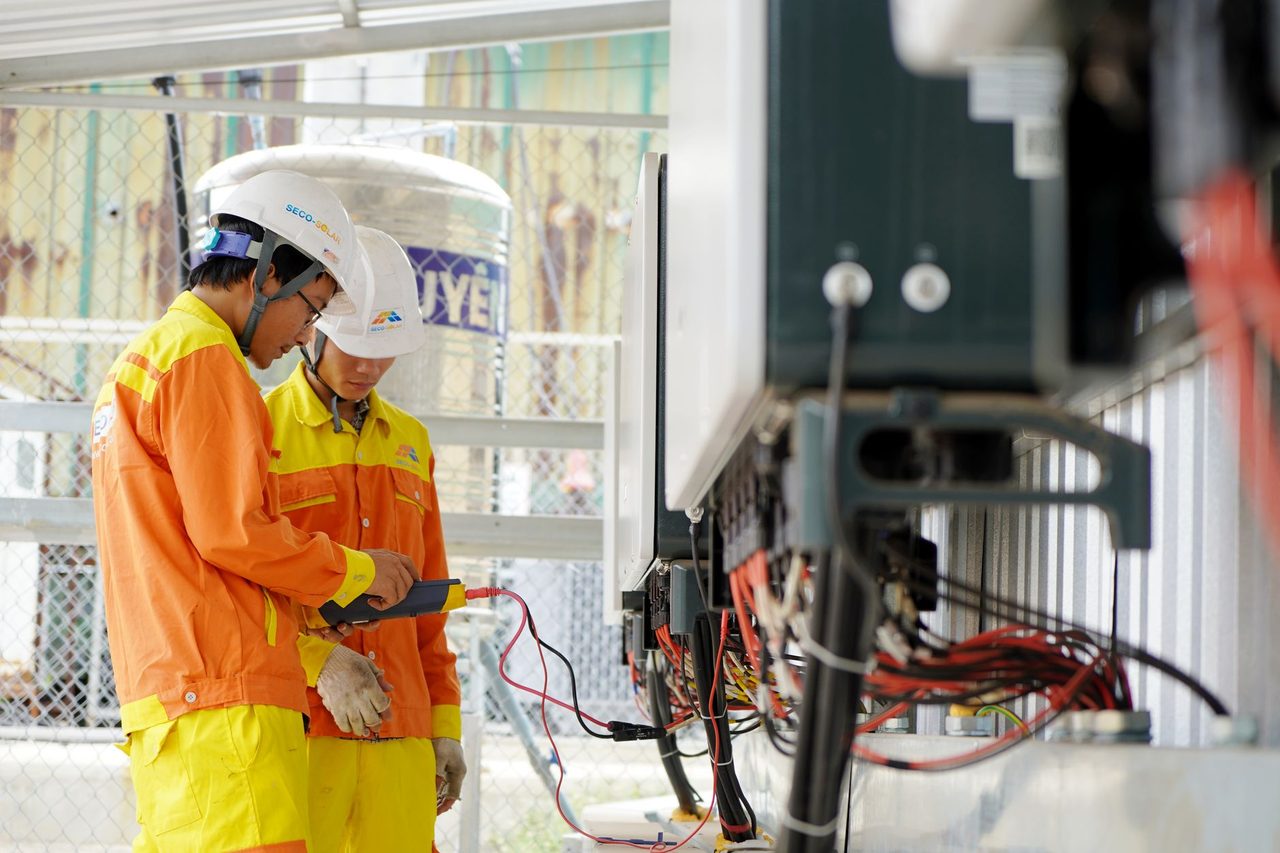
India 2026 Climate Transition Plans: Finance-Ready Decarbonisation for Industry
By Sudarshan Karweer · sudarshan@growthifye.com · +91 84510 99371 (Call / WhatsApp) · 2026-09-14
Photo: Mark Stebnicki on Pexels
India’s industrial climate transition plans in 2026: what lenders, buyers and boards now expect
Indian industrial decarbonisation has entered a different phase in 2026. The conversation is no longer limited to annual emissions inventories, renewable power procurement, or broad net-zero statements. Large corporates, export-facing manufacturers, lenders and supply-chain buyers now want a climate transition plan that shows how an Indian company will cut emissions, fund the capex, manage policy risk and prove results through auditable MRV.
This matters across steel re-rollers, auto components, chemicals, textiles, food processing, cement grinding, ceramics, pharma, data centres and commercial real estate portfolios. It also matters for RE developers, lenders and utilities because industrial transition planning is increasingly linked to open-access demand, storage adoption, electrification loads, captive and group-captive structures, and future demand for low-carbon fuels.
A good transition plan is not another glossy target document. It is an operating blueprint. It should connect Scope 1, Scope 2 and material Scope 3 baselines with plant-level abatement actions, policy exposure, procurement strategy, financing pathways and governance. In India, that blueprint also needs to fit current realities: open access charges vary sharply by state, gas remains volatile, DISCOM supply quality is uneven in several industrial clusters, and carbon policy architecture is evolving through the Carbon Credit Trading Scheme, export-linked disclosure pressure and buyer-led product emissions requirements.
This article sets out what a credible, finance-ready transition plan should include in 2026 and how Indian C&I energy consumers can structure one for implementation.
Why climate transition plans have become a board and finance issue
Three forces are pushing transition plans into the mainstream.
First, capital providers want evidence that decarbonisation capex will lower operating risk rather than simply satisfy ESG optics. Banks, NBFCs, private credit funds and strategic investors increasingly ask how a company’s energy cost curve, carbon exposure and technology choices will evolve over 3 to 10 years. A plant claiming net-zero by 2045 without showing near-term fuel switching, renewable sourcing, load optimisation and MRV controls now looks underprepared.
Second, export customers want confidence that suppliers can remain competitive under tightening carbon-related procurement rules. Even where no direct compliance obligation applies at the Indian plant today, buyers are asking for verified emissions factors, primary energy data, product-level allocation logic and decarbonisation trajectories. A transition plan helps convert that pressure into a managed internal programme.
Third, boards need a practical framework for sequencing investments. Most industrial firms cannot do everything at once. They need to know whether the first rupee of decarbonisation capex should go into waste heat recovery, boiler electrification, solar-wind-storage procurement, compressed air optimisation, thermal insulation, electric forklifts, biomass substitution, or digital sub-metering. Without a marginal abatement cost view, many firms overpay for headline projects while missing lower-cost reductions.
In practice, a transition plan works when it answers five board-level questions:
- What is the emissions baseline by source, site and product line?
- Which actions reduce emissions fastest at acceptable cost?
- What are the operational dependencies and technology risks?
- How much capex is needed, when, and with what payback?
- How will progress be measured and externally defended?
What a credible 2026 transition plan should contain
For Indian industry, a credible transition plan in 2026 should include at least eight building blocks.
- A base year and emissions boundary covering Scope 1 and 2 fully, with material Scope 3 categories clearly screened
- Plant-wise energy and emissions baselines using metered consumption, utility invoices, fuel purchase records and production data
- A target architecture with 2030 and 2035 milestones rather than only a distant 2040 or 2050 aspiration
- A marginal abatement cost curve covering no-regret, moderate-capex and strategic options
- A financing map showing internal accruals, leases, project SPVs, energy-as-a-service or EPC-linked commercial structures
- A policy map covering state electricity regulations, open-access economics, RPO-linked implications where relevant, CCTS exposure and customer disclosure needs
- An MRV framework with controls, owners, data systems, QA checks and assurance-readiness
- A governance model linking operations, finance, procurement, sustainability and plant engineering teams
Too many companies still start with a target before they have a reliable baseline. That creates trouble later. If diesel, LPG, furnace oil, coal, purchased steam, refrigerants and process vents are not correctly captured at source, the target becomes weak before implementation begins. Likewise, Scope 2 planning can go wrong if a company treats all renewable procurement as equal despite sharp differences between rooftop solar, captive solar, group captive wind-solar hybrids, exchange-based green power and round-the-clock products.
This is where Carbon accounting & disclosure and Net-zero roadmaps & MACC need to work together. Carbon data alone does not tell management what to build next. A roadmap without auditable activity data is also fragile.
Start with an asset-level baseline, not a corporate average
The biggest practical mistake in transition planning is relying on corporate-average emissions intensity. Indian industrial firms often run multiple plants with different fuel mixes, machine vintages, process temperatures, utility reliability profiles and state electricity tariffs. A ceramics unit in Gujarat, a textile wet-processing line in Tamil Nadu and an auto-component unit in Maharashtra cannot be decarbonised using one generic template.
A 2026-quality baseline should therefore map emissions at asset level.
For Scope 1, this usually includes:
- Stationary combustion: coal, petcoke, furnace oil, LDO, HSD, PNG, LPG, biomass
- Mobile combustion: diesel fleets, material handling equipment, logistics under operational control
- Process emissions: sector-specific calcination, chemical reactions, vents or solvent losses
- Fugitive emissions: refrigerants, SF6 where applicable, compressed gas leak proxies if material
For Scope 2, the baseline should separate:
- Grid electricity by plant and feeder if available
- Existing captive generation
- Third-party open-access power
- Renewable energy attributes and contract structures
- Hourly or time-block load shape for major facilities where feasible
A useful operational benchmark is to map the top 20 energy loads that together account for 70% to 85% of plant electricity or fuel consumption. In many Indian plants, these will include chillers, compressors, boilers, thermic fluid heaters, furnaces, pumps, HVAC, ETP systems, DG backup and process drying systems.
The baseline should also include cost layers, not only emissions. For example:
- Industrial grid tariffs in 2026 commonly range from about Rs 6.5 to Rs 10.5 per kWh depending on state, voltage level, duty and demand charges
- Solar-wind open-access blended landed tariffs in favourable states can still come in near Rs 4.2 to Rs 6.2 per kWh, but banking rules, CSS, AS, wheeling and losses matter
- RTC or firmed renewable structures with storage or balancing can move landed cost closer to Rs 5.8 to Rs 8.5 per kWh depending on profile and tenure
- PNG prices for industrial users remain regionally variable and linked to imported LNG pressure in many cases, making fuel-switch economics volatile
- Diesel-based backup generation can easily exceed Rs 18 to Rs 25 per kWh on a full-cost basis at many sites
A baseline with these cost realities allows management to prioritise measures that improve both emissions and energy spend.
Build the MACC around real industrial choices in India
A transition plan becomes finance-ready when it converts the emissions baseline into ranked interventions with capex, opex impact, implementation timelines and abatement potential. That is the role of the MACC.
In 2026, the most relevant industrial decarbonisation levers in India typically fall into five buckets.
First, no-regret efficiency measures. These often include VFD retrofits, compressed air leak management, boiler tuning, condensate recovery, insulation upgrades, power factor correction, pump right-sizing, sequencing logic and heat recovery. In many sectors, such measures deliver paybacks under 24 months and emissions reductions of 3% to 10% at site level.
Second, RE-led Scope 2 reduction. Open-access solar, wind-solar hybrid procurement, rooftop solar, captive structures and storage-linked procurement can sharply reduce purchased electricity emissions. For day-shift-heavy loads, solar-heavy procurement may be enough. For continuous processes, firms increasingly need profile-matched supply design rather than annual MWh matching. This is where RE-led decarbonisation has to align with operations and tariff design.
Third, industrial electrification. Replacing diesel or fossil thermal loads with electric options can be highly effective where process temperature bands allow it and renewable electricity can be contracted competitively. Heat pumps, electric boilers for lower-temperature applications, induction systems and electric mobility within plants are all more credible in 2026 than they were a few years ago. The technical screening should focus on load factor, process temperature, reliability tolerance and wiring/substation implications.
Fourth, fuel substitution for hard-to-abate segments. Biomass, bio-CNG, RNG blends, or in select cases green hydrogen pilots may make sense, but only after careful boundary analysis. For most industrial users, green hydrogen still needs disciplined use-case selection in 2026 because delivered cost can remain several times higher than conventional fuels depending on transport, storage and purity requirements. It is more credible in ammonia, refining, specialty chemicals or very high-temperature contexts than as a generic boiler fuel replacement.
Fifth, residual emissions strategy. Some emissions will remain after practical abatement, especially in process-intensive sectors. Transition plans should identify these residuals clearly rather than hide them. If carbon markets become part of the strategy later, they should sit after a robust internal abatement hierarchy and strong MRV.
A good MACC should show at least:
- Rs per tCO2e abated
- Capex per intervention
- Annual savings or cost increase
- Technical readiness level
- Downtime or shutdown requirement
- Dependency on policy approvals or vendor maturity
- Ownership by plant, procurement or central team
Align the plan with India’s 2026 policy and market context
Indian transition plans cannot be copied from Europe or Southeast Asia. They must reflect domestic regulation and power-market structure.
On electricity, state-level variation remains decisive. Cross-subsidy surcharge, additional surcharge, banking restrictions, wheeling loss assumptions, scheduling rules and approval timelines can materially alter the economics of renewable procurement. A plan that assumes uniform pan-India open-access savings is not lender-grade.
On carbon policy, firms should at minimum assess likely exposure to the Carbon Credit Trading Scheme architecture, especially where sector coverage or future tightening may affect compliance costs, data requirements or benchmarking. Even before direct compliance obligations arrive, internal MRV capability becomes a strategic asset because firms with weak data systems will struggle to respond quickly.
On trade, exporters should map customer-level carbon asks even if a specific regulatory label does not apply across all products. Many buyer questionnaires now expect supplier transition narratives with quantified emissions pathways, procurement actions and governance controls.
On disclosure, transition plans should line up with board-approved reporting frameworks and assurance expectations. This includes consistency between public targets, internal capex plans and operating assumptions. If the annual report says one thing, plant teams model another and procurement signs contracts on a third assumption, credibility collapses.
Make MRV and governance strong enough for audit and finance
Transition plans often fail not because the strategy is wrong but because the data system is weak. If metering gaps, spreadsheet version issues, emission-factor inconsistencies and unclear ownership persist, implementation quality drops quickly.
In 2026, an investable MRV stack for Indian industry should include:
- Defined source list and boundary memo
- Meter hierarchy for electricity, steam, fuels and key process loads
- Monthly close process with sign-offs from plant, finance and sustainability owners
- Controlled emission-factor library and update protocol
- Production-linked intensity calculations with allocation logic
- Document retention for invoices, lab values, fuel slips and calibration records
- Exception flags for abnormal consumption or factor changes
- Internal audit or assurance rehearsal at least once a year
This is especially important when multiple outcomes depend on the same data: corporate disclosure, buyer requests, lender diligence, internal capex appraisal and possible future carbon-market participation. Carbon markets & MRV should not be treated as a late-stage overlay. They depend on clean operating data from day one.
Governance also matters. The best transition plans assign clear ownership:
- CFO or strategy office for capex prioritisation and financing
- COO or plant heads for execution
- Procurement for power and fuel contracts
- Sustainability team for accounting consistency and reporting
- Internal audit or risk function for controls
Without this cross-functional structure, decarbonisation remains a side project.
How to turn the plan into a 24-month action programme
A practical transition plan should end with an execution calendar, not a slogan. For most Indian industrial firms, a 24-month programme in 2026–2028 should sequence work as follows.
Months 0-3:
- Lock organisational boundary and base year
- Clean Scope 1 and 2 inventory with plant-level detail
- Screen material Scope 3 categories
- Create energy-cost baseline and tariff map
- Identify metering and data-control gaps
Months 3-6:
- Build the MACC
- Run technical feasibility for top 10 to 15 actions
- Evaluate renewable procurement pathways by state and site
- Screen electrification opportunities by process temperature and reliability needs
- Develop internal carbon price sensitivity if useful for capex ranking
Months 6-12:
- Approve quick-payback efficiency measures
- Launch priority RE procurement or captive/open-access structuring
- Start sub-metering and digital data architecture upgrades
- Integrate transition plan into annual budget and plant KPIs
- Prepare lender and board pack with savings, abatement and execution risks
Months 12-24:
- Execute medium-capex projects
- Validate realised savings versus model
- Refresh emissions pathway and target trajectory
- Prepare for assurance, customer reviews and policy-related data requests
- Re-rank later-stage options such as storage, deep electrification or alternative fuels
This staged approach is usually more credible than publishing an aggressive target with undefined delivery mechanics.
The bottom line for Indian industry
In 2026, a climate transition plan is becoming the central document that connects decarbonisation ambition to operating reality. For Indian C&I companies, the winners will not be those with the loudest targets. They will be those with plant-level baselines, policy-aware renewable procurement, realistic electrification pathways, disciplined MACC prioritisation and audit-ready MRV.
That approach serves multiple stakeholders at once. Boards get clearer capital allocation. Lenders get a more bankable decarbonisation narrative. Buyers get confidence in supply-chain resilience. Plant teams get a practical sequence of interventions. Utilities and RE developers get better visibility into future load transformation.
Most importantly, companies reduce the risk of fragmented climate action: a solar PPA here, an efficiency project there, and a disclosure report somewhere else. A transition plan pulls these pieces into one implementation architecture.
If your business is building a 2026 decarbonisation strategy, contact Growthifye’s advisory desk to develop a finance-ready transition plan covering baselines, MACC, RE procurement, electrification, MRV and execution support.
Explore Growthifye's related capabilities
This analysis connects directly to our advisory practice: Carbon accounting & disclosure · Net-zero roadmaps & MACC · RE-led decarbonisation · Industrial efficiency & electrification.
About the author

Chief Executive Officer, Growthifye — With over 23 years in management consulting, Sudarshan has taken businesses from concept to scale — building and scaling new-age digital and energy businesses.
- 23+ years in management consulting
- EY alumnus
- Led large-scale BESS programmes, capital raises and advisory mandates
Want this analysis applied to your project?
Talk to our team