IEC 61850 Process Bus for Indian DISCOMs 2026: Digital Substations, SAS ROI
By Sudarshan Karweer · sudarshan@growthifye.com · +91 84510 99371 (Call / WhatsApp) · 2026-09-04

Indian utility digitalisation has spent the last few years talking about AMI, MDMS, OMS, ADMS and feeder automation. Those are all valid priorities. But one layer lower in the value chain, a quieter shift is now becoming relevant for state utilities, private DISCOMs, transmission-connected industrial networks and lenders evaluating distribution capex: the move from conventional substations to IEC 61850-based digital substations, especially process bus architectures.
For India in 2026, this is no longer a purely technology-led discussion. It is a capex-quality, lifecycle-cost and operational-risk discussion. A well-specified digital substation can reduce copper cabling, improve event visibility, speed up fault analysis, simplify future bay additions and make protection automation easier to scale across urban load centres, renewable-rich nodes and high-growth industrial corridors. A badly specified one can create interoperability issues, cyber gaps, opaque maintenance dependence and expensive retrofit pain.
This article focuses on the business case, architecture choices and implementation reality of IEC 61850 process bus for Indian DISCOMs and adjacent stakeholders. It deliberately takes a different angle from standard ADMS, OMS, AMI or feeder automation discussions. The question here is simple: where does digital substation architecture materially improve utility outcomes in India, and what should utilities, developers and financiers insist on in 2026?
Why process bus matters now in India
Several market signals are converging.
- RDSS-funded and state-funded network modernisation has improved utility readiness for digital protection, disturbance recording and integrated automation
- Urban load density is increasing, especially in 33/11 kV and 66/11 kV assets serving metro, airport, data centre and industrial demand clusters
- Rooftop solar, BESS pilots, EV charging and open-access wheeling are increasing switching complexity and power-quality scrutiny
- Utilities are under pressure to reduce outage duration, improve auditability and justify capex with measurable performance improvements
- Skilled manpower constraints are pushing utilities to prefer standardised, data-rich systems over heavily bespoke relay and panel engineering
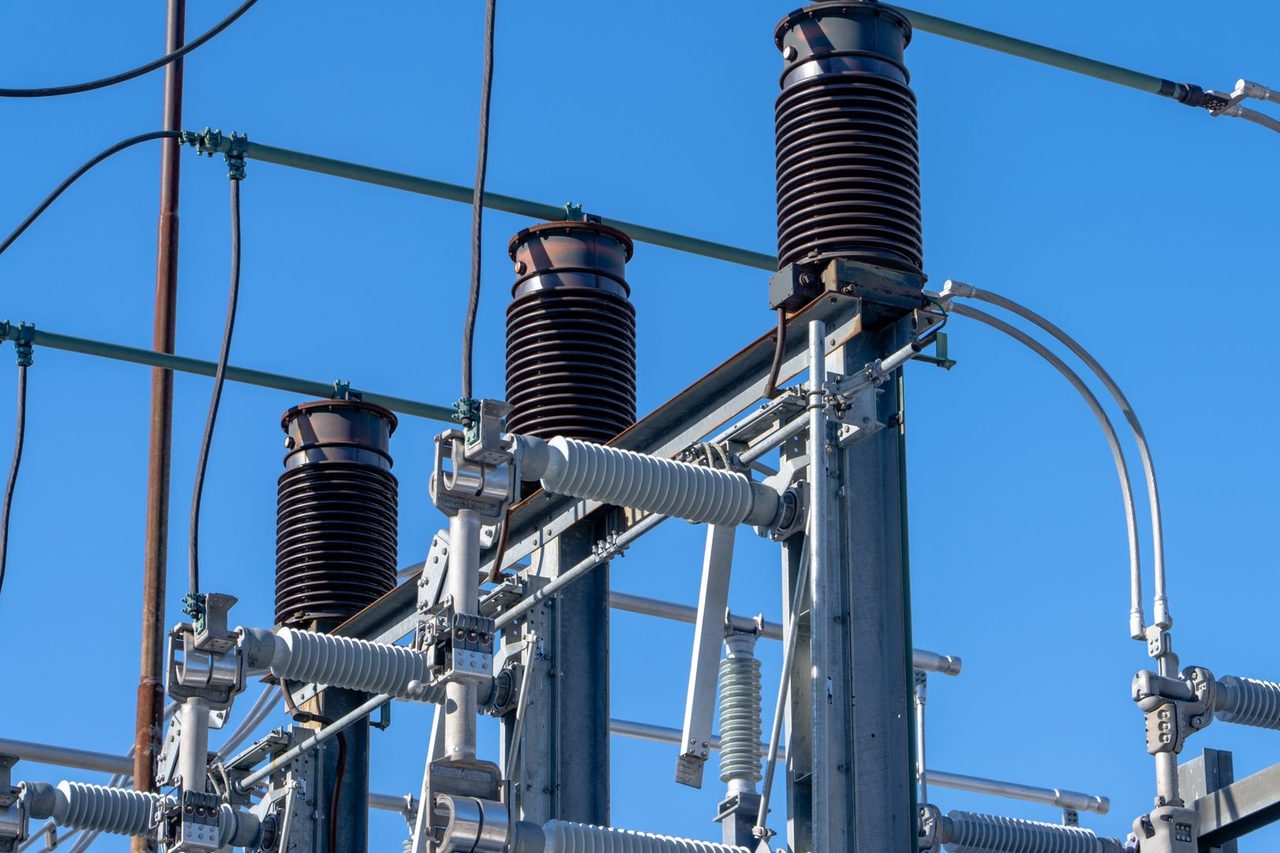
In a conventional substation, current transformers and voltage transformers are hardwired with large volumes of copper to protection and control panels. Interlocking, status signals and trip circuits often become engineering-heavy, difficult to modify and inconsistent across substations. Event analysis after trips can be fragmented. Bay extensions can be cumbersome. Spare management also becomes messy when each station evolves with a different design history.
By contrast, IEC 61850 process bus digitises primary equipment signals nearer the switchyard through merging units and communicates them over an Ethernet-based architecture using standards such as Sampled Values and GOOSE messaging. The result is not magic, but it is material: less copper, more standardised data exchange, cleaner time synchronisation and better support for modern substation automation.
For Indian utilities that are already investing in IEC 61850 substation automation, process bus is the logical next step in selected substations, not necessarily every substation.
What a digital substation changes operationally
The common mistake is to evaluate digital substations only on first-cost comparison with conventional SAS. That is too narrow.
The stronger case is operational.
First, fault visibility improves. When relays, bay controllers, disturbance recorders and engineering workstations share a standards-based communications model, sequence-of-events analysis becomes faster and more reliable. For utilities trying to reduce repeated feeder trips or unexplained transformer outages, this matters.
Second, wiring complexity falls. In a greenfield 33/11 kV or 66/11 kV station, replacing extensive copper control wiring with fibre can reduce installation complexity, trenching volume and secondary-system congestion. In compact urban substations where space is a hard constraint, that can be decisive.
Third, future expansion becomes easier. If a DISCOM expects load growth from commercial towers, metro systems, industrial estates or large campuses, adding bays in a digital architecture can be cleaner than reworking a crowded conventional marshalling philosophy.
Fourth, safety and diagnostics improve. Fewer long copper runs can reduce exposure to wiring errors, induced noise and maintenance ambiguity. Testing can become more structured when utility teams insist on proper engineering documentation, SCL files, simulation capability and disciplined FAT to SAT processes.
Fifth, data quality improves for higher-layer systems. Better substation event data supports SCADA / ADMS integration, outage analysis and network planning. That does not mean process bus alone reduces SAIFI or AT&C losses. It means substation-originated faults, protection miscoordination and restoration analysis become easier to diagnose, which indirectly supports reliability and commercial outcomes.
Where the ROI works best in 2026
Not every substation should be converted to process bus immediately. In India, the 2026 ROI is strongest in defined use cases.
1. New urban load-centre substations
For new 33/11 kV, 66/11 kV or campus substations in dense cities, process bus can save space and reduce cabling complexity. Land and civil constraints in cities such as Mumbai, Bengaluru, Hyderabad, Chennai, Pune and NCR sharply increase the value of compact, modular secondary architecture.
2. Industrial and commercial supply nodes
Substations serving data centres, semiconductor parks, ports, airports, metro rail, pharma clusters and high-value manufacturing loads benefit from better disturbance recording and outage forensics. A single avoidable trip event can have a commercial cost far above the incremental digital-substation capex.
3. Renewable integration pockets
At nodes where distributed solar, BESS or fast-changing industrial demand affects voltage and switching profiles, more granular and interoperable substation data helps utilities tune control logic and protection settings with greater confidence.
4. Standardised multi-substation rollout programs
The economics improve when a utility rolls out a standard architecture across a fleet rather than treating each station as a unique engineering project. Standard bay templates, relay philosophies, HMI conventions and testing procedures reduce lifecycle cost more than isolated pilot projects do.
5. Brownfield replacement where control wiring is already a problem
If an existing substation has recurring wiring faults, obsolete panels, unavailable spares or unsafe panel-room congestion, the cost comparison should include avoided maintenance and outage risk, not just panel replacement cost.
In practical terms, Indian utilities may see incremental capex of around 8% to 20% over basic conventional secondary systems for well-engineered digital architectures, depending on voltage level, redundancy philosophy, vendor strategy and retrofit complexity. But lifecycle savings can offset that through lower copper use, faster commissioning in repeat designs, lower troubleshooting time and easier future modifications.
The business case is strongest where outage cost, space value, engineering repeatability and data quality all matter at the same time.
The real specification issues utilities must get right
In 2026, the technology is not the main risk. Specification discipline is.
A digital substation procurement can fail commercially even when the equipment itself performs. Indian DISCOMs and project sponsors should focus on six areas.
Interoperability beyond brochure claims
IEC 61850 compliance on paper is not enough. Utilities should demand demonstrated interoperability between relays, merging units, bay controllers, gateways and station HMI from different vendors in realistic configurations. This is where Vendor-neutral specifications become essential.
Architecture choice: station bus only or full process bus
Many Indian substations already use station bus for SAS and gateway integration. Full process bus is a bigger step. Utilities should clearly define whether they want:
- Station bus only
- Hybrid architecture with selected digitised bays
- Full process bus for all bays
This decision changes cost, testing scope, cyber design and O&M requirements.
Time synchronisation and redundancy
Sampled Values and event analysis are only as good as time quality. PRP/HSR redundancy choices, PTP or SNTP design, GPS clock strategy and failover behaviour must be specified upfront. These are not footnotes.
Cybersecurity and remote access control
Digital substations expand the attack surface. Utilities should align station architecture with Indian cyber advisories, utility SOC practices and segmented access controls. Engineering laptops, remote relay access and firmware control need formal governance, not ad hoc vendor practices.
Testing philosophy
Routine FAT is insufficient. Utilities need scenario-based testing for protection logic, failover, sampled-value integrity, GOOSE performance, alarm mapping and event recording. Strong FAT to SAT discipline is one of the clearest differentiators between successful and problematic deployments.
Documentation and digital asset maintainability
Substation Configuration Language files, as-built network diagrams, relay setting governance, IP plans and patch management records must be handed over in usable form. Otherwise, the utility inherits a black box.
What lenders, C&I consumers and policymakers should watch
This topic is not only for DISCOM engineering teams.
Lenders should recognise that substation digitalisation quality affects availability, restoration time and maintainability. In project finance diligence for industrial power systems, franchisee operations, private networks or utility modernisation programs, secondary-system architecture can materially influence operational risk.
C&I consumers should care when their supply depends on overloaded urban substations or on dedicated utility nodes with high outage sensitivity. Better protection visibility and substation automation can improve root-cause analysis and reduce repeat interruptions, especially where multiple 11 kV feeders serve high-value facilities.
Renewable developers should watch interconnection nodes. As more distributed resources connect in distribution networks, poor visibility at substations can slow troubleshooting and increase curtailment ambiguity. High-quality digital substations create a better operational base for future DER management systems and more responsive network control.
Policymakers should avoid forcing one-size-fits-all mandates. Process bus should be encouraged where lifecycle logic exists, not turned into a ceremonial checkbox. Good policy would support standardisation, interoperability testing, utility training and performance-linked evaluation, rather than only counting the number of substations digitised.
Common mistakes in Indian digital substation projects
Several recurring errors are visible in the market.
- Treating IEC 61850 as only a communication protocol rather than an engineering and lifecycle discipline
- Buying proprietary architectures that make future multi-vendor integration expensive
- Underestimating utility training needs for maintenance and troubleshooting
- Skipping rigorous network and cyber design because the project is labelled as substation automation rather than OT digitisation
- Running pilots without a fleet standardisation roadmap
- Comparing capex only, without valuing outage-risk reduction, maintainability and expansion flexibility
One more mistake deserves emphasis: over-digitising low-criticality assets. A lightly loaded rural substation with stable configuration and low outage consequence may not justify full process bus today. Utilities should prioritise critical urban and industrial nodes first.
A practical roadmap for 2026 deployments
For Indian DISCOMs and related sponsors, the sensible approach is phased.
Start with a substation portfolio assessment. Rank assets by criticality, load density, outage consequence, space constraints, age of secondary systems and expected future expansion.
Then define standard reference architectures for two or three archetypes, for example:
- Urban 33/11 kV indoor GIS substation
- Industrial-corridor 66/11 kV substation
- Brownfield retrofit with hybrid process bus
Next, prepare utility-owned design standards rather than vendor-owned designs. This is where experienced advisers can materially reduce lock-in and future change-order risk.
After that, run one or two pilots with strict acceptance criteria, including interoperability, cyber controls, maintainability and handover documentation. Do not judge pilots only by energisation date.
Finally, move to programmatic rollout only after standard bay templates, training modules, spare strategy and digital documentation practices are proven.
For utilities that also plan feeder automation, outage management or advanced control functions, digital substations should not be isolated projects. They should be aligned with broader SCADA / ADMS integration so that event data, alarms and topology status support system-level operations.
The bottom line for 2026 is straightforward. IEC 61850 process bus is not a universal replacement for all conventional substations in India. But in high-value, high-complexity, high-growth nodes, it is becoming a credible and often superior architecture. The winners will not be the utilities that buy the most digital hardware. They will be the ones that write clear specifications, preserve interoperability, enforce testing discipline and select sites where lifecycle value is real.
If your organisation is evaluating digital substation strategy, technical due diligence, bid documents or rollout planning, contact Growthifye's advisory desk. We support utilities, developers, lenders and C&I stakeholders with practical automation roadmaps, specification support and implementation oversight.
Explore Growthifye's related capabilities
This analysis connects directly to our advisory practice: IEC 61850 substation automation · FLISR & self-healing networks · DER management systems · SCADA / ADMS integration.
About the author

Founder & CEO, Growthifye — engineering and financing India's clean-energy transition.
Want this analysis applied to your project?
Talk to our team