
BESS VGF in India 2026: Viability Gap Funding, Tariffs and Project Structuring
By Sudarshan Karweer · sudarshan@growthifye.com · +91 84510 99371 (Call / WhatsApp) · 2026-09-05
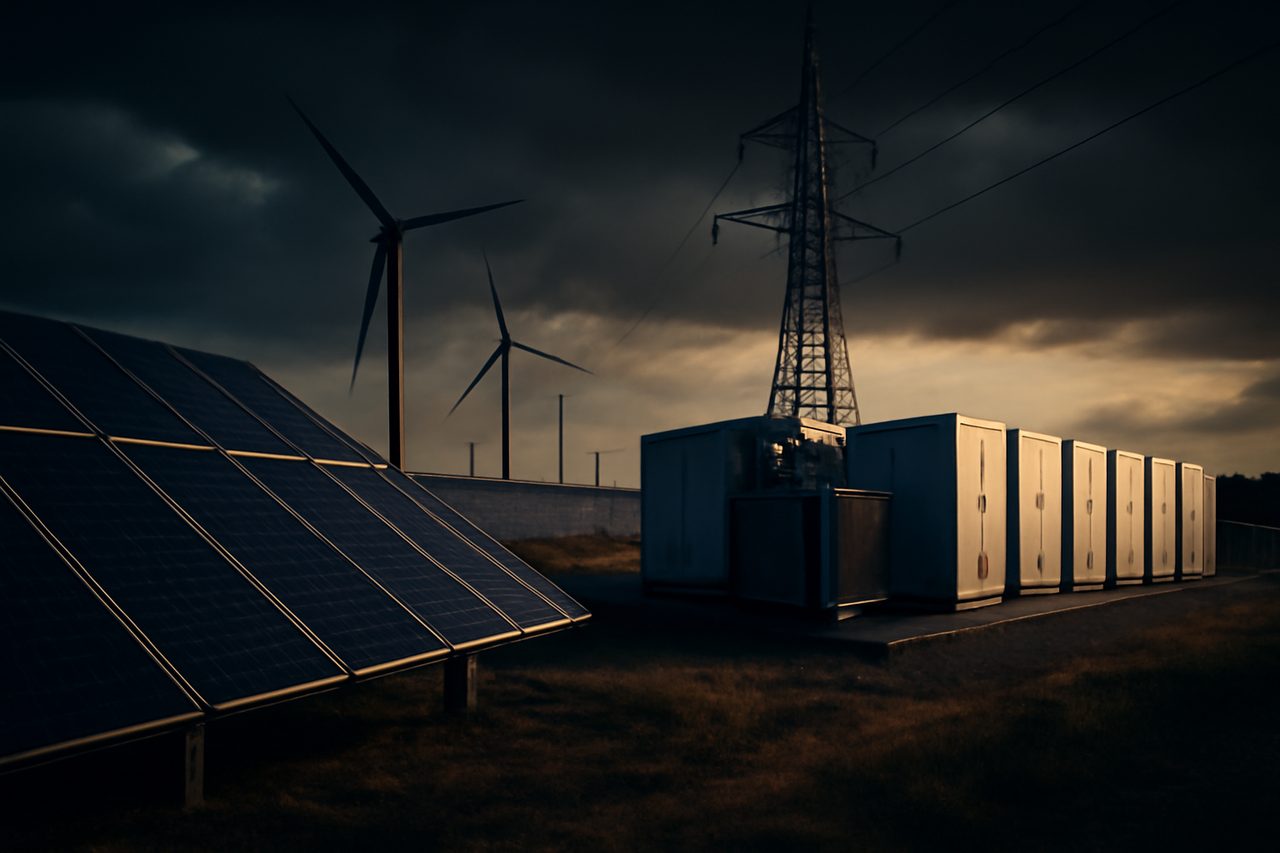
Photo: Jan van der Wolf on Pexels
India’s battery energy storage system market in 2026 is moving from policy signalling to repeatable procurement. The most important bridge between ambition and executable projects has been viability gap funding, or VGF. For developers, utilities, lenders and large power buyers, VGF is no longer a side incentive. It is a core variable in tariff formation, bid strategy, technology selection and debt sizing.
This matters because standalone storage in India still sits in an awkward zone. On one side, the system value is obvious: peak support, renewable integration, congestion management, balancing, reserve and local reliability. On the other, many of these values are not yet fully monetised through stable, long-duration contracts. VGF has therefore emerged as the tool that helps convert system value into financeable projects.
For Indian market participants evaluating storage in 2026, the real question is not whether VGF is useful. It is how VGF changes delivered tariffs, contract structures, augmentation plans, lender comfort and the allocation of operational risk. That is where project outcomes will be decided.
Why VGF matters in India’s 2026 BESS market
India’s BESS economics have improved materially, but not enough to make most grid-scale projects universally bankable without some form of revenue support, regulated recovery or concessional capital. Four-hour systems remain the dominant format for utility procurement because they align with evening peak support and renewable shifting requirements, but they are still capex-intensive relative to current contracted storage tariffs.
In 2026, turnkey EPC pricing for utility-scale lithium-ion BESS in India typically varies by chemistry, warranty profile, augmentation philosophy, HVAC/fire design, import content and AC-side integration scope. For large four-hour systems, all-in installed costs often land in a broad range of roughly Rs 3.8 crore to Rs 5.2 crore per MW for certain project configurations, though project-specific numbers can move meaningfully depending on duration, location, evacuation scope and technical specification. On an energy basis, many projects are still benchmarked in Rs crore per MWh terms for investment committees because augmentation and usable-energy guarantees matter more than nameplate power alone.
Against that cost base, offtakers remain highly tariff-sensitive. DISCOMs and central procurers want storage because it improves renewable absorption and reduces peak procurement stress, but they also compare storage tariffs with short-term market purchases, thermal flexibility and network reinforcement. VGF narrows that affordability gap.
The practical effect is straightforward:
- Lower upfront project capex borne by the developer
- Lower annual fixed storage charges required from the offtaker
- Better debt service coverage if contracts are structured correctly
- Improved bid participation and deeper competition
- Faster market formation in states that are still learning how to procure storage
This is why VGF-backed tenders have become reference points for the broader storage market, even for projects that do not themselves receive VGF.
How VGF is being structured in BESS tenders
India’s storage VGF architecture has largely been designed to support standalone BESS procurement serving DISCOM and grid needs. While tender-specific rules differ, the broad model in 2026 is familiar: a central scheme provides a capped upfront grant linked to storage capacity, and the beneficiary procurer secures storage services through a long-term contract, usually with a fixed annual payment framework tied to availability and performance.
The 2023-approved central support framework for standalone BESS created the policy base, and by 2026 its implementation lessons are clearer. In practice, bidders must pay attention to five details that have a first-order impact on economics.
- Whether VGF is linked to MWh capacity, MW rating or a tender-defined package
- The cap per MWh and whether it is indexed or fixed in absolute terms
- The disbursement schedule, including commissioning-linked and performance-linked milestones
- The pass-through treatment, if any, for augmentation capex over project life
- The interaction between VGF and penalties for availability, round-trip efficiency or degradation
The market has learned that the headline VGF amount is only one part of the story. Two tenders with the same nominal grant can produce different viable tariffs if one allows a more realistic augmentation plan or a more balanced availability regime.
For example, a project receiving support of around Rs 27 lakh per MWh may look attractive at bid stage. But if the battery must sustain tight delivery obligations deep into the contract without clear augmentation treatment, the developer may need to embed a substantial risk premium into the tariff. Conversely, a lower-support project with a flexible augmentation framework and bankable payment security can clear at better effective economics.
What VGF does to tariff discovery and bid strategy
In 2026, tariff discovery in VGF-backed BESS tenders is no longer just a function of battery capex. Winning bids are being shaped by assumptions on degradation, augmentation timing, charging energy source, auxiliary consumption, liquidated damages and financing cost.
For practitioners, three tariff concepts are worth separating.
- Quoted annual storage charge or capacity payment
- Implied levelised cost of storage service over contract life
- Effective delivered cost to the offtaker after accounting for charging energy and utilisation pattern
Many market participants still compare bids too simplistically. A lower quoted capacity charge is not necessarily a lower system cost if charging losses, augmentation outages or dispatch constraints are not accounted for.
Consider a stylised four-hour, 500 MWh standalone BESS with a 12-year to 15-year contract tenor. If VGF reduces net capex by 15% to 25%, the annual fixed charge required for target equity IRR can drop materially. Depending on leverage, interest rate and degradation design, this reduction may improve bid competitiveness by several paise per kWh equivalent or by a meaningful percentage reduction in annual capacity charge. But the full benefit only materialises if the project can maintain contractual usable capacity without excessive augmentation cost.
Developers bidding aggressively in VGF tenders therefore need a view on:
- Initial oversizing versus later augmentation
- Guaranteed end-of-year usable energy
- Round-trip efficiency trajectory across the contract term
- Imported cell price downside and replacement timing
- O&M cost escalation and spare strategy
- Insurance pricing for thermal runaway and business interruption
The most disciplined bidders are now building bottom-up dispatch and degradation models rather than relying on generic battery vendor templates. That is the right approach because VGF compresses headline tariffs, leaving less room to absorb modelling error.
The bankability questions lenders are asking in 2026
Lenders have become more constructive on storage, but they are still selective. A VGF-backed project does not become financeable by default. In fact, some lenders are scrutinising these projects more carefully because bid aggression has increased.
The key credit questions typically include:
- Is the offtake counterparty strong, and what is the payment security package?
- Is the VGF disbursement certain, timely and protected from administrative slippage?
- Are availability guarantees realistic relative to cell degradation and ambient conditions?
- Does the EPC wrap cover integration risk across battery, PCS, EMS, SCADA and fire systems?
- Is there a credible augmentation reserve funded into the base case?
- Are warranty terms aligned with the dispatch regime assumed in the financial model?
Debt providers in India are particularly focused on the mismatch between contract obligations and battery ageing. If the project company is obligated to provide a fixed quantum of discharge capability over many years, then either initial oversizing or augmentation capex must be robustly planned. If not, DSCR stress emerges precisely when the battery begins to fade.
Interest rates still matter. Even in 2026, a 100 to 150 basis-point difference in borrowing cost can change bid viability. VGF helps offset this, but not fully. A project with weak payment security, delayed VGF reimbursement or an unbankable augmentation assumption can still fail lender due diligence.
For that reason, developers and procurers should treat technical diligence and financial structuring as one integrated process. Storage contracts that look inexpensive on bid day can become fragile if they leave unresolved questions around charging rights, dispatch priority, metering boundaries or deemed availability.
Grid integration and dispatch design: the underestimated variable
One of the biggest mistakes in early BESS discussions was to treat storage as a generic box that can be inserted anywhere in the grid. By 2026, that view is no longer tenable. Interconnection and dispatch design can make or break a VGF-backed project.
A BESS serving evening peak support from a congested node has a different operational profile from a BESS meant for renewable firming, intraday balancing or substation support. Yet procurement documents sometimes flatten these differences into one tariff metric. That creates hidden risk.
For practical project design, stakeholders should evaluate:
- Whether the battery is charged from grid power, co-located renewables or both
- Expected annual cycles and partial-cycle behaviour
- Transmission and wheeling implications during charging
- Curtailment exposure if co-located with renewable generation
- Reactive power and grid-code obligations at the point of interconnection
- Black start, ramping and response-time requirements where applicable
This matters financially because battery wear is dispatch-sensitive. A project optimised for one full cycle per day may underperform if actual system operation results in multiple partial cycles, reserve deployment or irregular charging windows. If tender documents do not define the dispatch envelope clearly, VGF can mask rather than solve the bankability issue.
From a utility perspective, better dispatch design also improves value capture. A battery procured only for narrow peak shifting may deliver lower whole-system value than one integrated into broader balancing and network operations. But monetisation pathways must then be contractually clear. Otherwise the developer is asked to provide extra services without corresponding revenue.
What developers, DISCOMs and C&I buyers should do now
Each market participant should approach VGF-backed storage with a different lens.
For developers:
- Build bid models around usable energy delivery, not just installed nameplate
- Stress-test augmentation timing under hot-weather and high-throughput cases
- Negotiate EPC and LTSA packages that align with contractual availability metrics
- Track customs, GST and logistics assumptions closely because bid margins are thin
For DISCOMs and procurers:
- Specify the service clearly: peak shaving, renewable shifting, balancing or local reliability
- Avoid penalty structures that force uneconomic overdesign without improving system value
- Strengthen payment security and milestone clarity for VGF-linked disbursement
- Evaluate bids on lifecycle system cost, not only annual quoted charge
For lenders:
- Examine the battery replacement philosophy and reserve funding in detail
- Test downside cases for lower efficiency, faster fade and dispatch deviation
- Confirm that insurance and performance warranties cover the real operational envelope
For large C&I consumers watching this market, VGF-backed utility tenders also create an important benchmark. They indicate where storage costs are landing in India after policy support, which in turn helps frame decisions on open-access hybrids, behind-the-meter resilience and medium-term procurement strategies. Even if a C&I buyer is not directly accessing VGF, the tariff signals from these projects matter.
The 2026 outlook: VGF is a bridge, not the final market design
VGF has done what good transitional policy should do: it has accelerated project formation in a segment where system value is ahead of standalone commercial monetisation. But it is not the end-state for India’s storage market.
Over time, the sector will need deeper and more bankable revenue streams from multiple channels:
- Capacity-style procurement for peak adequacy
- Better ancillary-service monetisation
- Clear treatment of storage within distribution planning
- Improved market signals for congestion and flexibility
- Standardised long-term contracts with realistic degradation frameworks
As these mechanisms strengthen, VGF dependence should reduce. But in 2026, VGF remains critical because it lowers entry barriers while procurement practice matures.
The winners in this phase will not be the players who assume every supported tender is automatically attractive. They will be the ones who understand that storage economics sit at the intersection of electrochemistry, contract design, dispatch reality and public-policy structure. In India, that combination is now where advisory quality creates the most value.
For sponsors, utilities and financiers evaluating BESS opportunities, the key is to move past headline grant numbers and focus on full-project viability: tariff sustainability, augmentation discipline, grid suitability and payment security. That is the difference between a bid that clears and a project that performs.
If you are assessing a VGF-backed BESS tender, storage sizing case, lender due diligence scope or grid-integration strategy, contact Growthifye’s advisory desk for a project-specific discussion.
About the author

Chief Executive Officer, Growthifye — With over 23 years in management consulting, Sudarshan has taken businesses from concept to scale — building and scaling new-age digital and energy businesses.
- 23+ years in management consulting
- EY alumnus
- Led large-scale BESS programmes, capital raises and advisory mandates
Want this analysis applied to your project?
Talk to our team

